

Co-founder & CEO of @userlist. SaaS email marketing is the game. Keep them short.
Joined December 2012
- Tweets14.6K
- Following309
- Followers6.1K
- Likes28.3K






Pinned Tweet
The new @userlist is now available ✨ Built for product dreamers, email geeks, and data nerds 🎩
Our customers are getting the whole new UI with improved navigation, higher information density, and quirky illustrations. We also redesigned the website, the knowledge base, and end-user-facing parts of the app.
Our team is making a happy dance.
Read the full story with screenshots and WIP: userlist.com/blog/how-we-red…

💛

Shout out to @benediktdeicke and @uibreakfast from @userlist for not only jumping on a call with me to help me with a challenge I was having with a client's account
But also for then helping me actually resolve that and going way over and above
Working with founders is just the best
We see marketers suffer from these extremes in lifecycle automation: complexity and lack of volume.
a. Unnecessary complexity: trying to predict every user step, going to the extremes with automation logic. Making mistakes, getting frustrated.
What’s the real cost of lifecycle emails?
▪️ Software. Monthly recurring fee which depends on the user count.
▪️ Migration. Human hours to switch from your existing system.
▪️ Engineering costs for the integration
▪️ Content. Ongoing efforts to write and set up the workflows.
Top 5 tips for managing B2B email marketing (as someone asked today):
▪️Don't be afraid to email more
▪️Treat this as a process with continuous improvement/expansion, rather than a one-off project
▪️Be helpful
▪️Keep your messages short and focused
▪️DON'T OVERTHINK
Selling an ESP is like selling a mattress. A mattress is bulky, hard to replace, essential for your sleep. It's unlikely you'll rave about your mattress on social media. A new mattress won't make you sexy/healthy/rich.
It's just a mattress.
It's just an ESP.
Here's exactly why consultants are paid to do their thing. Only a fraction of SaaS companies have dedication, resources, and knowledge to expand their lifecycle marketing in a systemic way.
Also, who makes comments this long and awesome? @iammarcthomas 🤗

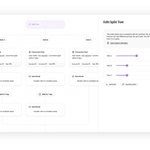
Did you know that the Split Test node isn't just for A/B tests? It's a random group generator, splitting users into up to 5 paths at whatever percentages you choose.

▪️ Throttle quarterly review calls (so that your calendar doesn't go insane). Use a calendar-based recurring trigger, then randomly split customers and assign different time delays for each branch.
What makes a perfect welcome email? (hundreds of companies still obsess about a single email, while forgetting about the rest of their lifecycle)
But seriously?
▪️ Acknowledge that the user started using the software, and include the website link (duh, but not everybody remembers this)
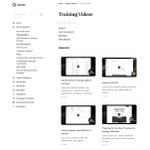
▪️ Deliver mission-critical information to new users. Include links to the docs, training videos, a quick start guide.
▪️ Be supportive
▪️ Reflect your brand personality
▪️ Set the context for future emails
At @userlist, we have a “creative” onboarding sequence that takes the user on the adventures with Susie. However, our first email is still practical.

This January we offered a review call to all paying customers, and most people who replied were newly added team members. They didn't know much about @userlist, or what's happening in their accounts.
This blew our mind.
So we set up a simple workflow (took me 15 minutes).


Love this @iammarcthomas 💛
This is definitely a common friction point in building out lifecycle messaging
How I tell my clients to approach it is to think in terms of Money Moments
Map out every moment where someone could increase or decrease your MRR, prioritize those into a roadmap and then work through it systematically
Prioritizing means thinking about the impact across a number of different dimensions
Ultimately, you can come up with a roadmap of activities that will help you not just cover the lifecycle holes, but find the most meaningful ones.
Specifically, I recommend thinking about Money Moments in terms of both quantitative and qualitative priority.
For example, on the quantitative side, you might ask:
- How many people are hitting this moment?
- What is the current conversion rate of people at that moment?
- What’s the potential conversion rate?
- What’s the MRR impact per conversion?
Playing this out with the onboarding example you mentioned, the reason that's such a high-priority Money Moment is because it’s usually where the most people are going through.
Everybody who enters the product goes through the onboarding sequence to help them get activated.
If it turns out you’re actually activating only 1% of people and 100,000 people go through that a year, that’s a huge opportunity.
You have a large margin, so the expected value of increasing that would be a high-impact moment.
But there's like a million other opportunities that people never get to
"Now that I have user onboarding, what else can I do?"
Your best next step is: a workflow for your paying customers.
It runs at a slow pace (every 1-2 weeks) and combines educational content, feature nudges, and customer loyalty stuff (asking for referrals, reviews, etc).