






I can't get over the fact that if you throw Opus 5.5 at a repo, it will create product walkthrough videos and feature highlights with a faithful representation of the UI and nice transitions
OpenAI Plugin submission has been down for most people since August, due to an identity verification sync problem.
Unusual community.openai.com/t/plugi…

The fact that the vast majority of people in Europe would say that we live in a ruthless capitalistic competitive market economy may be a good answer to the famous question: what important truth do very few people agree with you on?

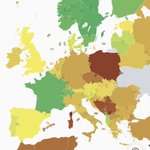
🇫🇷 France's government SPENDING now equals roughly 57% of its entire economy...
That's higher than the levels shown here for the Soviet Union, communist Romania, Poland, and China.
• USSR at 50%
• Communist Romania at 42%
• Venezuela under Chávez at 38%
• Communist Poland at 36%
• China at 33%
Will France fall?
Source: @randgroup / Writer: Samuel

The point of non return for democratic reform is indeed when a full majority of people live off government handouts or salaries.
The US is not that far behind.

The biggest, and stupidest, myth in European politics, particularly popular in France, is that Europe suffers the consequences of "austerity" and "neoliberalism". In the biggest 5 countries in Europe, more than half of the population makes its income from the state, less than half from the private sector. This is what makes the problem of reducing the welfare state so impossible: more than half of the voters are net recipients. No surprise that Italy's budget has not been balanced in 100 years, France's in 50 years (ooh la la, l'austérité!!):
-France: 30 million from the state versus 21m private sector workers. State spending is 57% of GDP, taxes more than half the economy. The budget hasn't been balanced in the lifetime of most French (since 1974).
- Germany: 35 million adults from the state, versus 34 million from the private sector. 10% of the population is registered as severely disabled. Public spending is over half of GDP. Germany has had a continuous budget deficit since 2019.
-Italy: 23 million from the state, versus 20.5 million private-sector workers. Public spending is 51% of GDP. Italy has had a budget deficit every year since 1925, for 100 years.
- Spain more people get their income from the state since 2024: 18.21 million from the public sector versus 17.9 million people working in the private sector. Since 2025, Spain also had more government employees than self-employed workers (autónomos) for the first time in history. State spending is at 45%, budget has not been balanced since 2007.
- UK: 54% of households now receive more in state benefits than they pay in taxes. State spending is 44.5% of GDP, taxes (40%) are at their highest since 1950, the budget hasn't been balanced since 2001, and 1 in 5 new cars is paid by the government through a bizarre state disability scheme (Motability).

Tito Costa retweeted

The biggest, and stupidest, myth in European politics, particularly popular in France, is that Europe suffers the consequences of "austerity" and "neoliberalism". In the biggest 5 countries in Europe, more than half of the population makes its income from the state, less than half from the private sector. This is what makes the problem of reducing the welfare state so impossible: more than half of the voters are net recipients. No surprise that Italy's budget has not been balanced in 100 years, France's in 50 years (ooh la la, l'austérité!!):
-France: 30 million from the state versus 21m private sector workers. State spending is 57% of GDP, taxes more than half the economy. The budget hasn't been balanced in the lifetime of most French (since 1974).
- Germany: 35 million adults from the state, versus 34 million from the private sector. 10% of the population is registered as severely disabled. Public spending is over half of GDP. Germany has had a continuous budget deficit since 2019.
-Italy: 23 million from the state, versus 20.5 million private-sector workers. Public spending is 51% of GDP. Italy has had a budget deficit every year since 1925, for 100 years.
- Spain more people get their income from the state since 2024: 18.21 million from the public sector versus 17.9 million people working in the private sector. Since 2025, Spain also had more government employees than self-employed workers (autónomos) for the first time in history. State spending is at 45%, budget has not been balanced since 2007.
- UK: 54% of households now receive more in state benefits than they pay in taxes. State spending is 44.5% of GDP, taxes (40%) are at their highest since 1950, the budget hasn't been balanced since 2001, and 1 in 5 new cars is paid by the government through a bizarre state disability scheme (Motability).
Tito Costa retweeted

Mensonges d’idéologue marxiste.
La densité de milliardaires est corrélée au niveau de vie mesuré par le PIB par habitant.


"Quand il y avait moins de milliardaires, on avait plus de prospérité": Thomas Piketty réclame un référendum pour taxer les fortunes de plus de 100 millions d'euros
l.bfmtv.com/0CiF


I wonder what the EU Commissioner for Sustainable Transport and Tourism @tzitzikostas thinks about this
Tito Costa retweeted

okay one thing I can say with confidence is truly nobody thought the guy who owned the 140 character company would also be the guy that built the flying cars


French economist: we primarily have a government revenue (not spending) problem.
They won't be happy until public spending is 90% and tax revenues are 85% of GDP.
Private sector GDP shrinking in absolute terms is how you likely get there from here.


D’abord, coupons court à votre argument selon lequel il y aurait avant tout un problème de dépenses publiques : contrairement à ce qu’affirment un certain nombre de médias et de responsables politiques, nous avons avant tout un problème de recettes publiques.
Depuis 2017, le gouvernement a en effet choisi de réduire les rentrées fiscales : ce sont 2 points de PIB de recettes qui manquent à l’appel, soit 60 milliards d’euros par an.
C’est l’équivalent du budget de l’éducation nationale qui s’est volatilisé.

Readers added context they thought people might want to know
"coupons court", mais pas trop court.
Si on ne coupe pas le graphique à partir de 2017 on voit que la différence entre dépenses et recettes vient de loin et que les recettes on augmenté de 5% depuis 1990.
x.com/sc_cath/status…
Zuckerberg: "We're gonna write this check for like $100 billion, $200 billion. I'm like, Alex, are you sure this is going to work?"
Germany total defense budget: €99 billion

🚨do you understand what Zuckerberg just admitted about Meta's first frontier model.
Zuckerberg: "We're gonna write this check for like $100 billion, $200 billion. I'm like, Alex, are you sure this is going to work?"
Alexandr Wang: "…certainly not clear at all that it was going to work."
it's called Muse Wonder.
here's the part nobody is talking about:
> Meta's own tests put it level with Fable 5.1 and GPT-6 Astra
> on MemoryBench it beats Fable, Opus and Astra
> $4 input, $20 output per million tokens, same tier as Opus 5.5
> trained at Prometheus, Meta's new data center in Ohio
> no independent benchmarks yet
$200 billion. one bet. and the guy signing the check wasn't sure it would work.
now we find out if it did.
watch the clip below ↓
Connecting MCPs for video generation (I use seedance 2.5 via FAL) and ads management on Meta (finally free of the Facebook Ad Manager bugs and everchanging business suite) reqlly changes the game for performance marketing
Tito Costa retweeted

Sozialismus ist das perfekte Geschäftsmodell für Politiker: Er erzeugt Abhängigkeit, und Abhängigkeit erzeugt Wähler. Wer vom Staat lebt – durch Transferleistungen, Subventionen, „soziale“ Absicherung, planwirtschaftliche Privilegien – wählt denjenigen, der die Hähne aufdreht. Der Politiker wird zum Versorger, der Bürger zum Klienten. Je größer die Abhängigkeit, desto größer die Macht. Deshalb lieben sie ihn. Nicht aus Ideologie, sondern aus nacktem Eigeninteresse.
Kapitalismus hingegen ist für die politische Klasse eine existenzielle Bedrohung. Er belohnt Eigenverantwortung, Risiko, Innovation und private Initiative. Er macht Menschen unabhängig vom Staat – und damit unkontrollierbar. Wer seinen Lebensunterhalt selbst verdient, seine Entscheidungen selbst trifft und seinen Wohlstand selbst schafft, braucht keine Gönner in Berlin, Brüssel oder sonstwo.
Jede Regulierung, die „den Markt zähmen“ soll, ist in Wahrheit ein Instrument, um Wettbewerb zu ersticken und etablierte Interessen zu schützen. Der freie Markt braucht keinen Politiker als Mittler. Der Politiker braucht den freien Markt als Feindbild.
Deshalb die ewige Rhetorik: Kapitalismus wird als „gierig“, „ungerecht“, „unsozial“ gebrandmarkt – während der Staat, der mit Gewalt monopolisiert, umverteilt und kontrolliert, als moralische Instanz auftritt. Es ist die älteste Strategie der Macht: die Abhängigkeit als Tugend verkaufen und die Unabhängigkeit als Gefahr.
Der Staat hat kein Interesse an freien Menschen. Er hat Interesse an Untertanen, die ihm dankbar sind. Sozialismus liefert die Untertanen. Kapitalismus liefert die Freien.
#FreiheitstattKnechtschaft #SteuernsindRaub #Eigentum #Freiheit #ParasitenwegmitEuremZwang
Tito Costa retweeted

La follia del globalismo rappresentata in modo perfetto

The state of the world in one chart.
🇪🇺 Europe represses wages and exports its savings: that's the "Europoor" phenomenon.
🇺🇸 America turns European savings into soaring tech valuations: that's the AI bubble.
🇨🇳 China builds the factories and floods the world with cheap goods: that's involution.
And each loop feeds the next.
More here: ardenletter.com/p/the-wests-…

AI models are great but have you tried using them to make sense of a 697-page monster PDF of a Bill of Quantities?

