

CREA is a feminist human rights organisation which builds feminist leadership, advances women’s human rights, & expands sexual & reproductive freedoms for all.
- Tweets10.6K
- Following1K
- Followers15.1K
- Likes7.4K







ALT Graphic announcing applications for CREA and Digital Narratives Studio’s “Possible AIs: Institute for Speculative Technologies,” taking place 19–26 January 2027 in Bangkok, Thailand. Application deadline is 30 October 2026. A QR code to apply appears at the bottom.

ALT A blue graphic with an abstract wavy line pattern, the white CREA logo in the upper-left corner and a QR code in the upper-right corner. Hindi text announces applications for the Feminist Leadership, Movement Building and Rights Institute – Hindi, taking place from 18–22 January 2027 in New Delhi, India. The application deadline is 10 December 2026.

ALT A blue graphic with an abstract wavy line pattern, the white CREA logo and a QR code. The text reads: “Applications Open. Feminist Leadership, Movement Building and Rights Institute – Hindi. 18–22 January, 2027. New Delhi, India. Application Deadline: 10 December, 2026.”


ALT Slide 1: A purple and muted green photograph of women sitting together with raised fists. Bold yellow and turquoise text reads, “16 Days of Activism: Shared Struggles, Collective Action.” The CREA logo and hashtag #UNiteToEndGenderBasedViolence appear on the slide.

ALT Slide 2: An illustration of three people collectively pushing against a large, curved grid-like structure. Text reads, “Violence affects one in three women. For many survivors, justice remains elusive.”

ALT Slide 3: A photograph of women participating in a group discussion, with one woman standing and speaking. The text introduces CREA’s 16 Days of Activism campaign, exploring how gender-based violence (GBV) intersects with connected struggles across technology, sanitation and climate, and how CREA has responded to them.

ALT Slide 4: A photograph of a smiling woman holding a microphone, surrounded by other participants. Text reads, “Our work is made through peers, mentors, networks, and collectives we engage with.”

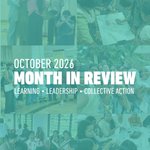
ALT Slide 1 – Cover: A teal-tinted collage of photographs showing participants engaging in workshops, group discussions, creative activities and community gatherings. White text reads “October 2026 Month in Review: Learning • Leadership • Collective Action.”

ALT Slide 2 – SELF Refresher: Text slide titled “Questioning Norms, Claiming Agency.” Highlights CREA’s SELF follow-up in Jaipur, Rajasthan, held on 2–3 October 2026, where young participants explored gender-based discrimination, violence, caste, media stereotypes and menstrual stigma through collective reflection.

ALT Slide 3 – SELF Photographs: Two photographs from the SELF refresher in Jaipur. The top image shows young women seated around a table in discussion, while the bottom shows participants standing together outdoors. Text reads “SELF | Questioning Norms, Claiming Agency.”

ALT Slide 4 – SGRI Hindi: Text slide titled “Reimagining Rights & Sexuality.” Describes CREA’s five-day Sexuality, Gender and Rights Institute, held in New Delhi from 5–9 October 2026, bringing together women leaders, activists and practitioners to explore sexuality, gender, caste, disability, transgender rights and sex work through feminist learning.

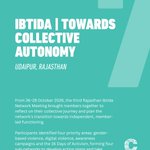
ALT Slide 13 – Ibtida Network: Text slide titled “Towards Collective Autonomy.” Highlights the third Rajasthan Ibtida Network Meeting, held in Udaipur from 26–28 October 2026, where members discussed independent, member-led functioning and established four priority areas covering gender-based violence, digital violence, awareness campaigns and the 16 Days of Activism.

ALT Slide 14 – Ibtida Photographs: Two photographs from the Rajasthan Ibtida Network Meeting. The top shows women seated around a table collaborating on a written activity, while the bottom shows participants presenting their discussion beside a flip chart covered with handwritten notes. Text reads “Ibtida | Towards Collective Autonomy.”

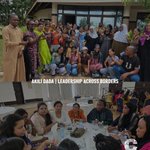
ALT Slide 15 – Azadeh Akhlaghi: Text slide titled “Art, Memory & Resistance.” Describes CREA’s 28 October session in New Delhi with Iranian photographer and filmmaker Azadeh Akhlaghi and Mass Communication students from Jamia Millia Islamia, moderated by Sabeena Gadihoke. The conversation explored photography, historical memory, political resistance and visual storytelling.

ALT Slide 16 – Azadeh Akhlaghi Photographs: Two photographs from the session with Azadeh Akhlaghi. The top shows three women seated in conversation against a backdrop of colourful patterned textiles. The bottom shows an audience of students and participants smiling and listening attentively. Text reads “Azadeh Akhlaghi | Art, Memory & Resistance.”

ALT Slide 17 – Global Feminist Leadership Programme: Text slide titled “Leading Differently, Together.” Announces the launch of the Global Feminist Leadership Programme on 1 October 2026 by CREA, Soul City Institute for Social Justice and IPPF. The 12-month online programme brings together 26 leaders from 21 countries to explore feminist leadership, organisational transformation, digital rights and movement building.

ALT Slide 18 – Closing: Closing text slide reading “October at CREA, in one word: Possibility.” Reflects on a month of questioning established norms, nurturing feminist leadership, reimagining justice and building connections across borders through shared learning and collective action. Ends with “See you next month.”

ALT A colourful faculty feature graphic for Possible AIs: Institute for Speculative Technologies, organised by CREA and Digital Narratives Studio. Large black pixel-style text reads “Faculty Feature” against overlapping pink, teal and light blue speech bubbles. The Institute dates, 19–26 January 2027, and location, Bangkok, Thailand, appear above a row of six black-and-white faculty portraits.

ALT A faculty feature introducing Nishant Shah, academic, researcher and digital culture scholar. He is an Associate Professor at The Chinese University of Hong Kong and Director of the Digital Narratives Studio. His work connects research, teaching, feminist digital justice and collective action. His smiling portrait, wearing glasses and a dark blazer, appears beside a teal speech bubble containing his biography on a pink background.

ALT A faculty feature introducing Leni Velasco, feminist activist, movement builder and narrative change strategist. Her work spans human rights, democracy, arts, culture and technology. She is the Steward Anchor of the Narrative Convergence Network and co-leads the Generative AI Network (GAIN). Her portrait appears in the lower right alongside a teal speech bubble containing her biography against a pink background.

ALT A faculty feature introducing Maya Indira Ganesh, researcher, AI ethics scholar and feminist technologist. She is an Assistant Research Professor and Associate Director at the Leverhulme Centre for the Future of Intelligence, University of Cambridge. Her work examines AI through feminist and decolonial perspectives. Her smiling portrait, wearing a colourful patterned jacket and yellow earrings, appears beside her biography on a pink and teal background.

ALT A faculty feature introducing Prarthana Mitra, creative practitioner and digital rights researcher based in New Delhi. Their work explores emerging technologies through queer-feminist, decolonial and tech-critical frameworks, focusing on alternative technological futures and creative agency in the AI era. Their smiling portrait, wearing glasses and a patterned shirt, appears beside a teal speech bubble against a pink background.

ALT A faculty feature introducing Geci Karuri-Sebina, scholar, digital governance researcher and futures strategist. She is an Associate Professor at the University of the Witwatersrand and ICESCO Chair on Innovation and Futures in Africa. Her work focuses on digital governance and the sociotechnical implications of AI in the Global South. Her portrait, featuring glasses, a patterned headwrap and a beaded necklace, appears against a pink and teal background.

ALT A faculty feature introducing Noopur Raval, feminist educator, researcher and technology scholar. She is an Assistant Professor of Information Studies at the University of California. Her work examines emerging technologies, gig workers, AI in the Global South, and AI in learning and teaching. Her portrait, wearing a denim jacket and white shirt, appears beside a teal speech bubble containing her biography on a pink background.

ALT A faculty feature introducing Sam Chua, cultural entrepreneur, researcher and futures curator. He is the founding curator of Seapunk Studios, a research-and-imagination collective exploring solarpunk ideas for Southeast Asia and the Global South. His work examines strategy, systems, curiosity, care and civilizational change. His portrait, wearing a light blue patterned shirt, appears beside his biography on a pink and teal background.

ALT Slide 1: A blue and purple graphic introducing Nisha, a Roshni Community Leader from Patna, Bihar. A black-and-white portrait of Nisha with her arms crossed appears on the right, outlined in yellow. The text reads, “She calls herself ‘Natural Nisha’, a leader born from her community.” A quote highlights her belief that real change comes from many voices rising together through collective action.

ALT Slide 2: Nisha is pictured working on a laptop, wearing a green kurta and patterned scarf. Against a blue background, a purple text box describes how, after Class 10, Nisha witnessed her friends dropping out of school while balancing her own studies and family responsibilities. These experiences motivated her to work towards change in her community. White illustrations of connected people symbolise collective action.

ALT Slide 3: A photograph shows Nisha addressing a group of women and children outdoors, with several young women standing alongside her. The text describes her Roshni Community Leader Action Project, through which she organised a Nukkad Natak demanding a health centre and community meetings addressing early marriage and school dropouts. Her work brings community members together to collectively advocate for their rights.

ALT Slide 4: A blue and purple collage featuring two photographs of Nisha's community work. The first shows her facilitating an awareness session with women seated indoors, while the second shows her standing outdoors with three young women. The text explains that Nisha's project focused on adolescent girls' education and health through awareness and counselling sessions. She collaborated with PRI members, Panchayat Pradhans, teachers, ASHA workers and NGO representatives. Her efforts helped 15–20 families and 90 community members develop greater awareness of gender equality, education and health.

ALT 1. Cover slide with the title “Who Feeds AI?” in large white pixelated text against a teal gradient background featuring circuit board patterns. A white robotic hand extends from the left, palm facing upwards, with the CREA logo at the bottom right.

ALT 2. Slide titled “The Work We Don’t See,” featuring a photograph of hands typing on a laptop. Text explains that AI does not train itself. Human workers label data, review responses, identify harmful content and correct mistakes. Their essential contributions often remain invisible in conversations about technological progress.

ALT 5. Quote slide featuring a teal circuit board background and a robotic hand. Large white pixelated text reads, “The responsibility for the treatment of these workers needs to be laid at the feet of Big Tech.” The quote is attributed to Karri Lybeck, tech industry trade union adviser and organiser, as quoted by SOMO in 2026.

ALT 7. Call-to-action slide with a teal circuit board background, titled “Want to Explore These Questions Further?” Text introduces CREA’s Possible AIs Institute, which brings together activists, researchers and practitioners to examine AI, power, rights and justice. A QR code and “Apply Now” prompt appear beneath the text, with the CREA logo at the bottom right.

ALT Blue graphic titled “Let’s Demystify AI!” The text explains that participants will explore how artificial intelligence works, trace its histories and examine how power, politics and social structures shape technology.

ALT Pink graphic titled “Who Gets to Shape AI?” The text highlights how AI can reproduce inequalities and create new forms of discrimination and violence. Participants will examine AI through feminist and queer perspectives, exploring gender, sexuality, identity, rights and whose voices are excluded from its development.

ALT Blue graphic titled “What’s Behind the Screen?” The text encourages participants to look beyond AI applications and outputs to critically examine the processes, structures, interests and wider social implications behind AI technologies.

ALT Pink graphic titled “What If We Built AIs Differently?” The text introduces collective dialogue, reflective co-creation and critical thinking as ways to imagine alternative technologies grounded in feminist values, justice and collective wellbeing.
ALT Graphic announcing applications for CREA and Digital Narratives Studio’s “Possible AIs: Institute for Speculative Technologies,” taking place 19–26 January 2027 in Bangkok, Thailand. Application deadline is 30 October 2026. A QR code to apply appears at the bottom.

ALT CREA carousel introducing Deepa, a Roshni Community Leader from Lakhisarai. A black-and-white portrait of Deepa appears against a blue background with yellow butterfly illustrations and purple accents. Text introduces her as “Multitasker Deepa” and describes her as someone breaking barriers and building women’s leadership in her community.

ALT Photograph of Deepa smiling while facilitating an activity, set against a blue and purple background with butterfly illustrations. Text describes how she overcame social criticism and challenges growing up in a marginalized community, transforming her experiences into a determination to bring change to her village.

ALT Deepa stands in front of a blackboard, addressing a group of girls and women seated in a classroom. Text highlights her Roshni Community Leader Action Project, which addresses girls’ school dropouts caused by a lack of science teachers and inadequate sanitation. She raised these concerns on Mann Ki Baat and mobilized parents, schools and girls to advocate for their rights.

ALT Two photographs show Deepa with groups of girls and women, including one of six young people standing outdoors with raised fists. Against a blue and purple background, text explains how her project supported safe toilets and a community library in two villages in Gopalpur. It directly benefited 95 school dropout girls through awareness, counselling and re-enrolment support, engaged 25 stakeholders and reached 20–25 families.

ALT Five speakers seated on stage at the FON Bangladesh event, with FON and AFD branding displayed behind them.

ALT A speaker in a bright pink outfit presents from a podium at the FON Bangladesh event.

ALT Screenshot of a bdnews24.com article titled “FON project wraps up as stakeholders urge sustained support for feminist organisations,” with CREA, FON and AFD branding.

ALT Participants seated around tables listen and applaud during the gathering.

ALT Graphic announcing CREA’s participation at the SVRI Forum 2026 in Bangkok, Thailand. The text reads, “We are heading to Bangkok for the SVRI Forum 2026!” followed by “CREA” and “Join us!” The design features the SVRI Forum and CREA logos, with colourful floral illustrations and geometric motifs in CREA’s pink, blue and orange palette.