







Pinned Tweet
🌍412,000 people directly at risk of radicalisation. 22 countries. 70 active programmes.
Returnees rebuilding their lives. Youth choosing opportunity over violence. Communities resolving conflicts through dialogue.
That's community-led prevention in 2025.
The evidence is clear that it works. The question is whether its scale will ever match the scale of the threat.
💐We are grateful to @EU_FPI for its support in making this report possible. To our donors, partners, civil society organisations, and the communities on the frontlines - thank you for your support and commitment.
👉Rooted in Communities — GCERF's Annual Report 2025 → gcerf.org/annualreport2025?u……
@stefanomanservi @GCERF_ED @AusAmbCT @DanishMFA @EU_Commission @EU_FPI @Ulkoministerio @francediplo_EN @GermanyDiplo @AA_stabilisiert @ItalyMFA @MFA_Lu @cooperation_lu @DutchMFA @MFATNZ @NorwayMFA @SweMFA @SwissMFA @FCDOGovUK @CenterCve
@Daniel_Frank @Lejdi_Dervishi

👉What makes reintegration sustainable? The answer goes beyond security.
🤝Our new report brings together research, field experience and practitioner insights to strengthen the integration of Mental Health and Psychosocial Support (MHPSS) into rehabilitation and reintegration programming.
It draws on insights from GCERF’s Community of Practice Seminar, conducted in collaboration with the Instituti i Psikologjisë, @Rektorati and @UNPeacebuilding in June 2026, and is also part of a series of R&R-focused events organised by GCERF, with contributions from practitioners across Iraq, Mali, Kenya, Kosovo and Kyrgyzstan.
💐Our sincere thanks to the authors, Prof. Dr. Aliriza Arënliu, Asst. Dr. Linda Hoxha, MA Diadora Cërmjani from the University of Prishtina Instituti i Psikologjisë and Prof. Dr. Stevan Weine from the University of Illinois Chicago, for their expertise and valuable contributions. We also thank the speakers at the June event for their contributions.
MHPSS is not a secondary consideration. It is central to sustainable reintegration.
Read the report here : gcerf.org/wp-content/uploads…
@Rektorati @UNPeacebuilding
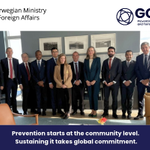
🌍 Prevention starts at the community level. Sustaining it takes global commitment.
For over a decade, the Global Community Engagement and Resilience Fund (GCERF) has invested in locally led efforts to strengthen community resilience, rebuild trust between communities and institutions, and address the conditions that can lead to violent extremism.
As conflicts intensify and international cooperation and development resources face growing pressure, prevention must remain a priority.
📍On 21 October in New York, GCERF and @NorwayUN brought together Permanent Representatives and senior partners for Renewing Prevention: A High-Level Conversation on Investing in Peace, Resilience and Prevention.
👉 The lunch marks the launch of GCERF’s Third Replenishment, leading to a high-level pledging conference in 2027. It is an opportunity to renew political commitment, strengthen partnerships and mobilise sustained investment in locally led prevention.
Investing in communities today helps build a safer, more peaceful future for us all.
@NorwayUN @NorwayMFA @AuswaertigesAmt @EU_Commission @MofaQatar_EN @MinBZ @MofaJapan_en @KSAmofaEN @GCERF_ED @stefanomanservi


🤝 Strong partnerships are key to sustainable reintegration and resilient communities
On 29–30 September, GCERF Regional Manager for Central Asia, Mr. Gianluigi Lopes, visited Uzbekistan to strengthen cooperation with government institutions, international partners and civil society organisations working to advance reintegration and social inclusion.
👉 Meetings with the @EU_Tashkent, diplomatic representatives from @UKinUzbekistan, the embassies of France and Switzerland, as well as @giz_gmbh and @UNmigration focused on progress under GCERF’s EU-funded Prosecution, Rehabilitation and Reintegration (PRR) programme and opportunities for future collaboration.
🌱 Engagement with our national partner, the Institute for Strategic and Regional Studies (ISRS), and grantees - the Republican Center for Social Adaptation of Children, Barqaror Hayot and @Istiqbolliavlod - focused on achievements in providing ongoing support for vulnerable communities, including repatriated women and children, labour migrants and their families.
Together, GCERF and its partners continue working towards more inclusive, coordinated approaches to sustainable reintegration and stronger community resilience across Uzbekistan.
@EU_Tashkent, @UKinUzbekistan, @giz_gmbh, @UNmigration, @Istiqbolliavlod


📍 Strengthening Partnerships and Community Resilience in Kyrgyzstan
From 5–9 October, GCERF’s Regional Manager for Central Asia, Mr. Gianluigi Lopes, visited Kyrgyzstan to engage with government institutions, international partners and local actors working to prevent violent extremism and strengthen community resilience.
During the visit, meetings with government counterparts, the @EUinKyrgyzstan, @franceaukg, the embassies of Germany and Japan in Kyrgyzstan, the @ICRC, and Local Task Forces (LTFs) focused on ongoing and planned activities, progress and challenges, and opportunities to strengthen future cooperation.
👉 Strong partnerships and local leadership are essential to building resilient communities, strengthening social cohesion and supporting sustainable efforts to prevent violent extremism.
By connecting international cooperation with locally led action, GCERF and its partners are helping communities in Kyrgyzstan build resilience and create opportunities for a more peaceful future.
@EUinKyrgyzstan @franceaukg @ICRC


🤝 Connecting with the peacebuilding community at the #GenevaPeaceForum
On 13 October, GCERF took part in the Peacebuilding Marketplace at the Geneva Peace Forum, sharing our work and exchanging ideas with participants from across the field.
We extend our sincere thanks to the organisers of #GPF26 for creating this valuable space for dialogue, exchange and collaboration across the peacebuilding community.
💐 A warm thank you to everyone who visited our stand and engaged with us. We look forward to continuing these conversations and strengthening collaboration to prevent violent extremism and build more resilient communities.
@CICG_Geneva @Geneve_int


🕊️ From conflict to reintegration: why must mental health be part of the peacebuilding process at every stage?
To mark World Mental Health Day, GCERF, together with the @BerghofFnd, @Interpeace_Org, @MaandeeqMentalH and @UNDP, brought together peacebuilders and mental health professionals to discuss Connecting Mental Health and Peacebuilding Across the Conflict Cycle.
💬 As Dr. Linda Hoxha, Teaching Assistant at the Department of Psychology, Instituti i Psikologjisë at the University of Prishtina, Kosovo reminded us: “Return is not the end of the crisis, it is the beginning of a much longer process.”
Reintegration requires more than returning home. It means addressing the lasting psychosocial impacts of conflict and supporting people as they rebuild their lives and relationships.
GCERF’s Deputy Executive Director, Lilla Schumicky-Logan, also highlighted the link between young people’s mental health and radicalisation, particularly online:
💬 “What we are seeing today across the world is that the mental health of young people has an incredible effect in radicalisation, especially when it comes to online settings.”
The discussion reinforced a central message: Mental health and psychosocial support (MHPSS) must be integrated into peacebuilding across the conflict cycle, with people’s lived experiences shaping the approaches and policies that affect them.
💐 Thank you to all speakers, including Mohammed Ali from Resonate! Yemen and Jeyana Ahmed from Salam for Hope Foundation for sharing their insights, and to all participants for contributing to this important exchange.
👉 Sustainable peace must address not only violence itself, but also its lasting impact on people and communities.
@UniPrishtina @ResonateYemen @BerghofFnd @Interpeace_Org @MaandeeqMentalH @UNDP


💡If reintegration is lived at the community level - why do so many approaches still overlook it?
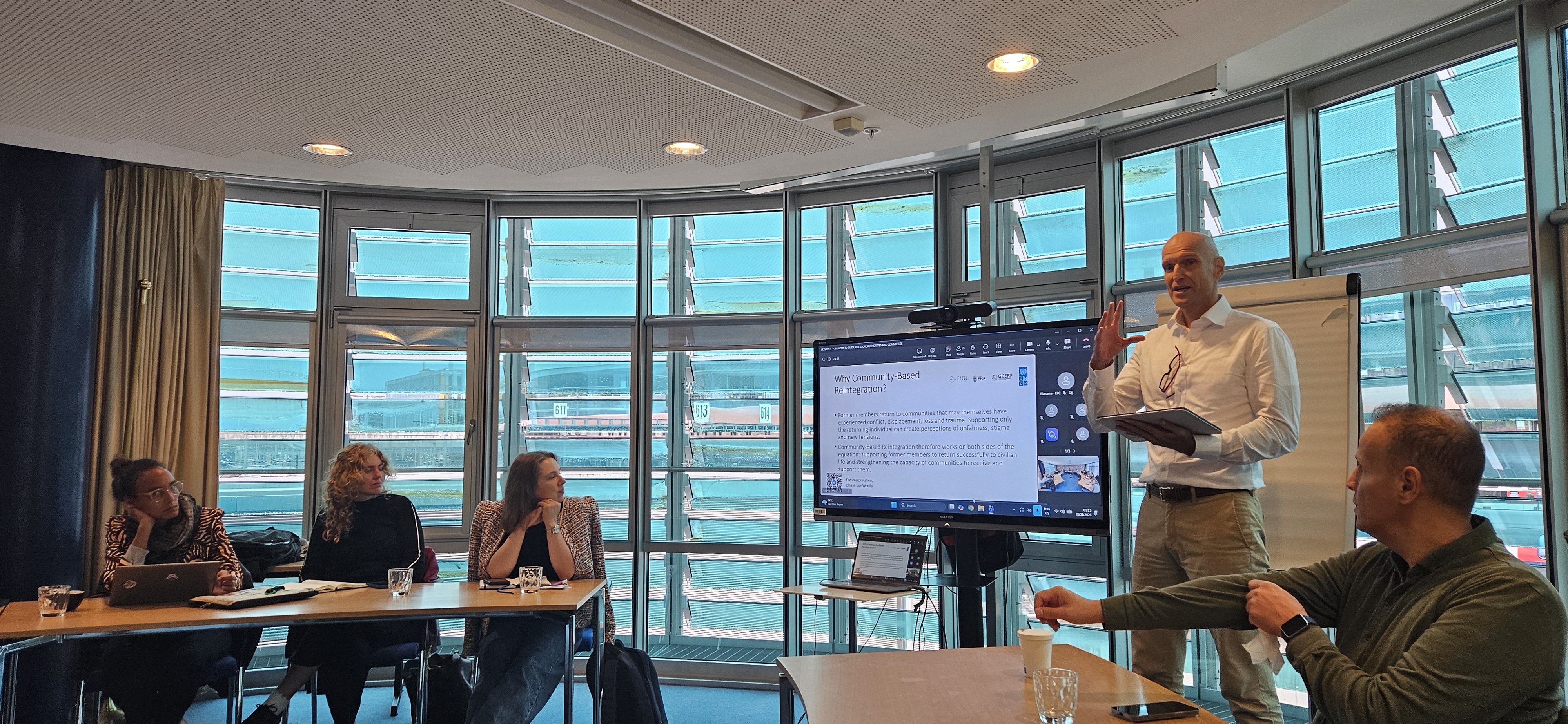
Yesterday morning in Geneva, the Community-Based Reintegration (CBR) Core Group, composed of GCERF, @ElmanPeaceHRC, @FBAFolke and @UNDP, which has been working on the topic for the last few years, gathered for two sessions on community-based reintegration in conflict settings.
Drawing from the A Guidance Note on Community-Based Reintegration launched in 2024, we presented two complementary resources developed by the Community-Based Reintegration Core Group, and built specifically to put local leadership, participation, and accountability at the centre of reintegration practice:
📗 A How-To Guide for Local Authorities and Community Committees
📘The CBR measurement tool
👉 Read the full Guidance Note here: gcerf.org/wp-content/uploads…
These are not theoretical frameworks. They are practical, adaptable tools, designed for use in low-resource and conflict-affected settings, and developed through extensive consultations with practitioners and experts on the ground.
The session on the How-to guide was joined by guest speakers from @TheGCSP and @Interpeace_Org, whom we thank for their valuable insights.
💐 A sincere thank you to all speakers for a fruitful and thought-provoking exchange - and to all participants for their engagement and interest in advancing this critical work.
@Geneve_int @EU_Commission @EU_FPI @CenterCve
@dfat @AMC_corporatif @GAC_Corporate @francediplo @DanishMFA @ItalyMFA @Utrikesdep @MFA_Lu @AuswaertigesAmt @NorwayMFA @MofaQatar_EN @SwissMFA @GCERF_ED @stefanomanservi


💡 How can policymakers respond when climate pressures increase the risks associated with violent extremism?
At the #BCSC2026, Germany’s Federal Minister for Foreign Affairs, H.E. Dr @AussenMinDE, referenced the Nairobi Toolkit on the Climate-Security Nexus in his keynote address.
📄 The Toolkit helps governments, civil society and practitioners understand how climate-related pressures interact with local grievances, insecurity and violent extremism, and identify key recommendations for policy and practice on how to address the nexus.
It draws on two years of research, seven expert workshops and consultations across the climate, development and security sectors.
The Toolkit was developed through @theGCTF Initiative on Addressing the Nexus Between Climate Change and Violent Extremism, co-led by @AuswaertigesAmt and @GovtOfKenya, with GCERF as implementing partner.
The next step is the implementation of the toolkit at both the programmatic and policy levels. For that, GCERF counts on the support of its partners and stakeholders.
It is time to transform a challenge into an opportunity for prevention and peace.
👉 Read the Full Speech of H.E. Dr @AussenMinDE here: auswaertiges-amt.de/en/newsr…
@AuswaertigesAmt @GovtOfKenya @NCTC_Kenya @theGCTF @AndreAR1025 @PalazzoloKatya @stefanomanservi

🌍 Climate change is not only an environmental challenge. It is reshaping the conditions in which armed groups recruit, operate, and sustain themselves
At the #BCSC2026, GCERF, @adelphi_berlin, and @UNIDIR convened a side event exploring climate-induced fragility in areas affected by violent extremism and terrorism, moderated by @AndreAR1025, GCERF's Head of Performance and Impact Unit.
Three key insights emerged:
🔹 Prevention must be forward-looking. Anticipating vulnerabilities before they escalate is essential to preventing climate-related pressures from fueling instability and violent extremism.
🔹 The links run in both ways. Climate shocks can undermine livelihoods and trust - creating openings these groups may exploit. At the same time, P/CVE and climate responses can unintentionally deepen environmental pressures and grievances.
🔹 Climate sensitivity must become part of how we work. P/CVE approaches must integrate climate realities into prevention, peacebuilding, rehabilitation and reintegration efforts.
👉 One message stood out: Supporting civil society is necessary and the most effective way to address the nexus between climate and security – including violent extremism, and we should embrace focused and localised approaches.
💐 Our sincere thanks to speakers Siobhan O'Neil, Aisha Omar, @kasinganeti_t and @LRuettinger for an open, thoughtful and highly insightful discussion - and to the organisers of the Berlin Climate and Security Conference for bringing together such a diverse community to advance this critical dialogue.
🌱 The climate-security nexus is not a future challenge. It is already shaping the realities in which peace, security and prevention must operate.
@AuswaertigesAmt @adelphi_berlin @UNIDIR @ClimateDiplo @stefanomanservi


🤝 Strengthening Regional Collaboration to Prevent Violent Extremism
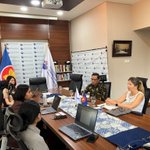
GCERF’s Deputy Executive Director Lilla Schumicky-Logan and National Advisor Mohamad Rizki Maulana met with Faby Isaura Baus and colleagues from the @ASEAN_IPR to explore opportunities for closer collaboration in preventing online radicalisation, research and advocacy.
ASEAN’s regional institution dedicated to peace, reconciliation, conflict management and conflict resolution, plays an important role in advancing regional research, strengthening knowledge and expertise, and fostering cooperation among stakeholders across Southeast Asia.
👉 The discussions identified several areas of shared interest and potential synergies, particularly in addressing emerging forms of violent extremism and strengthening evidence-based prevention approaches.
Building on these common priorities, GCERF and ASEAN-IPR look forward to working more closely together in the coming months, combining regional expertise, research and practical experience to advance effective and sustainable approaches to preventing violent extremism.
🌏 Together, we can strengthen regional cooperation and contribute to a more peaceful and resilient ASEAN
@ASEAN_IPR


🤝 Strengthening partnerships to prevent violent extremism in Indonesia
From national policy to community-level action, effective prevention relies on strong partnerships. GCERF is working closely with Indonesia’s National Counter Terrorism Agency - @BNPTRI, Counterterrorism Special Detachment 88 (Densus 88), to support efforts to prevent and counter violent extremism in line with National Action Plan for the Prevention and Countermeasures of Violent Extremism Leading to Terrorism (RAN PE).
💡 Through its investments in Indonesia, GCERF supports initiatives addressing radicalisation both online and offline, including the rehabilitation and reintegration of individuals formerly affiliated with domestic terrorist groups. Working alongside national institutions and local civil society organisations, these efforts aim to strengthen prevention, build resilience and support sustainable reintegration.
During engagements with BNPT and Densus 88, EU representatives Ms Maria Rosa Sabbatelli and Mr Frank Geens, Counter-Terrorism Specialist, discussed GCERF’s contribution to Indonesia’s prevention agenda and opportunities to strengthen cooperation further.
💐 GCERF is particularly grateful to the European Union’s Service for Foreign Policy Instruments - @EU_FPI for its dedicated contribution of EUR 500,000 towards preventing composite violent extremism in Indonesia.
🕊️ By bringing together government leadership, operational expertise, international partnerships and community-led initiatives, we are working towards a safer, more resilient and peaceful Indonesia.
@EU_Commission @EU_FPI @uni_eropa @BNPTRI


🌍 Engaging the Private Sector for Global Resilience
On the margins of #UNGA81 in New York, GCERF and Stryk Global Diplomacy were delighted to co-host a reception on the vital role of the private sector in advancing safety, security, and resilience.
As our Executive Director @GCERF_ED put it: "Private investment will play an increasingly important role in the economic and social prospects of emerging yet conflict-affected countries."
👉 Founded as a public-private partnership, GCERF remains committed to investing in people and partnerships at the local level. Thank you to Stryk Global Diplomacy and everyone who joined the conversation.
@nolairfan @stefanomanservi @GCERF_ED

📍 Visiting Bogor, Indonesia
EU Head of Unit Ms Maria-Rosa Sabbatelli and EU Counter-Terrorism Expert to ASEAN Mr Frank Geens, together with GCERF's Deputy Executive Director Lilla Schumicky-Logan and National Advisor Mohamad Rizki, visited a GCERF-funded Digital Literacy and Critical Thinking Skills training for vulnerable youth, led by the @wahidfoundation.
During the visit, the delegation observed first-hand how participants are building practical skills to:
✅ Recognise and question harmful narratives, disinformation and extremist propaganda
✅ Think critically about the content they consume and share
✅ Engage safely, responsibly and constructively in online spaces
✅ Become positive voices and peer influencers within their communities
As school shootings, online radicalisation and composite violent extremism-related violence involving minors become growing concerns in Indonesia, investing in prevention and resilience is more important than ever.
👉 By equipping young people with the ability to question things constructively and critically, GCERF is contributing to an engaged, pluralist and peaceful next generation in Indonesia.
@wahidfoundation @EU_Commission @EU_FPI @pmwBxl


🤝 GCERF's Deputy Executive Director Lilla Schumicky-Logan met with @iijmalta colleagues in Malta, including Naoufel Gaied, Executive Secretary, and Julien Loty, Programme Manager, to discuss strengthening collaboration between GCERF and IIJ.
👉 As fellow GCTF-inspired institutions, GCERF and IIJ bring complementary expertise that can help advance work across prosecution, rehabilitation and reintegration (PRR), as well as preventing violent extremism, including through engagement in prison settings.
Both organisations reaffirmed their commitment to strong and sustained cooperation beyond the current EU PRR programme, and to making full use of each other’s complementary expertise and experience.
💐 We look forward to deepening this partnership and identifying further opportunities to work together in support of effective, rights-respecting approaches to preventing and responding to violent extremism.
@iijmalta @iijmalta_intl

💬 Join the Conversation: Connecting Mental Health and Peacebuilding Across the Conflict Cycle
👉 Mental health and peacebuilding are deeply connected - but too often, they are addressed separately.
🤝 To mark World Mental Health Day, the @BerghofFnd, together with GCERF, @Interpeace_Org, @MaandeeqMentalH and @UNDP, is bringing together peacebuilders and mental health professionals with first-hand experience of conflict and its aftermath.
Hear directly from practitioners and experts working across different contexts, including Somalia, Rwanda, Syria, Kosovo and Yemen:
🔹 Frank Kayitare, Country Representative, Interpeace, Rwanda
🔹 Jeyana Ahmed, Programme Manager, Salam for Hope Foundation, Syria
🔹 Dr. Linda Hoxha, Teaching Assistant, Department of Psychology, Institute of Psychology, University of Prishtina, Kosovo
🔹 Mohammed Ali, Senior Project Manager, Resonate! Yemen
🔹 Mohamud Hasan Abdi, Project Manager, Sub-Saharan Africa Unit, Berghof Foundation, Somalia Office
🔹 Nika Saeedi, Global Lead on Mental Health and Psychosocial Support, Crisis Bureau, UNDP
🔹 Rowda Olad, Executive Director, Maandeeq Mental health Centre & Peace institute
🎙️ Welcome remarks: Nomfundo Mogapi, Clinical Psychologist and CEO, Centre for Mental Wellness and Leadership
🎙️ Moderator: Stefanie Gaumert, Advisor MHPSS and Peace, Berghof Foundation
Join the conversation to explore how mental health and psychosocial support (MHPSS) and peacebuilding can reinforce one another - from conflict transformation and recovery to reintegration and the prevention of renewed violence.
📅 8 October 2026
🕠 17:30–19:00 CEST
💻 Virtual | Zoom
🔗 Register here: us02web.zoom.us/webinar/regi…
@UniPrishtina @ResonateYemen @BerghofFnd @Interpeace_Org @MaandeeqMentalH @UNDP

🌱 A new step for rehabilitation and reintegration in Burkina Faso
On 23rd September, the "Reconstruire" Project officially launched its activities at the High-Security Prison in Burkina Faso, marking GCERF’s first investment in prison-based rehabilitation and reintegration programming in the country.
As part of GCERF’s work on Rehabilitation and Reintegration (R&R), the project will pilot a context-sensitive approach combining screening, engagement with religious leaders, psychosocial support, and vocational training to support rehabilitation and future reintegration.
🤝 The launch brought together prison authorities and key institutional stakeholders, including a representative of the Minister of Justice and the Director General of the Prison Administration, which was key to creating the conditions for this initiative to move forward.
💐 We thank @MFA_Lu and the @NorwayMFA for their continued support, as well as the members of the Country Support Mechanism (CSM) for their participation and engagement in this important milestone.
👉 This lays the foundation for continued collaboration to strengthen rehabilitation and reintegration approaches in Burkina Faso.
@UnijedAfrique @UFCDori


