

India’s finest magazine of politics and culture. @thecaravanhindi: https://xitter.cf/t.co/QdFgOOw57j
New Delhi
Joined October 2009
- Tweets114K
- Following266
- Followers407K
- Likes1.7K








Pinned Tweet
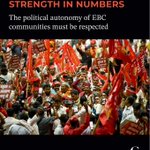
The November issue—Air Pollution is not just just a Delhi problem; Testimonies of police violence at the anti-SIR protests; India-China relations are now shaped entirely on Beijing's terms; The political autonomy of EBCs must be respected; The legends that formed around Jagdish Mahato; and more.
Read now: caravanmagazine.in/magazine
The November 2026 issue is now available online for all subscribers. If you are a subscriber and unable to log in to our website, please write to subscriptions@caravanmagazine.in
Print copies of the issue will be delivered to print subscribers and rolled out to newsstands over the next two weeks, depending on location. Copies will also be available for purchase on Amazon from November 10th.
The Caravan is able to publish journalism like this thanks to the support of our subscribers. To help us continue doing this work, subscribe today: caravanmagazine.in/subscribe
Or contribute: caravanmagazine.in/contribut…

Archvies | In 1984, the deployment of the army was deliberately delayed and the police refused to act while senior Congressmen such as #KamalNath, HKL Bhagat, Jagdish Tytler and Sajjan Kumar led mobs that murdered the Sikhs and pillaged their belongings.
Read Hartosh Singh Bal's essay from April 2016: caravanmagazine.in/vantage/w… #Congress

899
Archives | For many years, survivors, witnesses and observers have suspected that the violence was orchestrated by the highest echelons of the Congress party. Cases have been brought against some Congress leaders—notably Sajjan Kumar and Jagdish Tytler—but so far no senior politician or police officer has been sentenced.
Fresh evidence that figures in this piece suggests the orders for the violence came from the member of parliament Arun Nehru, a cousin and confidante of Indira Gandhi’s son and successor Rajiv. While this evidence is indirect testimony, it is strengthened by a considerable amount of circumstantial evidence available in the Misra and Nanavati reports. It also suggests that the conspiracy that led to the organised violence and the disjuncture between the commissions’ records and their findings are not two separate aspects of the tragedy—one followed from the other.
From October 2014, read Hartosh Singh Bal's (@HartoshSinghBal) report on How nine official inquiries obscured the truth of the 1984 anti-Sikh violence: caravanmagazine.in/reportage…

Archives | By providing legitimacy to the tenets of Hindutva, Indira and Rajiv paved the way for the Hindu Right to capture Indian politics.
Qurban Ali writes:
🔗caravanmagazine.in/politics/…

Archives | The ABVP constitution, written in 1949 by the RSS ideologue Eknath Ranade, states “that this is an organisation for the glory of the country.” Once, he said, the country—“Bharat”—was a “vishwa guru,” a teacher for the world. It used to be said, he continued, that the country was very rich, that rivers of milk flowed through it—“yahan doodh ki nadiyan beheti thi”—and that it was a golden bird—“Bharat ek sone ki chidiya thi.” He insisted that “these were not mere metaphors,” but literally true. The ABVP, Bhatia said, wants to bring back those “achhe din,” those good days. “The ABVP’s constitution talks about all this. Also, patriotism and a sense of social responsibility are missing in people today. We want to bring patriotism back.”
From 2017, @writetopd in: caravanmagazine.in/reportage…

The latest issue of The Caravan is here, with in-depth coverage of politics, culture, and more: caravanmagazine.in/magazine
Insightful, impactful journalism like this is made possible by your support. Subscribe now to support journalism that stands the test of time: caravanmagazine.in/subscribe

1,159
Limited Time Offer for the Discerning Reader!
Get 20% off on journalism that goes beyond the obvious. The necessary text for the critical reader.
Subscribe to The Caravan: caravanmagazine.in/subscribe

1
1,274
Contrarily, death holds significance in Master Saab at a collective and communitarian level. Taken together, the novellacompletes the arc of meaning, of life and death, within Mahasweta’s loose trilogy on Naxal themes, and it remains one of her best demonstrations of how literature and history strengthen each other.
Sharmila Purkayastha writes: caravanmagazine.in/literatur…

1
3
1,456
📷Children play football in the shallows at Versova beach on a monsoon evening. Their playground is part of a coastline increasingly being reshaped by the advancing coastal road network of Mumbai.
Fisherfolk who founded the city confront a coastal highway, a photo essay by Nicolò Brugnara: caravanmagazine.in/communiti…

Cover Story | A political blame game makes it easy to obscure the more sober and scientific understanding of pollution’s contributing factors. “India should stop viewing this as a local Delhi problem or a local Patna problem or a local Calcutta problem,” Veerabhadran Ramanathan, a US-based geoscientist, told me. He called it a “problem of the entire Indo-Gangetic Plain” that “affects probably close to 800 million people in the area.”
@akhileshhpandey reports: caravanmagazine.in/environme… #pollution

For EBCs, representation (the ability to secure a share of power) and recognition (as legitimate political groupings whose issues need to be taken seriously) have been distinct but connected questions in the post-Mandal era. Before the VP Singh government decided to implement the Mandal commission’s recommendations on OBC reservations, in 1990, the social bases of the Congress and the BJP in Uttar Pradesh were not as sharply different as they appear today.
@SunilKashyap0 writes: caravanmagazine.in/politics/…

Since 2024, the Modi government seems to have conceded the argument to China. This posture of weakness arguably earned Modi a brief visit by Xi Jinping to Delhi for the BRICS summit, during which the Chinese leader conspicuously skipped the official dinner. After the Xi–Modi meeting, the Chinese readout recorded Indian assurances about an independent foreign policy, unchanged positions on Taiwan and Tibet, and the prevention of anti-China activities on Indian territory. The Indian account contained no equivalent Chinese commitment addressing military cooperation with Pakistan or the Arunachal confrontation.
@SushantSin writes: caravanmagazine.in/politics/…

The Agnipath scheme was fundamentally an unprecedented gamble with the institutional integrity of the world’s second-largest standing army. For over a hundred and twenty years, the Indian military relied on this social contract: a soldier signed up for long-term service of fifteen to twenty years in exchange for a secure livelihood, comprehensive medical care, canteen facilities and, most importantly, a guaranteed pension. This system forged the regimental cohesion, soldierly pride and unit trust that transformed young people from diverse backgrounds into cohesive fighting units.
Agnipath shattered this covenant overnight.
@SushantSin writes: caravanmagazine.in/security/…

"We were not a truly autonomous body which can have its own language policy, education policy etcetera. To me, one of the most important issues was—Ladakh had so much potential to innovate, be very dynamic in reformation in education, and to be upright, away from corruption. All this was not possible because we had to walk with a state that was slow, in trouble, and that was corrupt. Ladakh has been very clean."
From 2019, Praveen Donthi interviews Sonam Wangchuk: caravanmagazine.in/politics/… #SonamWangchuck #Ladakh

Archives | Today, Nehru is understood, for better and for worse, as the architect of independent India. Rather than taking this moniker for granted, let us ask what it means.
Read @TaylorCSherman's notes from 2023, on what we talk about when we talk about Nehru:
caravanmagazine.in/history/n…

Having invested politically in One Rank One Pension, Modi found it difficult to mount an open assault on existing pension entitlements. Short-term recruitment offered another route to reduce future obligations by changing the terms for future soldiers.
The chief of the army staff at the time, General MM Naravane, resisted a full rollout and preferred a limited pilot project but was overruled by the prime minister’s office. The scheme was imposed against the wishes of the service chiefs, and anyone who dared criticise it, whether a veteran admiral or a school-leaving aspirant, was demonised by pro-establishment voices in the media.
@SushantSin writes: caravanmagazine.in/security/…

"The ideology put forth by my father, which is the thinking of the Maharashtra Andhashraddha Nirmoolan Samiti, is different from the atheist movements in other countries and India. Our thinking is based on the freedom of thought guaranteed by the Indian Constitution. Religion is a personal choice. But religion is viewed in different forms in our country."
Shiv Inder Singh, a freelance journalist and the editor-in-chief of the Punjabi portal Suhi Saver, spoke to Dabholkar’s son, Hamid, about the developments in the case, his father’s legacy and continuing the work of the MANS.
Read the full interview here: caravanmagazine.in/politics/…

Archives | How a PIL on the lack of cleanliness in the Indian railways exposed bureaucratic deadlock:
caravanmagazine.in/vantage/h…

Archives | Krishna’s defiance of the dharmic code from time to time makes him a cultural hero for many oppressed constituencies.
Perhaps for exactly the opposite reasons, Ram is the god of choice for the Sangh Parivar. In recent years, ardent chants of “Jai Shri Ram” have extended from the streets to the parliament and have been used to terrorise Muslims.
From 2021, Ram Shepherd Bheenaveni writes on the ethnic histories of Ram and Krishna: caravanmagazine.in/religion/…
Illustration By Osheen Siva

1,220
In 1937, Jawaharlal Nehru had been elected president of the Indian National Congress for the third time. But he was worried that the Indian people may begin to perceive his and the INC’s prominence as Caesarism—akin to the dictatorship of Roman Emperor Julius Caesar, a charismatic authoritarian leader whose rule was characterised by the cult of his personality.
Cognisant and cautious of the dangers of his own pride and position, he wrote an essay titled “Rashtrapati,” under the pseudonym Chanakya. The essay was published in 1937 in the Modern Review—a Calcutta-based monthly journal founded by Bengali thinker Ramananda Chatterjee in 1907. In it, “Chanakya” describes Nehru as “some triumphant Caesar passing by,” who might turn dictator with “a little twist.” By writing about himself in this manner, Nehru stressed the importance of questioning the motives of leaders, and checking the power they hold. Patriots, Poets and Prisoners is an anthology of essays published in the Modern Review between 1906 and 1947, that highlights the debates and issues surrounding the Indian freedom movement. Taken from the book, the following is an excerpt:
"The fascist face is a public face and it is not a pleasant face in public or private. Jawaharlal’s face as well as his voice are definitely private. There is no mistaking that even in a crowd, and his voice at public meetings is an intimate voice which seems to speak to individuals separately in a matter-of-fact homely way. One wonders as one hears it or sees that sensitive face what lies behind them, what thoughts and desires, what strange complexes and repressions, what passions suppressed and turned to energy, what longings which he dare not acknowledge even to himself."
Read the full text of Nehru’s essay here: caravanmagazine.in/vantage/w…

Today, Nehru is understood, for better and for worse, as the architect of independent India. From Nehru The Architect, it has been but a short step for some of his critics to imagine Nehru The Authoritarian. Nehru has often been accused of fostering a cult of personality. The development of such a personality involves elevating one man above others and imbuing his leadership with a mystical air. Nehru understood and, for the most part, accepted the limits of his own powers. He could handle a joke about himself and appeared to have little interest in stage-managing how he was represented. He declared he was “allergic” to having things bear his name. In 1957, when he was approached with the idea for a book of extracts from his speeches, titled “Nehru’s Wisdom,” he dismissed the title as “pompous.”
If Nehru demurred at the unthinking adoration that was often thrust at him, why, then, have we come to regard Nehru as the architect of independent India? It is a title that was bestowed upon him by his party. As he contemplated retirement in 1958, the Congress refused to let him resign, or even take a short sabbatical, telling him that the country could not do without his leadership. During his lifetime, Nehru tried to re-direct the will to iconise towards MK Gandhi. But after Nehru’s death in 1964, the former prime minister’s iconography proliferated. Coins and stamps bearing his image were issued, roads renamed, and an appeal for a fund that would support the Nehru Memorial Museum and Library was launched. In memorial meetings, leaders led crowds in pledging loyalty to Nehru’s ideas—a promise that would have been unthinkable while Nehru was alive. The Congress, first in statements, now in tweets, regularly lauds him as the architect of India, particularly every 14 November and 27 May—his birth and death anniversaries. Over the past six decades, this invocation has seemed strongest when the Congress’s leadership has suffered from self-doubt or from low public approval.
While the role of the Congress in fostering this myth is clear, other political parties, especially the ruling Bharatiya Janata Party, have also played a part.
Read @TaylorCSherman's notes from 2023, on what we talk about when we talk about Nehru:
caravanmagazine.in/history/n…
