

Atacama, Chile
Joined February 2024
- Tweets188
- Following586
- Followers1.1K
- Likes493
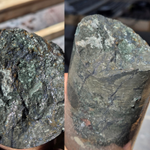
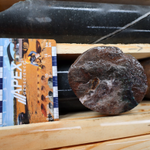
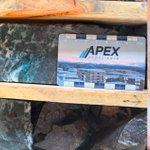
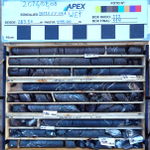


Super Copper logs visible copper in all four initial drill holes of Cordillera Cobre Maiden Program
Read more: supercopper.com/news-media/s…

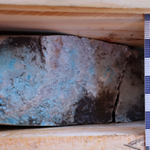
ALT DH26CC-003, 272.2–275.2 m, selected core face with blue-green material consistent with chrysocolla. Visual observations only; assays pending.
DH26CC-003, 116.3–118.8 m, calcite veinlet in dacite logged with covellite, cuprite, chrysocolla and native copper. Visual observations only; assays pending.


Copper mines move huge volumes of water and reagents.
Today we announce CUPRIX, our shot at a better answer. CUPRIX is a biopolymer in development that pulls a recoverable solid out of copper solution and leaves cleaner water behind.
Read more: supercopper.com/news-media/s… $CUPR.CN $CUPPF
This week, Andrés Encina, Country Manager for Super Copper, participated in the Mining Exploration Roundtable, convened by Chile's Ministry of Mining.
The roundtable brings government and industry together to accelerate new project development, strengthen investment and advance measures that support the discovery of new deposits in Chile.
We're pleased to be part of this dialogue as we advance our copper projects.


We are pleased to announce that phase 2 geophysics at the Castilla Copper Project has commenced.
Read now: supercopper.com/news-media/s… $CUPR.CN
Super Copper Corp. retweeted

Copper hit a new all-time high today.
The common rationale is AI, electrification, grids, and defense. That’s all true.
But the more interesting copper story is happening much further upstream.
The world doesn’t just need more copper. It is getting progressively harder to produce the copper we already have.
Consider BHP's Escondida, one of the world's largest copper mines. In the first nine months of FY2026, BHP mined a record amount of material and achieved record concentrator throughput, yet copper production still fell 3%, primarily because concentrator feed grade declined from 1.05% to 0.91%.
That's depletion in one statistic.
The industry can move more rock, consume more energy, build more processing capacity and become operationally more efficient, and still struggle to keep copper output flat.
And the replacement pipeline is looking dry.
Only around 5% of the copper deposits discovered over the last 35 years were discovered in the last decade.
We are effectively living off a geological inventory that took previous generations decades to find.
Then, there are bottlenecks inside the bottlenecks.
Take sulphuric acid.
It is a critical reagent for copper leaching, particularly across the massive SX-EW industry.
Chilean leach operations required roughly 4.5 tonnes of sulphuric acid for every tonne of copper produced in 2015. By 2025 that had risen to around 6.9 tonnes.
That’s a roughly 53% increase in acid intensity in a decade.
This is what declining ore quality looks like in the real world:
- More rock
- More reagents
- More energy
- More water
- More equipment
- More capital
For the same tonne of copper.
And even expanding existing mines is becoming dramatically more expensive. The IEA estimates capital intensity for brownfield copper expansions has risen roughly 65% since 2020, approaching levels historically associated with greenfield developments.
So “just expand the existing mines” isn’t necessarily the easy answer either.
Then there’s what is happening in the physical copper market.
Copper is increasingly becoming a market where “inventory” and “available inventory” are two very different things. Tariff positioning has pulled enormous inventories toward the United States. On a spreadsheet, that copper still exists. But copper doesn’t teleport.
Once governments and industrial users begin treating copper as strategically important, geography, trade policy and security of supply become part of the pricing equation.
You can theoretically have a global surplus while individual markets experience physical scarcity.
Another signal we're watching closely is copper concentrate treatment charges.
The world has built enormous capacity to process copper. What it hasn’t built enough of is new mines to feed those facilities.
With the 2026 benchmark treatment charge at zero and spot treatment charges now deeply negative, the market is effectively telling you:
The bottleneck is increasingly the rock.
And unlike a smelter, factory or data center, you cannot manufacture a major copper discovery on a two-year capex cycle.
The IEA estimates it takes around ~17 years on average to move a new copper project from discovery to production.
That's the fundamental mismatch: demand infrastructure can be built much faster than the mines required to supply it.
If copper doubles, that dramatically changes the economics of a copper mine.
But that incremental copper cost inside a multi-billion-dollar data center doesn’t change the fact that it will still need to get built.
That asymmetry is why I continue to believe the long-term copper clearing price needs to move higher.
Not because the world is going to “run out of copper.”
Because higher prices are ultimately required to incentivize the investment needed just to overcome depletion and create new supply.
And this is also why I think chemistry and materials science will become a much bigger part of the copper conversation.
If the industry is increasingly dealing with lower grades, more complex mineralogy, higher reagent consumption and greater water intensity, then the supply solution cannot simply be: find more mines.
We also have to become better at recovering copper from increasingly difficult material.
That's an area we're actively working on at @supercopperco. Alongside exploration, we're investing in materials science and chemistry aimed at improving copper recovery and water treatment.
To me, these aren't separate businesses.
Find better copper. And find better ways to extract it.
These are all reasons driving us to aggressively build out @supercopperco alongside @ApeironInvests.
@C_angermayer and the Apeiron team backed us before copper was printing new all-time highs, and supported us again in our financing earlier this year.
The thesis was never about predicting next month’s copper price.
It was about positioning around a structural bottleneck before that bottleneck became obvious.
To me, the increasingly scarce asset in this industry isn’t refined copper sitting in a warehouse.
It’s about discovering new economically viable copper in the ground, and the technology capable of enhancing recovery.
If this cycle develops the way I think it will, those two things are going to become increasingly valuable.
Interesting times ahead.
bloomberg.com/news/articles/…


Super Copper to Present at the Clean Energy & Metals Virtual Investor Conference on August 27th.
Read more: finance.yahoo.com/energy/art… $CUPR.CN

Super Copper Corp. retweeted

Drilling is underway at Super Copper Corp's flagship Cordillera Cobra project, located just 30 minutes north of Lundin's massive Candelaria IOCG project.
Watch the full interview with @supercopperco founder and CEO @dolesk here:
We have commenced our maiden drill program at the Cordillera Cobre Project, Atacama, Chile.
Read more: markets.ft.com/data/announce…
$CUPR.CN
Kilometre-scale targets defined beneath high-grade surface copper at our Castilla Project
Read more: ca.finance.yahoo.com/news/su… $CUPR.CN

CEO @dolesk joins Steve Yang at Natural Resource Stocks to discuss exploration strategy in Chile’s Atacama region.
Watch: youtube.com/watch?v=0eMc-B4v… $CUPR.CN $CUPPF
Super Copper Corp. retweeted

Could These Juniors Deliver the Next Major Copper & Silver Discovery?
@thesilverpony @supercopperco @GianniKov #copper #silver
Watch now⬇️
youtu.be/fl-Kkd2d1Rs?is=Vafx…


We are mobilizing for our first-ever drill program at the the Cordillera Cobre Project.
✅ Drill pads & access roads complete
✅ Rig mobilizing to site
✅ Phase 1: up to 5,000m across 8 platforms
Testing an 800m+ IP chargeability corridor within a 3.5km magnetic trend linking El Alto and Calcite Hill.
🔗newswire.ca/news-releases/su… $CUPR.CN
The Castilla Project is coming together fast:
✅ Property-scale alteration system mapped
✅ Structural control confirmed, high grades at the intersections
✅ New gossan target in unsampled NE ground
✅ Data points to an IOCG model
Next: 3D MVI + IP and drill targets.
Read more: newswire.ca/news-releases/su… $CUPR.CN

We have kicked off property-wide geophysics at our Castilla copper-gold project. The plan: turn surface signatures of up to 53.8 g/t Au and 17.7% Cu into ranked, drill-ready targets.
The Castilla project is 7,200 ha, 100%-owned, with no royalties and never drill-tested.
🔗ca.finance.yahoo.com/news/su… $CUPR.CN
