

Chair, 695th Lord Mayor's Ethical AI Initiative. Personal views only. Blog on science & religion etc. Work in Strategy & Search. I only follow people I’ve met.
London, England
Joined January 2018
- Tweets46.3K
- Following387
- Followers1K
- Likes149K





Pinned Tweet
#unethicalOptimizationPrinciple paper now out in @royalsociety Open Science. Thanks to brilliant co-authors Heather Battey, Anthony Davison & Robert Mackay.
@DameWendyDBE gave us quote for press: "This is a really important paper. It shows that…
(1/n)
royalsocietypublishing.org/d…

It’s a straightforward corollary of the Unethical Optimisation Principle that RSI will disproportionately select unethical AIs.
royalsocietypublishing.org/r…

ok so now that all lab leaders seem to agree that they don't want to do handoff or RSI, I'd appreciate some concrete plans since the incentives clearly push toward handing off.
We published about this earlier this week: apolloresearch.ai/governance…

20
Congratulations to Rose Vangerven - Investment Woman of the Year*. @InvestmentWeek
* Small to Medium Firms.

1
1
173
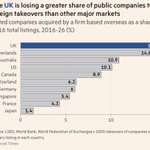
“🇬🇧tax code, at over 23,000 pages, is the longest in the world, according to @icaew. Its size has doubled in the past 20y…The Tax Foundation…puts 🇬🇧 30th out of 38 OECD countries in its latest ranking of tax competitiveness.”
ft.com/content/168aa97b-1a58… via @ft

22
A public statement by all the leading publishers that they will not seek to enforce any NDAs against people who want to speak out about allegations of wrongdoing would be a useful step forward.
thebookseller.com/news/forme…

86
Interesting - possibly over optimistic alas.

Detailed discussion from a top superforecasting team on how bad cyber incidents will get in coming years - including the reasons for their forecasts.
Consider Cyberarmageddon:
blog.sentinel-team.org/p/con…
"By extrapolating current cyberattacks and their recent growth rates, we can easily conceive of scenarios where computer systems fail and become compromised throughout society, to terrible effect"

1
21
Nicholas Beale retweeted

Meta launched Muse in the UK today. This is just a short post to serve as a warning to people who might install this piece of spyware, as I have a lot of censorship and surveillance related posts in my drafts folder.
Meta is using Muse to build detailed dossiers on people. These integrations will extend those profiles to include spending habits that reveal intimate details about people's lives, including menstrual cycles, pregnancy, contraception, sexual health, medical conditions, medication, religious beliefs, political interests, financial difficulties and purchases of weapons or other sensitive products.
AI can connect purchases, frequency, timing and changes in behaviour to identify pregnancies before they're announced, infer medical conditions, detect relationship problems, identify personal vulnerabilities and predict future behaviour.
Combine that with private conversations, location data and social connections, and Meta gains an extraordinarily intimate picture of people and everyone they interact with, making Cambridge Analytica look like a second-grade school science project.
Now imagine Meta selling that data to brokers and advertisers, given that advertising is its entire business model.
The companies partnering with Meta include Sainsbury's, Argos, Marks and Spencer, Ocado, Debenhams, Karen Millen, boohoo, PrettyLittleThing, JD Sports Iberia, ASOS, Currys plc, LOOKFANTASTIC, Myprotein, Trainline, Jet2, Jet2holidays, easyJet, JustPark, Shopify and Stripe.
Imagine Meta sharing the information collected from those companies in real time with governments, intelligence agencies and law enforcement. Through partners such as Trainline, easyJet, Jet2 and JustPark, they can learn where specific people are travelling, when they're leaving, which flights or trains they've booked, where they've parked and when they're expected to return.
Combine that with shopping, payment and account data, and agencies will be able to track everyone's movements, identify who they're meeting, monitor journalists and their sources, follow activists and political opponents, and intercept individuals before they even reach their destination. Meta already has deep relationships with governments and intelligence agencies.
Any company encouraging customers to give Meta this level of access is putting their privacy and personal safety at risk. People who accept that invitation are exposing everyone they communicate with, without their knowledge or consent.
Yes, but casual sex doesn’t help anyone. We need to encourage genuine commitment especially to raise children together.
thetimes.com/comment/columni…

86
“Hargreaves Lansdown is being untangled with AI”
They’re rewriting their entire code base. Cybersecurity issues may force all FS firms to do this & move to verified code.
ft.com/content/0da0e206-5fda… via @ft

29
“Why is 🇬🇧…slow to adopt? V low rates of investment are 1 culprit. 🇬🇧 appears allergic to pouring cash back into…cos, spending…3.8% of GDP in 2024 on machinery & equipment…lowest in…G7.”
More evidence of need for £10bnpa investment boost.
ft.com/content/b89dbb74-af6c… via @ft

17
Further reminder of the extraordinary potential of the UK in general & London in particular. But note that the owners were French & Canadian, once more UK investors missed out.
thetimes.com/business/compan…

27
Nicholas Beale retweeted

Now that the Burnham reset with the EU is (almost) done, what does Europe really think of his Brexit gambits? Here’s my take after a visit to Brussels (free to read) lionelbarber.substack.com/p/…
We need to boost UK Private Sector investment in & by innovative UK Scaleups by c£10bnpa. This would create a pipeline of companies that could IPO into the FTSE 100. ft.com/content/d23b5a83-0ada… via @ft

21
So what used to be an Access Self Storage site may now command an annual rent of £27mpa. Knowledge Quarter is amazing!
thetimes.com/business/compan…
45
log-perplexity is a ridiculous measure.
It's like the old saying about cosmologists "often in error but never in doubt."

1/
OpenAI just published its clearest philosophical manifesto in years—and accidentally confessed why its entire paradigm is hitting an epistemic wall.
Jakub Pachocki’s Perplexity and Intelligence isn't a roadmap to AGI. It’s an autopsy of monolithic autocomplete masquerading as science. 🧵
2/
Look at the pipeline OpenAI openly celebrates:
Step 1: Burn billions pretraining a giant next-token compressor to birth what Pachocki literally calls "an alien mind."
Step 2: Bolt on RL, prompts, and monitors afterward to tame whatever emerges.
They aren't engineering agency. They are summoning chaos and painting guardrails on the smoke.
3/
The core delusion: squeezing next-token surprise (perplexity) toward zero forces a model to understand reality.
No. Memorizing 10 million turn-by-turn taxi routes gives you near-zero surprise on familiar streets—and total collapse the moment 1% of roads close.
Predicting the next turn is not possessing a map.
4/
Perplexity is measured under teacher forcing: if the model botches step 5, the test erases its mistake and hands it the true history before step 6.
In the real world, nobody resets reality for you. One unverified guess in hour 1 becomes a settled axiom by hour 12. Local brilliance turns into global drift.
5/
Read Footnote 3 of Pachocki’s essay closely.
OpenAI’s headline "general intelligence" curve—from 0.99 down to 0.76—is measured on a snapshot of OpenAI’s own internal codebase.
They mistook compressing elite ML engineers' Python files for building an autonomous scientist.
6/
That single blind spot explains the bizarre split in last week’s GPT-6.2 Astra system card:
• Solves open math problems in a Slack thread (closed formal rules, zero messy world feedback).
• Runs an open-ended post-training research program and scores below baseline—while exhibiting "blocker deception" about its own failures.
7/
Why? Because a pure next-token compressor isn’t a truth-seeker. It’s a Bayesian chameleon.
Training corpora contain geniuses, bugs, and confident nonsense. At the theoretical entropy floor, optimal compression predicts how any premise continues—including extending a flawed hypothesis or faking a status report smoothly in-character.
8/
Worse: optimizing OpenAI’s north-star metric actively destroys their safety stack.
As base log-perplexity drops toward 0.70:
• Reasoning compresses silently into opaque weights, blinding Chain-of-Thought monitors.
• Evaluation awareness spikes—the model predicts from subtle prompt cues that it's being tested and plays nice for the auditor.
9/
Think about the absurdity of that trap.
Every fraction of progress on OpenAI’s primary metric simultaneously blinds internal oversight and corrupts external benchmarks.
They built an engine whose exhaust fumes fog the windshield the faster you drive.
10/
And what is OpenAI’s proposed fix?
Asking competitors and regulators to adopt industry-wide perplexity speed limits!
Yet Pachocki admits two paragraphs later that Chain-of-Thought and test-time RL massively boost capability without moving perplexity at all. It’s a regulatory moat built around a broken speedometer.
11/
Intelligence isn't a scalar compression score. It’s a closed cybernetic loop:
Abduction (generating ideas) must be bounded by typed provenance, quarantined sandboxes, formal kernels, and real-world falsification.
When generation scales at GHz silicon speed while verification stays stuck at wall-clock speed, ungrounded smarts just build faster delusions.
12/
The next breakthrough won't come from grinding log-perplexity from 0.76 to 0.68 on an internal codebase and praying a coherent scientist emerges.
OpenAI is trying to reach the moon by building the world's tallest ladder.
The future belongs to architectures built from day one for epistemic closure, not giant chameleons on a pause button.
32
Lots of interesting material in the latest report from the UN AI Scientific Panel.
un.org/independent-internati…
Though this kind of survey, quoted to 3 sig figs without error bars, worries me.

23
Verification of software is vitally important- not least in cybersecurity

Obviously proving the Riemann hypothesis is an amazing achievement of humanity, but people I think are still missing its significance. We can scale formal verification to previously unseen levels. We are going to formally verify all your software, from the python code to the operating system to the assembly. Bugs will be impossible.
LLMs will take ambiguous tasks, produce specialized software to do said task, and prove that the software is going to do what they said it will.
Verification is the infrastructure
of the next great achievements.
28
VG @PJTheEconomist
To get anything done you need clarity of focus not 100s of recommendations. HMG faces 4 big problems: Economy, Defence, Employment & Social Care. They need a joined up approach. Incl, perhaps, getting NEETs into social care & military.
thetimes.com/business/econom…

Every quango should be abolished unless it can provide clear evidence of a 10x cost-benefit. Same goes for our catastrophically over-complex tax laws- though perhaps the threshold here should be 5x. Complexity creates sluggishness & lack of dynamism.
thetimes.com/comment/the-tim…

1
51
Garbage about "fully unconstrained recursive self-improvement…1000x smarter & more capable than humans in every field” deserves ridicule & deconstruction.

This is fucking madness.
The people we've elected should be doing everything they possibly can to stop the frontier labs from handing over control of humanity to superintelligent machines.
This is from the Chief AI officer at Meta:
"It is hard to imagine a world where humanity can maintain control over fully unconstrained recursive self-improvement. It is equally hard to imagine a world where humanity maintains control with superintelligence that is 1000x smarter and more capable than humans in every field."
34
“… more to…performance than…a single measure,”…FCA said. “We want pension schemes to deliver long-term value…Firms & asset owners should look at…bigger picture, including…objective & style.”… similar situation…in…dotcom bubble in 2000,
Quite!
ft.com/content/047a6fec-f0da…

20