
ML Scientist at @jura_bio
Oslo, Norway
Joined November 2017
- Tweets108
- Following366
- Followers401
- Likes269


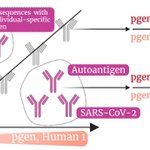

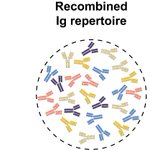


First you could train an in vitro generative model – now, thanks to our guest star player @AlanNawzadAmin, you can fine-tune it as well!

Introducing: continuous variational synthesis
📄 jurabio.com/s/cvs.pdf
We’re pleased to announce a new advance in our ability to synthesize generative model-designed DNA sequences at petascale.
Andrei Slabodkin retweeted

meet @mostik_ai!
what happens when you put 12 PhDs in one room for four months? first place on the ARC-AGI leaderboard, which I can't say much about while the competition is still running. and this, which I can.
everyone's arguing about whether open models will catch up to frontier models. we think it's the wrong question. here's the one we pose: why does a frontier model have to generate your answer at all, when the only thing you need from it is the reasoning?
we do this by enabling models to communicate in latent space. through our protocol, hidden states pass straight from a frontier model into a small one running on your infrastructure -- no text between them, and neither model is fine-tuned. two models from different families, sharing reasoning, both left untouched.
how do we know it works? we tested it on a setup where a 753B model reads the problem, and a 4B edge-class model writes the answer. with this approach, we get results 80% as accurate as the frontier model, but at 20x faster performance.
we're committed to preventing frontier model lock-in and are already partnering with inference providers to accelerate open-weight adoption. we've done this between 15 of us, in four months, 12 PhDs and a Fields medalist, backed by @generalcatalyst
WIRED has the first external account of the company and the work: wired.com/story/russian-star…
full writeup, the setup, and all the numbers: mostik.ai/read-more

A new scaling law just dropped – for your (and mine) favorite modality!
Can we achieve the same scaling laws in biological AI as we have in the rest of machine learning?
We found that @jura_bio's mix of designed data generation and training produce robust scaling laws: more data reliably lead to better predictions over many orders of magnitude.

When you work in ML, there are these really rare moments when - while you are still sceptical - the magic happens, and the model just works.
Antibody binding prediction that generalizes to unseen epitopes, see below

If you ever wondered what a "binding landscape" looks like (from the epitope point of view), now is the time to go and check it out
We're launching our new target intelligence dashboard, MESA, with a nice interactive case study from our recent TCRm campaigns. 82M AI-designed scFvs manufactured and tested against 100 targets, simultaneously.
jurabio.com/mesa

Andrei Slabodkin retweeted

The race to first-in-human is accelerating globally. The obvious response is to scale up: more automation, more cells, more sequencing, more capital. This will work until it doesn't.
At @JURA_Bio, we've been building beyond the obvious.

Who would like to synthesize the whole Observed Antibody Space at a cost of several MacBooks?

I’m thrilled to announce: at @jura_bio we’ve constructed a new kind of generative protein model, which allows us to manufacture its generated designs in the real world at petascale.
Paper: static1.squarespace.com/stat…
Blog: jura.bio/blog/variationalsyn…


Andrei Slabodkin retweeted

We have trained ESM3 and we're excited to introduce EvolutionaryScale.
ESM3 is a generative language model for programming biology. In experiments, we found ESM3 can simulate 500M years of evolution to generate new fluorescent proteins.
Read more: evolutionaryscale.ai/blog/es…
Andrei Slabodkin retweeted

(1/7) Curious about what a blood sample can reveal about humoral immunity? Our latest work combined sequencing methods and mass spectrometry to explore BCR and antibody repertoires and assess their synergistic potential. biorxiv.org/content/10.1101/…

Andrei Slabodkin retweeted

The IMMREP23 @kaggle #TCR-#epitope specificity #MachineLearning #prediction challenge is live now! Spread the word! @airr_community @iRecRepPapers
kaggle.com/competitions/tcr-…
Andrei Slabodkin retweeted

(1/8)🎉A fresh preprint in which we present LIgO — a powerful tool to simulate adaptive immune receptor (AIR) and repertoire (AIRR) data for the development and benchmarking of AIRR-based ML 🧵⬇️
biorxiv.org/content/10.1101/…

Andrei Slabodkin retweeted

biorxiv.org/content/10.1101/…. A good reminder that predictions of TCRs recognizing 'unseen' epitopes (i.e., epitopes without any known TCR) remains an unsolved challenge.

1/8 New preprint: generative modeling of AIRR repertoires, the last piece of my PhD, >2 years of work, a project that is very dear to me biorxiv.org/content/10.1101/…

7/8 Huge thanks to Ludvig M. Sollid, @SandveGeir, and the co-last authors @PRobertImmodels and @victorgreiff
8/8 We thank @HelmsleyTrust, @forskningsradet, @UniOslo, @UiO_LifeSci, @EU_H2020, @ireceptor_plus, Norwegian Cancer Society, @JCoDiRC, Innovative Medicines Initiative 2 Joint Undertaking for generous funding.