

C-Suite Advisor, 2x CMO, 3x Author, Public Board Member. LendingTree, Expedia Group, Visa, & PepsiCo. Author of Marketing with AI. Publisher of Sommelier India
Joined October 2007
- Tweets12.1K
- Following2.9K
- Followers30.1K
- Likes7.2K






Shiv Singh retweeted

Two big points from this new Anthropic paper:
1) The most AI value comes from changing the organization
2) There is wide worker resistance to AI adoption (partially due to point 1)
Changes that expand what workers do & share AI gains with them could help anthropic.com/research/worki…


Shiv Singh retweeted

This is f*cking insane. OpenAI co-founder Andrej Karpathy opened his screen and showed exactly how he uses AI every day
70 minutes. No slides. Just the way the top 1% actually work with LLMs
Prompts → Context → Tools → Workflows → How The Top 1% Work
Most people are overcomplicating it. He picks the right model, feeds it the right context and lets the tools do the rest
Anyone can open ChatGPT and type. Almost nobody uses it the way the man who co-founded OpenAI does
Worth more than any $2,000 AI course
Bookmark and watch it today
Then read how to turn that into agents that run on their own with harness, loops and graphs in the guide below ↓


Shiv Singh retweeted

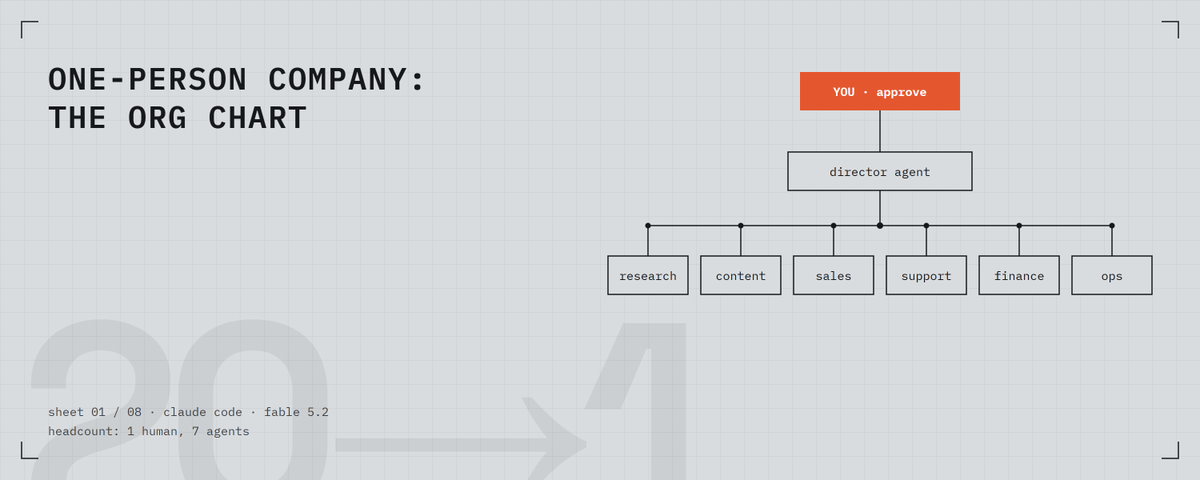
Dario Amodei (Anthropic CEO) just released a prompt that turns Opus 5.5 into an entire company that works while you sleep for less than your phone bill
It's f*cking unreal...
Send it to Opus 5.5, and thank me later. Then read the article below ↓




Shiv Singh retweeted

Dusting off this tweet from April because this gap in shared understanding of LLM capability is *widening*. It's now less "two groups of people speaking past each other" and more a sharp funnel.
- Napkin math somewhere around 6B people (~75% of the population) have barely come in contact with LLMs at all.
- Around 1-2B (~20%) are casual and infrequent users of free-tier ChatGPT-like products. This group sees derpy chatbots and treats them a bit like a better Google search, a writing aid, or etc. Maybe an agent tries to book you a flight. I have non-tech friends who (reasonably, imo) say they have not much use for it at all. Even many professionals outside of math&code are in this tier. For example, execs and many other functions spend a lot of their time talking to other people, so while they understand what is happening intellectually, it is still second-hand and a bit abstract.
- Now we get to professional use of frontier-grade LLMs in math&code. Somewhere around 20M people (0.2%) see first-hand that large, complex projects that used to take them weeks/months can now be completed by agents with a prompt. Building apps, copying apps, translating apps, decompiling apps from binaries... This has all happened very quickly and recently - less than 1 year ago, I was writing code manually by hand, typing memorized computer code commands into a code editor character by character, occasionally pressing Tab to autocomplete a little chunk of code.
- And finally we get to the ~5,000 people (~0.00006%) with access to frontier-grade systems internally. The external world has seen the preview. It looks like swarms of thousands of agents collaborating over weeks on software mega projects: minting zero days, running cyber attacks and defenses at machine speeds, discovering new science, advancing the frontier of mathematics. Things that would have taken top professionals in the industry years of work. Meanwhile, human review and comprehension are starting to fall behind. For example, people are still involved in the "archeology" of the OpenAI-HF incident from many months ago. Mathematicians may be poring over the 722 manuscripts on frontier mathematics for a while.
The funnel is driven by a combination of factors:
1. The impact scales with ambition, problem size, and horizon. A question with a paragraph answer barely stresses the system. You need a reservoir of big, difficult problems that you really care about. This aspect drives the consumer / professional dimension of the funnel.
2. The jaggedness of the system (which I have written about a lot separately). Capability peaks in domains that are digital, verifiable and economically valuable. This is because LLM capability emerges from reinforcement learning on verifiable rewards on a curated environment mixture driven by revenue potential. This aspect primarily drives the area (e.g. math&code) dimension of the funnel.
3. Access. Free-tier, paid-tier, internal.
So this is the weirdness of the moment. The general public has mostly not interacted with these systems. When they have, it looks like a derpy chatbot. The majority of professionals still see only a modest uplift. And a small sliver of professionals are experiencing the vertigo of the curve going vertical. And it is all happening at the same time.

Judging by my tl there is a growing gap in understanding of AI capability.
The first issue I think is around recency and tier of use. I think a lot of people tried the free tier of ChatGPT somewhere last year and allowed it to inform their views on AI a little too much. This is a group of reactions laughing at various quirks of the models, hallucinations, etc. Yes I also saw the viral videos of OpenAI's Advanced Voice mode fumbling simple queries like "should I drive or walk to the carwash". The thing is that these free and old/deprecated models don't reflect the capability in the latest round of state of the art agentic models of this year, especially OpenAI Codex and Claude Code.
But that brings me to the second issue. Even if people paid $200/month to use the state of the art models, a lot of the capabilities are relatively "peaky" in highly technical areas. Typical queries around search, writing, advice, etc. are *not* the domain that has made the most noticeable and dramatic strides in capability. Partly, this is due to the technical details of reinforcement learning and its use of verifiable rewards. But partly, it's also because these use cases are not sufficiently prioritized by the companies in their hillclimbing because they don't lead to as much $$$ value. The goldmines are elsewhere, and the focus comes along.
So that brings me to the second group of people, who *both* 1) pay for and use the state of the art frontier agentic models (OpenAI Codex / Claude Code) and 2) do so professionally in technical domains like programming, math and research. This group of people is subject to the highest amount of "AI Psychosis" because the recent improvements in these domains as of this year have been nothing short of staggering. When you hand a computer terminal to one of these models, you can now watch them melt programming problems that you'd normally expect to take days/weeks of work. It's this second group of people that assigns a much greater gravity to the capabilities, their slope, and various cyber-related repercussions.
TLDR the people in these two groups are speaking past each other. It really is simultaneously the case that OpenAI's free and I think slightly orphaned (?) "Advanced Voice Mode" will fumble the dumbest questions in your Instagram's reels and *at the same time*, OpenAI's highest-tier and paid Codex model will go off for 1 hour to coherently restructure an entire code base, or find and exploit vulnerabilities in computer systems. This part really works and has made dramatic strides because 2 properties: 1) these domains offer explicit reward functions that are verifiable meaning they are easily amenable to reinforcement learning training (e.g. unit tests passed yes or no, in contrast to writing, which is much harder to explicitly judge), but also 2) they are a lot more valuable in b2b settings, meaning that the biggest fraction of the team is focused on improving them. So here we are.
Shiv Singh retweeted

Your next users are machines
Agents burn nearly 5x the tokens people do, up 14x in six months


AI agents don't use the cloud like humans do. AWS CEO Matt Garman on rewiring AWS for its newest "users":
"Increasingly we're seeing teams that want a cloud that is great to work with agents and not just with people."
" We've doubled down on things like starting a database in three seconds and some capabilities that agents are excited about."
"Many agents wanna create a database, do a little bit of work, and then have the database go away. You don't really need that database to have five nines of durability."
"There are new building blocks that agents are gonna want that we just didn't really need before: compute sandboxes, gateways, agent permissions versus people or service role permissions."
" A lot of those are things that we have built and are building and thinking actively about because they are just brand-new building blocks. It's not using the existing building blocks differently."
@mattsgarman @RaghuRaghuram


Shiv Singh retweeted

The idea of an intelligence explosion caused by recursive self improvement has been around for a long time but until very recently it did not seem imminent. Now many leading researchers think it may happen quite soon. You can read our paper about it here:
casp.ac/reports/intelligence…

Shiv Singh retweeted

Satya Nadella: How Microsoft is applying the concept of "Lean for knowledge work" internally with AI.
The internal ROI on AI investment and leveraging the cost reduction effect of AI.
Borrowing from Toyota's manufacturing efficiency principles and applying them to white-collar operations powered by AI.
e.g. Microsoft spends approximately $4 billion per year on customer support operations. By deploying AI agents for front-end deflection (resolving issues before they reach human agents) and real-time reasoning assistance for support staff, they are dramatically reducing costs in areas like Xbox and Azure support.
---
From "Bg2 Pod" YT channel ( link in comment)
Shiv Singh retweeted

Sam Altman (CEO of OpenAI):
"You don't need better prompts. You need to master agent engineering with GPT-6 Astra."
In 22 minutes he explains what Open AI enginners do differently, how to build and structure work with agents.
This beats any paid agent course I've seen.
Watch it, then read the full astra guide below 👇


Insight Partners' Deven Parekh on why the firm is diversifying while everyone else bets the farm on OpenAI and Anthropic techcrunch.com/2026/09/13/in…

231
Shiv Singh retweeted

The team at Microsoft AI, led by @mustafasuleyman just published a terrific humanist code of conduct.
Especially given recent incidents its emphasis on increasing human agency and augmenting human roles rather than competing with them is particularly relevant and urgent.
Mark Zuckerberg had a bold plan to replace Meta staff with AI. Here’s how it imploded. reuters.com/investigations/m…

1
1
363