

Because science saves lives, and that’s something worth celebrating. Join us in building a culture of gratitude for science.
- Tweets1.8K
- Following415
- Followers1.1K
- Likes1K




ALT ScienceSaves graphic featuring a child holding a hand toward the camera, with a red rash visible on the palm. Blue text on white panels reads: “‘What are the risks?’ is a fair question. An honest answer includes the disease.” Footer: sciencesaves.org.

ALT A child rests in bed holding a stuffed rabbit while an adult places a hand on their forehead. Text reads: “MMR has real side effects. About 1 additional fever-related seizure occurs per 3,000–4,000 young children vaccinated. These seizures haven’t been associated with lasting harm.” Footer: sciencesaves.org.

ALT Close-up photograph of a baby with a red rash visible across their face and body. Text reads: “Measles can cause lasting harm. About 1 in 1,000 children with measles develops brain inflammation. It can leave permanent disabilities.” Footer: sciencesaves.org.

ALT A child wearing a surgical mask receives an injection in the upper arm from a healthcare worker wearing blue gloves. Text reads: “Taking vaccine injuries seriously is part of supporting vaccination. People deserve care. Families deserve the full risk picture. Read the evidence from History of Vaccines.” Footer: sciencesaves.org.


ALT Blue graphic with three hospital photographs, including Alexis Williams smiling while seated and people in hospital hallways. Text reads: “Science saved someone. Help your state recognize it.” A green text box asks viewers to sign the petition for National Science Appreciation Day on March 26, 2027.

ALT Blue graphic reading: “People in 48 states and D.C. have signed. Local support helps us make the case for state proclamations. See how your state is progressing.” A U.S. map shows progress toward state signature goals: gray indicates 0–19%; light green, 20–39%; green, 40–59%; dark green, 60–79%; navy, 80–99%; and blue, 100% or more. Michigan, Virginia, and Washington have reached their goals. The map is dated October 5, 2026.

ALT Blue graphic with gray outlines labeled North Dakota and Wyoming. Text reads: “Know someone in North Dakota or Wyoming? Neither state is represented yet.” Below: “Live there? Sign the petition. Know someone there? Send it their way.” The petition address is ScienceSaves.org/Petition. A footnote dates the information to October 5, 2026.

ALT Blue graphic featuring a black-and-white photograph of a woman beside a small child. Text reads: “Help recognize the science that gives us more time together. Add your name for National Science Appreciation Day March 26, 2027.” The petition address is ScienceSaves.org/Petition. A separate text box reads: “Already signed? Send it directly to two people.”

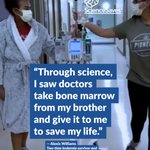
ALT ScienceSaves graphic showing Alexis Williams wearing a mask and robe in a hospital hallway beside an IV pole and another masked person. White text on blue reads: “Through science, I saw doctors take bone marrow from my brother and give it to me to save my life.” Attribution: “Alexis Williams, two-time leukemia survivor and bone marrow transplant recipient.” The ScienceSaves logo appears above.

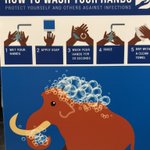
ALT Blue-and-white “How to Wash Your Hands” instructional sign showing five illustrated steps: wet hands, apply soap, wash for 20 seconds, rinse, and dry with a clean towel. Below the instructions is a large red woolly mammoth covered in soap bubbles against a blue background.

ALT ScienceSaves graphic showing a patient holding a tablet in a hospital bed, with medical monitors and a lung X-ray in the background. Text reads: “Lung cancer research: 5 months longer. Patients who used a symptom-monitoring app lived that much longer, on average, than those who didn’t.” Based on a 249-patient study from Radboudumc, published in The Lancet Oncology.

ALT Black-and-white family photo in a hospital room: a woman sits on a bed holding a toddler, with part of another adult visible beside them. Text reads, “Science saved someone.” ScienceSaves logo.

ALT Black-and-white photo of a smiling young person having their hair cut while raising a hand toward another person seated beside them. Text reads, “Maybe it was a premature baby who got to grow up. Someone whose cancer became treatable. Someone who survived an infection that once would’ve killed them.”

ALT Black-and-white photo of an adult holding a young child who is looking at an Elmo toy in a hospital room. Text reads, “Vaccines. Insulin. Antibiotics. Emergency medicine. Clean water. We call these scientific achievements. For someone, they were the reason there was a tomorrow.”

ALT Black-and-white close-up of a younger woman and an older man smiling with their faces pressed together. Text reads, “National Science Appreciation Day is about the lives science makes possible.”

ALT White graphic with the text, “Before the syllabus, give them a reason to care.” Large blue text asks, “What would you build to improve a human life?” A green footer includes the ScienceSaves logo and “Grades 6–12.”

ALT Three stacked medical images labeled in large white text: “An artificial heart,” showing a small artificial heart device; “Dialysis,” showing a patient receiving dialysis treatment; and “A 3D-printed hand,” showing a person using a prosthetic hand while driving.

ALT White graphic with the heading, “Now, your turn.” Large blue text asks, “What would you build to improve a human life?” Green text below reads, “Get the free Grades 6–12 lesson: ScienceSaves.org/1stday.”

ALT Close-up photo of a premature baby in a light blue outfit, resting with a nasal oxygen tube in place. White text over the image reads: “At 25 weeks, weighing 2 pounds, 2 ounces, I was considered a micro preemie.” — Logan.

ALT A baby boy sits in an adult’s arms in a medical setting, looking at a small Elmo toy. His face is turned away from the camera. Text reads: “When my brother was one year old, he had to have one of his kidneys removed because of a birth defect.”

ALT Photo of Emily smiling beside her grandmother at a table. Overlaid text reads, “Without his work, my grandmother may not be alive today.”

ALT Illustration introducing a classroom activity set in London in 1854 during a cholera outbreak. A historic black-and-white street scene appears beneath the large headline, “You’re the detective.” Text explains that cholera is spreading through the city and asks, “Can you figure out what’s causing it?”

ALT Blue background with a black-and-white portrait of physician Dr. John Snow. Large text explains that the accepted explanation for the deaths across Soho was “bad air,” but notes that Dr. John Snow was not convinced.

ALT Historic map titled “John Snow’s Map of London’s 1854 Cholera Outbreak,” showing streets and marks indicating reported deaths. Text explains that John Snow mapped the deaths and discovered a pattern centered around a public water pump.

ALT Green background promoting a classroom lesson based on John Snow’s investigation. A historical illustration shows people gathered around a public water pump while a skeletal figure representing death stands nearby. Bullet points explain that students plot cases, identify the cluster, account for outliers, and make a recommendation using the evidence.

ALT A small white card with a green border sits on a black textured surface. Printed at the top in blue text, it reads, “Because of science, I can…” Below, in green handwritten marker, the response says, “SEE MORE THAN 2 FEET AWAY,” referring to improved vision through science, such as corrective lenses or eye care.