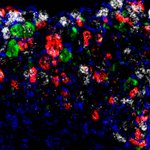
New work involving mice and patient cells reveals the mechanisms behind how neutrophils drive a rare group of autoinflammatory disorders called CAPS—and uncovers a potential new therapeutic target. @SciSignal scim.ag/3THE7dU
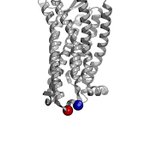
In a new study, scientists show that intracellular changes to receptor conformation alter how agonists bind to and activate a biologically important #GPCR from outside the cell through an “inside out” mechanism. @UCPH_health #Biochemistry scim.ag/4ynGkcI
A preclinical analysis of T helper 1 cells shows that shifting their metabolism from glycolysis to #oxphos curtails their role in inflammatory bowel disease and identifies a potential therapeutic target for these conditions. @MayoClinic scim.ag/476fnyT
Scientists show that a protein named RGS4 plays a central role in chronic neuropathic pain by maintaining hypersensitivity after nerve damage—a finding that could lay the road for precision drugs that target this protein. @BUMedicine @VannaZachariou scim.ag/3TDKgYw
In this week’s Editors’ Choice, we highlight a study by Rhee and colleagues in @Nature, showing how antibodies linking a GPCR with the transferrin receptor lead to GPCR down-regulation.
Read a summary: scim.ag/3UxSYb3
New work involving mice and patient cells reveals the mechanisms behind how #neutrophils drive a rare group of autoinflammatory disorders named CAPS—and uncovers a potential new therapeutic target. @UCSanDiego scim.ag/3THE7dU
Intracellular changes to receptor conformation alter how agonists bind to and activate the #GPCR ACKR3 from outside the cell—illuminating the connection between receptor conformation, agonist binding kinetics, and constitutive activity. @UCPH_health scim.ag/4ynGkcI
How do inflammasomes drive CAPS?
A mass cytometry analysis decrypts how #NLRP3 mutations in patient neutrophils trigger the clustering of gasdermin D and E at the plasma membrane, leading to #pyroptosis and the release of IL-1-beta. @UCSanDiego scim.ag/3THE7dU
This week’s new issue of #ScienceSignaling has arrived!
Researchers discover how the inflammatory death of neutrophils drives a rare group of autoinflammatory disorders, a new study uncovers an “inside out” regulatory mechanism for a GPCR, and more. scim.ag/4yISIVt
Scientists show that a protein named RGS4 plays a central role in chronic neuropathic pain by maintaining hypersensitivity after nerve damage—a finding that could lay the road for precision drugs that target this protein. @BUMedicine @VannaZachariou scim.ag/3TDKgYw
A recent biochemical analysis examines how a family of enzymes called atypical protein kinase Cs can have opposing effects on the growth of tumor cells—answering a persistent question in #cancer biology. #Biochemistry @UCSDPharm @NewtonLab scim.ag/4hqhEcY
Researchers have constructed a map of how light remodels patterns in a process called #phosphorylation in the eye of the fruit fly, elucidating the #biochemistry that enables these flies to adapt to oscillating light and dim conditions. @PurdueBiochem scim.ag/4iOFcux
A preclinical analysis of T helper 1 cells shows that shifting their metabolism from glycolysis to #oxphos curtails their role in inflammatory bowel disease and identifies a potential therapeutic target for these conditions. @MayoClinic scim.ag/476fnyT
Using models of peripheral nerve damage, a team parses gene expression in the DRG and shows that the GTPase-activating protein RGS4 increases after injury and prolongs sensitivity by repressing neuroinhibitory GABA-B receptors. @BUMedicine @VannaZachariou scim.ag/3TDKgYw
Changing the metabolism of T helper 1 cells implicated in #IBD via the enzyme GSK3-beta makes the cells less inflammatory and can reduce disease severity in a mouse model of colitis, according to new work. @MayoClinic scim.ag/476fnyT
Scientists target a G protein regulator to combat neuropathic pain, a study in mice shows how metabolically reprograming disease-linked T cells can calm inflammation in inflammatory bowel disease, and more in the new issue of #ScienceSignaling. scim.ag/4i6AvLy
Researchers have constructed a map of how light remodels patterns in a process called #phosphorylation in the eye of the fruit fly, elucidating the #biochemistry that enables these flies to adapt to oscillating light and dim conditions. @PurdueBiochem scim.ag/4iOFcux
Researchers find a role for the T cell adaptor protein PAG in supporting the function of cytotoxic T cells, showing that PAG connects with actin through its PDZ-binding motif to support the stabilization and function of the immune synapse. @CCTI_NYC scim.ag/47d3uqW
The closely related exchange factors Girdin and Daple bind to the PDZ domain of #Dishevelled to promote the disassembly of cilia during mitosis, according to new experiments with human cells. @CamBioCampus scim.ag/4hIcsT6
A new biochemical analysis examines how a family of enzymes called atypical protein kinase Cs can have opposing effects on the growth of tumor cells—answering a persistent question in #cancer biology. #Biochemistry @UCSDPharm @NewtonLab scim.ag/4hqhEcY