

“The illiterate of the 21st century will not be those who cannot read and write, but those who cannot learn, unlearn, and relearn.” -- Alvin Toffler
11.5504° N, 92.2335° E
Joined March 2007
- Tweets17.3K
- Following3.1K
- Followers660
- Likes5.4K








Savvas retweeted

We'll be spending a lot more time trying to understand the outputs of language models. A few thoughts, tips & tricks:
Writing. Something I've had success with: Ask your LLM to explain something in ASD-STE100, it's a controlled language specification originally developed for aerospace maintenance documentation. LLMs well-versed in this language and it comes with heavy constraints on clean writing style that I often find a lot more readable. Sometimes I've tried to soften it a bit e.g. ask for "80% of the way to ASD-STE100" because the spec is quite stringent. But even better:
Diagrams / images. Instead of writing, ask your LLM to create a diagram. These can be a lot easier to process, parse, and understand. But even better:
Web pages. Ask for output "in HTML" to get a beautiful, interactive webpage. LLMs are getting really good at frontend and can create beautiful experiences, animations, etc. But even better:
Explainer videos. The output format I am most bullish on is fully custom / bespoke explainer videos generated on any arbitrary topic. Experiment with things like "Create a 3b1b style video explainer on X. Use my ElevenLabs API key for audio narration". (you'd need an API key for the latter or you can ask your LLM to find you decent free alternatives that use your local compute). This is actually starting to work!
In summary:
- As LLMs get better, they will do more and more of the legwork autonomously, and a lot more of our work will rise up the abstractions into oversight and understanding.
- Luckily, LLMs can help here too because as intelligence and code are increasingly abundant, you can ask for large, custom, discardable software artifacts (e.g. web apps, video explainers) that would have never made sense to create before. Push the boundaries here and you'll be surprised.


Fun fact: dictionaries have listed "computer" since the 1600s — but not for a machine.
A "computer" originally meant a person hired to do calculations by hand, for astronomy, navigation, and later NASA's early space missions.
I'm still struggling to understand why the big monitor makers still bother with built-in speakers, especially at the premium level. Whats the point

Savvas retweeted

We Must Pace the Frontier: I’ve written a new essay on why the AI industry should slow down, with a three-part plan for doing so.
Anthropic is unilaterally committing to the first of these steps. We’ll provide third-party evaluators with permanent, employee-level access to our systems, so that they can verify adherence to our safety measures, report on incidents, and assess models’ alignment during training.
You can read the full post here: darioamodei.com/post/we-must…


Logitech implements their our Optimus keyboard youtube.com/watch?v=q0fH3eQ6…
Savvas retweeted

Over 70 years ago today, the term “artificial intelligence” was coined in a conference proposal: stanford.io/2WJJJGN

Wow

Tomorrow will be my last day at Google after 27 years, and watching it grow from 25 people to 190,000+ has been an amazing journey. Below is a note I shared with many people internally at Google today. An excerpt is:
It has been an absolute pleasure to work with you and to help build some of the most widely used and impactful products of all time. As a kid, I dreamed of helping build software that would be used by many people, and Google now has thirteen products used by more than a billion people (amazing!). Our work has had a tremendous impact in the world, and I have been lucky enough to collaborate and form friendships with many colleagues that I deeply admire, respect, and enjoy. It still brings me joy every time I see people out in the world using our products to find information, handle email, translate documents, watch videos, learn new things, navigate and understand the physical world, browse the web, use their phone, run large-scale computations on our infrastructure, ride in an autonomous vehicle, or perform complex tasks with the help of our AI systems. I hope you all share this sense of joy, because it is a shared accomplishment! Thank you to all of my colleagues at Google over many years!
Now I'm excited to go start @DiscoLoopAI with my longtime friends and colleagues @Sanjay_Ghemawat, @OriolVinyalsML, and @quocleix.
(Updated post: slightly redacted to not have some personal info)


Savvas retweeted

The end of an era. Dimitri Bertsekas, a pioneer of mathematical optimization, has passed away. So many of us relied on his textbooks to get through graduate school. His work shaped the minds of a generation.

Savvas retweeted
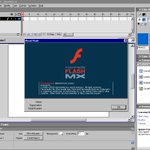
In May 1998, Macromedia released a vector graphics editor for creating interactive Macromedia Flash 3.0 web animations.
Flash 3.0 included new features such as vector & bitmap transparency, shape morphing, sprite animation
#WebDesignHistory

ALT Macromedia Flash 3.0 in 1998

ALT Macromedia Flash 3.0 in 1998

ALT Macromedia Flash 3.0 in 1998

ALT Macromedia Flash 3.0 in 1998
Savvas retweeted

On this May 11, we honor the birth of Edsger Wybe Dijkstra (1930–2002), the Dutch mathematician whose crystalline intellect reshaped the very soul of computing.
Born in Rotterdam, he began in theoretical physics and mathematics before forging a new path where elegance became doctrine. In 1956 he gave the world his shortest-path algorithm; still the quiet heartbeat of every GPS, network router, and logistics system on Earth.
With his 1968 letter “Go To Statement Considered Harmful,” he ignited the structured-programming revolution, insisting that clarity and simplicity are moral imperatives in code. Dijkstra taught us that true mastery is invisible: programs should read like poetry, not puzzles.
His quiet, relentless pursuit of beauty in complexity continues to inspire every developer who chooses discipline over cleverness. Today we remember a mind that proved mathematics is not merely useful; it is noble. Happy Birthday, Professor.


Savvas retweeted

I want to get back into publishing writing. I’ve accumulated tons of notes and thoughts. What’s a good platform these days? Is it Substack?
(will self host as well. Already have that in the pipeline :)
Savvas retweeted

This a computer, and you likely own one. It's a hydraulic analog computer.
It’s essentially a machined analog computer that computes with fluid instead of electronics: pump pressure is routed through passages that act like wires, while spool valves, springs, orifices, and check balls perform the equivalents of comparators, logic gates, delays, and one-way elements.
What it “calculates” is the machine’s current operating state, whether conditions have crossed a threshold to justify changing state, how strongly to apply each output, and how quickly to make that transition without instability or shock.
It does this by continuously balancing forces—pressure on different valve areas against spring preload and feedback pressure—so each valve shifts only when one hydraulic condition outweighs another, while restrictions and chambers add timing and smoothing.
In plain English, it is a real-time fluidic state machine that solves “if this pressure is greater than that one, route flow here; otherwise hold, delay, soften, or override” entirely through geometry and oil.
They're used in every car with an automatic transmission, where it makes choices like what gear to be in and how hard to apply clutches, etc....
And some dude worked it all out on paper back in the 1960s.

Savvas retweeted

"If you cannot explain something in simple terms, you don't understand it."
~ Prof. Feynman


