







ALT Map of the U.S. with the title Genesis Agent Skill Contributors with 10 labs labeled

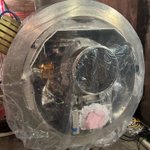
ALT A large, round piece of machinery is covered partially with clear plastic, revealing intricate components inside (an open cryomodule). Cables and wires surround the base, and the machine is positioned in an industrial setting. Credit: SLAC/Lara Streiff

ALT A complex scientific apparatus with multiple circular openings and metallic components, including a prominent central cylindrical structure. The device is an open cryomodule, and features various wires and connectors. Credit: SLAC/Olivier Bonin

ALT A large, circular piece of machinery (an open cryomodule) wrapped in protective plastic with various hoses and components visible inside. Credit: SLAC/Lara Streiff


ALT Photo of a woman in a fleece jacket with her back to the camera who is working on a computer. There is an automated robotic setup in front of her.


ALT A digital artwork showing a concept of network connectivity and data flow. On a blue background, interconnected nodes are centrally displayed, surrounded by icons representing various technologies. An upward-pointing arrow connects the nodes to a prism lit by a beam of light. Credit: Greg Stewart/SLAC

ALT A smiling child with light hair, wearing a striped shirt with a dark collar. Text on the image reads: "This is who helped build the world's largest digital camera."

ALT A framed photo of a newborn resting peacefully. The background has a light pattern with soft colors. Text above the photo humorously reads, "This is who is getting to the core of Earth’s magnetic field.

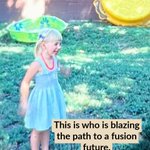
ALT A child is playing on grass in a yard, wearing a light blue dress. In the background, there is a yellow object and a green kiddie pool. Text overlay reads, "This is who is blazing the path to a fusion future."

ALT Image featuring swirling red and black patterns with bright highlights, creating a dynamic and vibrant texture. Researchers modeled energy dissipation in electrical devices using liquid crystals, which consist of bar-like molecules that rotate when voltage is applied. (Shen, Y. et al./SLAC National Accelerator Laboratory)

ALT Promotional poster for a lecture series titled "Blazing the Path to a Fusion Future." It features a stylized, glowing atom above a city skyline with a road leading towards it, set against a backdrop of curved lines. Credit: Greg Stewart/SLAC