

Driving Innovation in Research, Education and Clinical Excellence Worldwide #SCWDConference2026 10-12 Dec, 2026. Inperson | Washington, DC.
Washington DC, United States
Joined November 2015
- Tweets1.2K
- Following3.9K
- Followers1.6K
- Likes334




What connects kidney cancer, HIF signalling and cachexia?
Session 2 at SCWD 2026 explores cachexia as a multi-organ disease, examining early oncogenic events and HIF-2α-driven pathways linked to hypercalcemia and muscle wasting.
Hear from Prof. Marilia Seelaender, Prof. James Brugarolas, Dr. Joanna Lima, and leading experts as Basic and clinical science advances our understanding of cancer cachexia.
Join us in Washington, DC, 10–12 December 2026.
Register early: society-scwd.org/
#SCWD2026 #SCWDConference2026 #Cachexia #CancerCachexiaResarch #KidneyCancer #MuscleWasting #HIFSignaling #BasicScience

GLP-1RA therapy delivers significant weight loss. But not all weight loss is equal.
#SCWD2026 tackles one of the most pressing questions in obesity treatment: what is actually happening to muscle and bone during incretin-based treatment and what should we do about it?
What do you consider the most important strategy for preserving muscle and bone during GLP-1RA-based obesity treatment?
A. Optimising exercise protocols alongside pharmacotherapy
B. Myostatin/activin-pathway combination agents (e.g. bimagrumab + GLP-1)
C. Defining muscle-specific endpoints in obesity trials
D. Monitoring and early intervention based on body composition data
Join the discussion at SCWD 2026, where experts will examine the issue of muscle and bone loss during GLP-1RA treatment, including exercise, combination therapies and emerging clinical trial data.
Washington, DC | 10–12 December 2026: society-scwd.org/
#SCWD2026 #GLP1RA #MuscleHealth #Sarcopenia #Obesity #BodyComposition
What endpoints matter most when evaluating new therapies for cancer cachexia?
As new treatments move into clinical trials, selecting meaningful endpoints is essential to understanding their effects on body composition, physical function and patient outcomes.
At SCWD 2026, Prof. Stefan Anker will discuss relevant endpoints for clinical trials in cancer cachexia as part of the Cancer Cachexia Emerging Therapies session.
Register for SCWD 2026: society-scwd.org/
#SCWD2026 #CancerCachexia #Cachexia #ClinicalTrials #MuscleWasting #CancerResearch #CancerCachexiaResearch #SCWDConference2026

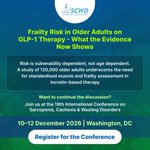
Millions of older adults are now accessing GLP-1 therapies, yet prescribing frameworks were built on trial evidence from predominantly younger populations.
A large real-world study of 120,000 older adults flags an urgent gap: older patients who begin GLP-1 therapy with low muscle reserve or pre-existing frailty face a fundamentally different risk profile. Lean mass loss, malnutrition, and functional decline are documented signals requiring active monitoring and early intervention.
Risk is vulnerability dependent, not age dependent.
The field needs standardised frameworks for muscle and frailty assessment in older adults on incretin-based therapies. That conversation is happening at #SCWD2026.
Washington, DC | 10–12 December 2026
Register: society-scwd.org/events/19th…
Read the article: reuters.com/legal/litigation…
#GLP1 #Tirzepatide #MusclePreservation #Frailty #Sarcopenia #MuscleWasting #Adiposity #OlderAdults #SCWD2026 #SCWDConference2026

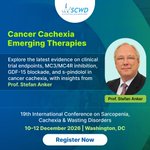
At #SCWD2026, one of the most anticipated sessions will bring together leading voices in cancer cachexia research to debate the science shaping the next generation of therapies.
Prof. Stefan Anker (Germany) opens the session with a presentation on relevant endpoints for clinical trials in cancer cachexia, a question that sits at the heart of how the field defines, measures, and ultimately proves treatment success.
Joining him in the session:
Dan Marks (USA) — MC3/MC4R inhibition for cachexia
Eric Roeland / Richard Dunne (USA) — GDF-15 inhibition to reduce cachexia and promote anti-tumour therapy
Andrew Coats (Australia) — s-pindolol
From receptor-based mechanisms to biomarker-driven trial design, this session reflects where cancer cachexia therapeutics is heading, and the scientific rigour required to get there.
Washington, DC | 10–12 December 2026
Register: society-scwd.org/events/19th…
#CancerCachexia #SCWD2026 #SCWDConference2026 #ClinicalTrials #GDF15 #MelanocortinSystem #CachexiaTherapy #MuscleWasting #CancerCachexiaResearch #Oncology

Cancer cachexia is a complex condition that can affect people living with cancer through muscle loss, nutritional decline and reduced physical function, making it an important part of cancer care and research.
SCWD continues to advance research and discussion around cancer cachexia and muscle wasting disorders, bringing together experts to deepen understanding and improve clinical management, with the potential to preserve function, support better patient outcomes and ultimately improve quality of life.
Are you working in cancer cachexia, muscle wasting, nutrition, physical function or related research? Join the global SCWD community at SCWD 2026 and be part of the conversations shaping the field.
If this is your area of research, don’t miss the opportunity to connect with experts and explore the latest work in cancer cachexia.
Register now for SCWD 2026, 10–12 December in Washington, DC: society-scwd.org/
#CancerCachexiaAwarenessDay #SCWD2026 #CancerCachexia #CancerCachexiaResearch #MuscleWasting #CachexiaResearch #SCWDConference2026

How does incretin treatment affect more than body weight?
As clinical use of incretin therapies expands, understanding changes in skeletal muscle and other organs is becoming increasingly relevant to the management of sarcopenia and muscle wasting.
At SCWD 2026, these questions take centre stage as experts examine the clinical evidence around incretin treatment and its effects beyond adipose tissue.
Register for SCWD 2026: society-scwd.org/
#SCWD2026 #Sarcopenia #MuscleWasting #MuscleHealth #IncretinTherapy #Obesity #BodyComposition #Cachexia #SCWDConference2026

September is Cancer Cachexia Awareness Month.
For people living with cancer, cachexia can mean loss of muscle and strength, reduced physical function, poorer treatment tolerance and a lower quality of life.
Recognising cachexia earlier and improving our understanding of its mechanisms, biomarkers, nutritional needs, physical function and treatment options can help clinicians provide better support throughout the patient journey. Advancing awareness, education and research in cancer cachexia means working towards better care and better lives for patients.
This September, SCWD and the Cancer Cachexia Society are joining that effort. At SCWD 2026, researchers and clinicians will come together in Washington, DC to discuss the latest evidence and approaches in cancer cachexia. Join us this December.
Washington, DC | 10–12 December 2026
Register early for SCWD 2026: society-scwd.org/
#CancerCachexiaAwarenessDay #SCWD2026 #CancerCachexia #CancerCachexiaResearch #MuscleWasting #CachexiaResearch #SCWDConference2026

The 1st Vienna Cachexia Network Symposium brings together clinicians, researchers and trainees to explore cancer-associated cachexia across metabolism, immunology, cancer biology and clinical and palliative care.
With keynote lectures from eduardo bruera, Stephan Herzig, Sheng ‘Tony’ Hui and Baracos Vickie, the programme offers an afternoon of scientific exchange, poster presentations and networking around the latest questions in cachexia research.
8 October 2026 | 13:00–19:00 CEST
Vienna & online
Free participation
Join us: med-online.info/webinar/vi-c…
#Cachexia #CancerCachexia #TissueWasting #CancerResearch #Metabolism #Immunology #PalliativeCare #ViCaN

SCWD brings together leading experts in muscle biology, sarcopenia and ageing to advance understanding of the mechanisms that regulate muscle mass across the lifespan.
Research co-authored by Prof. Stephan von Haehling highlights how the balance between anabolic and catabolic pathways supports muscle maintenance, and how ageing can contribute to anabolic resistance and reduced muscle protein synthesis.
The research also emphasises the importance of assessing muscle mass, strength and physical performance, alongside exercise, nutrition and potential pharmacological approaches to support muscle health.
These themes will continue at SCWD 2026, where experts will explore advances in sarcopenia, ageing and muscle wasting.
Register early for SCWD 2026: society-scwd.org/
#SCWD2026 #Sarcopenia #MuscleHealth #HealthyAgeing #MuscleBiology #MuscleWasting #AgeingResearch

To every researcher, clinician & investigator who submitted an abstract for SCWD 2026, thank you.
200+ submissions were received this year, covering sarcopenia, cancer cachexia, muscle wasting, adiposity, ageing, frailty & incretin-based therapies. Each one now goes through review as we build the scientific programme for the 19th International Conference on Sarcopenia, Cachexia & Wasting Disorders.
We know how much work goes into a submission, and we're grateful for the continued engagement of the SCWD community in advancing this field.
Selected abstracts will be announced ahead of the conference, 10-12 December 2026 in Washington, DC. In the meantime, Early Bird registration remains open, with rates increasing after 5 September 2026.
Register early: tinyurl.com/27j2btxt
#SCWD2026 #Cachexia #Sarcopenia #MuscleWasting #Adiposity #IncretinBasedTherapies #CancerCachexiaResearch #SCWDConference2026

FINAL CALL. 24 HOURS LEFT TO SUBMIT YOUR ABSTRACT.
With 350+ international experts coming together to advance multidisciplinary approaches across sarcopenia, cachexia, muscle wasting, adiposity, ageing, frailty and muscle health, this is your last opportunity to bring your research into the conversation focused on improving patients’ outcomes.
Don’t miss the deadline. Submit now: society-scwd.org/annual-conf…
#SCWD2026 #Cachexia #Sarcopenia #MuscleWasting #Adiposity #IncretinBasedTherapies #CancerCachexiaResearch #SCWDConference2026

Incretin-based therapies are producing significant reductions in total body weight. But total body weight is a crude endpoint.
The more pressing scientific question is what is actually changing in body composition, and why.
Adiposity is not simply fat mass. It encompasses the distribution, infiltration, and metabolic activity of adipose tissue across compartments. As GLP-1 and dual GIP/GLP-1 receptor agonists accelerate fat mass reduction, parallel changes in lean mass, intramuscular lipid content, and adipose tissue biology are raising fundamental questions about muscle-fat crosstalk, metabolic homeostasis, and how body composition endpoints should be defined in trials.
These questions sit at the intersection of obesity pharmacology, muscle biology, and metabolic disease. They are the questions #SCWD2026 is built to advance.
Washington, DC | 10–12 December 2026
Register today: society-scwd.org/
#SCWD2026 #MuscleHealth #GLP1 #IncretinTherapies #BodyComposition #Sarcopenia #Adiposity

Tomorrow, the Early Bird Rate Ends.
If you’ve been planning to attend SCWD 2026, today is the day to register at the Early Bird rate.
Join the scientific community in Washington, DC for the latest research, clinical advances and scientific discussions across sarcopenia, cachexia, muscle wasting, adiposity and muscle health.
Don’t leave it until tomorrow. Secure the Early Bird rate today.
10-12 December 2026 | Washington, DC: tinyurl.com/27j2btxt
#SCWD2026 #Cachexia #Sarcopenia #MuscleWasting #Adiposity #IncretinBasedTherapies #SCWDConference2026

The abstract submission deadline for SCWD 2026 has been extended due to high demand and researcher requests.
If you've been meaning to submit or need a bit more time to finalise your work, you now have it.
We welcome abstracts on sarcopenia, cachexia, muscle wasting, adiposity, ageing, frailty, and muscle health. Submitting is your chance to present your research and join the scientific programme at the 19th International Conference on Sarcopenia, Cachexia & Wasting Disorders, 10–12 December 2026 in Washington, DC.
Take the extra time. We look forward to seeing your work.
Submit your abstract today
#SCWD2026 #Sarcopenia #Cachexia #MuscleWasting #Adiposity #Frailty #MuscleHealth #WastingDisorders #AbstractSubmission #SCWDConference2026

Only 24 hours remain. Don’t miss your chance to bring your research to the global SCWD community.
This is your final opportunity to submit your abstract for SCWD 2026 and share your work with researchers, clinicians, and experts from around the world.
Whether your research focuses on cachexia, sarcopenia, muscle wasting, adiposity, or emerging areas such as incretin-based therapies, your findings can contribute to important scientific discussions and connections within the field.
For eligible early-career researchers, abstract submission also provides the opportunity to be considered for the Young Investigator Award and gain recognition for your work.
The deadline is approaching.
Take the final step and submit your abstract today: tinyurl.com/mt9j6ub2
Abstract deadline: August 31, 2026
Washington, DC | 10–12 December 2026
#SCWD2026 #Cachexia #Sarcopenia #MuscleWasting #Adiposity #IncretinBasedTherapies #MedicalResearch #CallForAbstracts #MuscleWastingResearch #CancerCachexiaResearch #YoungScientistAward #SCWDConference2026

Are you ready to share your research with the SCWD community?
With only 5 days left before the abstract deadline, this is your final opportunity to submit your work for consideration at SCWD 2026.
Whether you are presenting new findings, ongoing research, or emerging insights, your contribution can help strengthen discussions around the challenges and opportunities in sarcopenia, cachexia, and wasting disorders.
Join researchers and clinicians from around the world at the 19th International Conference on Sarcopenia, Cachexia & Wasting Disorders and be part of the exchange of ideas shaping the field.
Abstract deadline: August 31, 2026
Washington, DC | 10–12 December 2026
Submit your abstract today: tinyurl.com/mt9j6ub2
#SCWD2026 #Cachexia #Sarcopenia #MuscleWasting #Adiposity #IncretinBasedTherapies #MedicalResearch #CallForAbstracts #MuscleWastingResearch #CancerCachexiaResearch #YoungScientistAward #SCWDConference2026

Have you submitted your abstract yet?
Only one week remains to share your research with the global SCWD community.
SCWD 2026 brings together researchers and clinicians working to advance understanding and innovation across cachexia, sarcopenia, muscle wasting, adiposity, and emerging approaches including incretin-based therapies.
This is your opportunity to contribute your findings, exchange insights with experts, and be part of conversations shaping the future of research and clinical practice.
Don’t miss the deadline: tinyurl.com/mt9j6ub2
Submit your abstract by August 31, 2026 and join us in Washington, DC, for the 19th International Conference on Sarcopenia, Cachexia & Wasting Disorders.
#SCWD2026 #Cachexia #Sarcopenia #MuscleWasting #Adiposity #IncretinBasedTherapies #MedicalResearch #CallForAbstracts #MuscleWastingResearch #CancerCachexiaResearch #YoungScientistAward #SCWDConference2026

The countdown to SCWD 2026 has begun.
Early Bird registration is still available, offering an opportunity to secure your place before registration rates increase after September 5, 2026.
Join experts, researchers, and clinicians from around the world for scientific discussions and knowledge exchange focused on advancing understanding of cachexia, sarcopenia, muscle wasting, adiposity, and emerging approaches such as incretin-based therapies.
Be part of the conversations, collaborations, and discoveries driving progress in the field.
Register early for SCWD 2026: tinyurl.com/27j2btxt
#CancerCachexia #Cachexia #CancerCare #SupportiveCare #Oncology #SCWD2026 #Cachexia #Sarcopenia #MuscleWasting #Adiposity #IncretinBasedTherapies #MedicalResearch #MuscleWastingResearch #CancerCachexiaResearch #SCWDConference2026

Radiation-induced oral mucositis is a well-recognised driver of treatment-related malnutrition in head and neck cancer. A new preclinical study in Cancer Letters now points to a molecular mechanism that may explain part of that link.
GDF-15, an established biomarker and mechanistic driver of cancer cachexia, was found to be upregulated in coincidence with radiation-induced oral mucositis raising the hypothesis that treatment-induced mucosal injury may activate GDF-15/GFRAL signalling as an independent pathway contributing to cancer-related anorexia and wasting, distinct from tumour-derived GDF-15 elevation.cf
If confirmed, this positions mucositis not just as a toxicity management challenge, but as a direct contributor to the cachexia cascade, and elevates GDF-15 monitoring as a clinically relevant endpoint in patients undergoing head and neck radiotherapy.
Join the global conversation on cancer cachexia, GDF-15, and treatment-related wasting at #SCWD2026.
Washington, DC | 10–12 December 2026
Register: society-scwd.org/events/19th…
Read the study: sciencedirect.com/science/ar…
#CancerCachexia #GDF15 #GFRAL #OralMucositis #HeadAndNeckCancer #MuscleWasting #SupportiveOncology #SCWD2026 #SCWDConference2026
