

Founder and first President of The Geneva Learning Foundation @DigitalScholarX https://xitter.cf/t.co/UM7s0cTlPg
Joined April 2011
- Tweets10.6K
- Following2.7K
- Followers1.7K
- Likes2K





Pinned Tweet
"Equitable care is the purest form of healing." @PIH

I cannot unsee the quiet sorting of who matters and who does not.
I remember the grandmother who arrived before dawn, waiting hours while others who came later were seen first.
She did not ask for health equity.
She asked only if she would live to see her grandchildren grow.
I remember the adolescent boy who hid his illness for months because our clinic had become known as “the place where young men are judged.”
He did not ask for sensitivity training.
He asked if we could treat him without his community knowing.
I remember the woman carrying her malnourished child for a day’s journey, turned away because she could not pay.
She did not ask for policy reform.
She asked why the medicines that arrived at the district capital never reached her village.
They said health was universal.
But access is not universal.
Nor is dignity, nor quality.
Only the promises were universal.
Only the mission statements were universal.
We tracked the discrepancies in our ledgers.
We mapped the gaps in our coverage.
And then, we stopped merely documenting.
We began transforming what we could reach.
A nurse created pictorial instructions for patients who could not read.
A community health worker traveled extra hours to reach homes others deemed too remote.
A midwife learned phrases in five local dialects to comfort women in labor.
A doctor quietly paid for medicines when families could not.
No recognition.
No promotions.
Just presence.
I have seen community clinics operate without electricity—just daylight, ingenuity and dedication.
I have seen health workers walk kilometers in rainy seasons, unpaid, underequipped, and unwavering.
I have seen funders abandon, but our compassion endure.
What endures is not the policy, not the frameworks written in conference rooms.
What endures is the provider who questioned the status quo when questioning brought no reward.
The names absent from publications.
The efforts never funded.
The principles never compromised.
The inequity persisted.
And yet—we adapted.
Not because we were trained to.
Not because it advanced our careers.
But because equitable care, when all systems resist it, is the purest form of healing.
Equity did not arrive when policies proclaimed it.
Equity grew because someone, somewhere, insisted on providing care that honored every human equally.
This is why we care when equity fails.

Health worker, are you prepared? The strongest El Niño on record is going to harm the health of millions with hunger and disasters, and United Nations relief chief Tom Fletcher called it a “wrecking ball” on 21 October 2026.
Up to 50 million people could face more hunger from extreme heat, droughts, and floods.
The World Meteorological Organization and OCHA warned that Pacific sea temperatures may rise 3.8 degrees above average between November 2026 and January 2027.
This will bring extreme weather to Latin America, East and Southern Africa, Asia, and the Pacific.
Somalia, Ethiopia, and Kenya need supplies in place before heavy rains arrive.
Southern Africa needs seeds and support for livestock before the planting season.
Central America needs help to protect livelihoods from drought.
The UN released over 50 million U.S. dollars from the Central Emergency Response Fund for 11 countries on the front line, including Chad, Ethiopia, Somalia, South Sudan, and El Salvador.
Health workers already see more sickness from floods, heat, and failed crops.
The African Development Bank estimates costs of 10 to 20 billion dollars for African countries and a drop in GDP of 1 to 2 percent.
The Geneva Learning Foundation’s 7-30 Climate Health Emergency Framework sorts a climate emergency into two numbers you can hold in your head under pressure, seven days to prepare and thirty days to recover.
This course connects you with health workers from all over the world, each building their own local 7-30 plan for the next shock.

7-30 Climate Health Emergency Framework is a free framework that gives a shape to what you already do as a health worker facing climate shocks, so you can ask for support with evidence behind you. Download the framework and get certified here: learning.foundation/2026/08/…
7-30 sorts a climate emergency into two numbers you can hold in your head under pressure, seven days to prepare and thirty days to recover.
A free Level 1 certification course helps you learn to use it in the community you serve.
Work with a colleague to build your local plan and earn your certificate to submit to your employer or professional body.

Comment les organisations à but non lucratif entrent-elles dans l’ère de l’intelligence artificielle ? La Fondation Apprendre Genève a recomposé son nom dans une police conçue pour écrire du code.
Le nouveau logo relie les lettres T, G, L et F en un seul chemin continu.
Vues de près, les lettres forment un petit labyrinthe avec une seule ouverture.
Une clé se trouve juste sous cette ouverture.
Elle représente la cause profonde que les professionnels de la santé cherchent avant de concevoir une solution.
La clé vient du blason de Genève, où elle appartenait autrefois aux dirigeants de la cité.
Dans le logo, elle appartient à la personne qui se trouve au cœur du problème.
En police à chasse fixe, le « i » étroit et le « m » large partagent la même largeur.
Dans son réseau, agents de santé communautaires et spécialistes de santé publique contribuent sur un pied d’égalité.
La revue montre ce que portent la grille et la couleur rouge.

Lire l'article complet : learning.foundation/fr/2026/…

What is the visual language for philanthropy in the Age of Intelligence? “It feels statutory,” exclaimed creative director Cédric Delmont, who designs for Lindt and L’Oréal. He was talking about The Geneva Learning Foundation’s old logo. You will be surprised by why and how the cheeeeese agency reinvented our logo.
“You do not feel the action,” he said.
The foundation agreed. Its network of more than 80,000 health and humanitarian workers learns by doing.
Its founder’s worst nightmare was being mistaken for a think tank.
For its tenth anniversary, the foundation and the Geneva studio of cheeeeese tested three ideas.
They chose a key from the coat of arms of Geneva.
The key now sits in the hands of the health worker looking for a root cause.
The studio took the work on pro bono.
One more twist: an artificial intelligence will manage the new identity, with human oversight.
Read the full article: learning.foundation/2026/10/…

La Dre Marina Romanello, qui dirige le Lancet Countdown, vient à Teach to Reach pour écouter les agents de santé et présenter les dernières conclusions de son équipe.
Son équipe suit depuis dix ans ce que le changement climatique fait à la santé, dans chaque pays.
Le rapport de cette année s’appuie sur 146 auteurs et 71 organisations dans le monde.
Un professionnel de santé publique de l’État du Plateau, au Nigeria, a vécu cela dans son propre centre de santé.
De fortes pluies ont inondé des villages voisins. Son centre a recensé plus de 500 cas de choléra et de diarrhée en une semaine.
Ce n’est qu’après coup qu’il a fait le lien avec le changement climatique.
La Dre Romanello a dit que les chiffres ont besoin de ce genre de vérité de terrain.
À Teach to Reach, les agents de santé parlent en premier. Puis elle présente ce que montrent les données. Ensuite, tout le monde relie les points ensemble.
Cela se passe quelques jours avant la COP31, pendant que les résultats sont encore récents.
Apportez votre propre réponse : qu’est-ce qui a changé dans le climat cette année, et qu’est-ce que cela a coûté à votre communauté ?
👉 Demandez votre invitation : learning.foundation/fr/2026/…

Obtenez une certification en climat et santé : learning.foundation/fr/2026/…
En savoir plus sur Teach to Reach : learning.foundation/fr/teach…
Découvrez ce qui s’est passé la première fois que Marina Romanello, du Lancet Countdown, s’est entretenue avec des agents de santé : learning.foundation/fr/2026/…

Dr Marina Romanello, who leads the Lancet Countdown, is coming to Teach to Reach to listen to health workers and present her team’s latest findings.
Her team spent a decade tracking what climate change does to health in every country.
This year’s report draws on 146 authors and 71 organisations worldwide.
A public health professional in Plateau State, Nigeria saw it happen at his health centre.
Heavy rain flooded nearby villages. His centre logged over 500 cholera and diarrhoea cases in a week.
Only afterward did he connect it to climate change.
Dr Romanello has said the numbers need that kind of ground truth.
At Teach to Reach, health workers speak first. Then she shares what the data shows. Then everyone connects the dots together.
This happens days before COP31, while the findings are still new.
Bring your own answer: what changed in the weather this year, and what did it cost your community?
👉 Request your invitation: learning.foundation/2026/10/…

Get climate and health certification: learning.foundation/2026/06/…
Learn more about Teach to Reach: learning.foundation/teachtor…
See what happened the first time Marina Romanello from the Lancet Countdown sat down with health workers: learning.foundation/2026/10/…

Climate and outbreaks: could the 7-30 and 7-1-7 frameworks work together? TGLF Scholar Dr Alexandre Alimasi Akili explores the idea.
He is a clinical doctor and field epidemiologist in the DRC.
He asks how local health workers can turn what they see into action sooner.
His example is Tanganyika, DRC, where a 2024 flood destroyed 3,360 homes.
Aid agencies warned right away about water-related disease, especially cholera.
The 7-30 gives local teams seven days to prepare and thirty days to recover.
The 7-1-7 measures how fast a system detects, reports, and responds to outbreaks.
He proposes that the 7-30 helps local teams act.
The 7-1-7 would then measure how much faster the system responds.
He offers this as a research idea to test.
Several health workers see more diarrhea cases after a flood.
It could be a warning sign.
It could also be seasonal change or better record keeping.
He asks where local knowledge ends and proof begins.
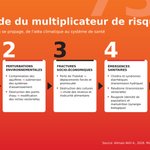
The article maps how one flood multiplies risks, from contaminated water to slower detection.


On World Menopause Day, we are pleased to share the first course asking health workers — most of them women working in African communities — to put menopause into words.
And what they shared is not what any textbook would have predicted.
Menopause is missing from most medical training, from health systems, from the conversation.
No screening. No vocabulary. No budget.
So we asked one question: what word comes to mind when you hear the word menopause?
A medical social worker answered: "Silence. Also disgust."
A public health worker named the word his own language uses, and the shame it carries.
A nephrologist in Italy saw spring — green fields and colorful flowers.
A community health board member in Costa Rica, going through it herself at a young age, held onto the same phrase: the second spring.
Then came the stories.
A menopause coach who waited five years for a doctor who would listen, after being told she could only get hormone therapy if she had her womb removed.
A nurse in Cameroon who thought she had malaria, tested negative again and again, and learned the truth from her colleagues.
An obstetrician who teaches medical residents, and who underwent cardiac tests before realizing she was in the climacteric herself.
The gap is real, and it is wide.
But the people closest to women in midlife are already noticing what the system misses.
They just need support to recognize it, and a place to compare what they see.
On Monday, they begin reviewing each other's experiences as evidence.
Read what they already notice, in their own words.

Read the full article: learning.foundation/2026/06/…

Agence cheeeeese crée un nouveau logo pour les dix ans de La Fondation Apprendre Genève.
GENÈVE (8 octobre 2026) – La Fondation Apprendre Genève (TGLF) dévoile aujourd’hui un nouveau logo et une nouvelle identité visuelle. L’agence de design internationale cheeeeese les a créés pour marquer le dixième anniversaire de la Fondation.

Lire l'article complet : learning.foundation/fr/2026/…

How do non-profits enter the Age of Artificial Intelligence? The Geneva Learning Foundation reset its name in a typeface designed for writing code.
The new logo joins the letters T, G, L, and F into one connected path.
Closed up, the letters form a small labyrinth with one opening.
A key sits just below that opening.
It stands for the root cause that health workers look for before they design a solution.
The key comes from the shield of Geneva, where it once belonged to the city’s rulers.
In the logo, it belongs to the person inside the problem.
In monospace type, the narrow “i” and the broad “m” share one width.
In its network, community health workers and public health specialists contribute on the same terms.
The review shows what the grid and the colour red each carry.


Reda Sadki retweeted

I think it's plausible that within a year we'll see AI-based cyberattacks on the power grid, financial system, internet infra, or water. Things like the French supermarket cyberattack but worse. As basic prep I would recommend:
Cash: Get a few weeks of spending in cash
Internet: Get a Starlink Mini so that you have Internet if local fiber or cell is down (~$150 plus $10/month in standby mode)
Power, minimal: Enough to run Starlink Mini and phones (~$1,250)
Daily need: about 1 kWh (Starlink Mini 0.7, phones and laptops 0.2; can limit runtime)
Battery: 1 kWh LiFePO4, e.g. EcoFlow DELTA 3 Plus
Solar: 1x400W folding panel, which refills about 1 kWh on a sunny day
Power, better: Enough to run a fridge, Starlink Mini and phones (~$5,000)
Daily need: about 2.5 kWh (fridge 1.5, Starlink Mini 0.7, phones and laptops 0.2)
Battery: 4 kWh LiFePO4, e.g. EcoFlow DELTA Pro 3
Solar: 3x400W folding panels, which refill about 3 kWh/day in sun
Generator: ~2,500W dual-fuel inverter generator; refills battery in a few hours even if weather is bad; get a few 20 lb propane tanks
Water: 14+ gal of water per person for two weeks
Food: 2+ weeks of shelf-stable food
Comms: Hand-crank NOAA emergency radio
Climat et épidémies: les cadres 7-30 et 7-1-7 peuvent-ils s’articuler? Le Dr Alexandre Alimasi Akili, Scholar de La Fondation Apprendre Genève, explore cette hypothèse.
Il est médecin clinicien et épidémiologiste de terrain en RDC.
Il veut savoir comment les agents locaux peuvent agir plus tôt.
Exemple: le Tanganyika, en RDC, où une inondation a détruit 3 360 maisons en 2024.
Les agences humanitaires ont aussitôt alerté sur les maladies hydriques, surtout le choléra.
Le 7-30 donne aux équipes sept jours pour se préparer, trente pour récupérer.
Le 7-1-7 mesure la vitesse de détection, de notification et de riposte aux épidémies.
Il propose que le 7-30 aide les équipes locales à agir.
Le 7-1-7 mesurerait alors à quel point le système riposte plus vite.
Il présente cela comme une piste de recherche à tester.
Plusieurs agents de santé constatent plus de diarrhées après une inondation.
Ce peut être un signal d’alerte.
Ce peut aussi être un changement saisonnier ou un meilleur enregistrement des cas.
Il demande où s’arrête le savoir local et où commence la preuve.
L’article suit les risques qu’une inondation multiplie, de l’eau contaminée aux retards de détection.

