

A diaspora Chinese media collective challenging imperialism. ➺ https://xitter.cf/t.co/p1nmHMQRe0 ➺ https://xitter.cf/t.co/FJczny3zn3 ➺ https://xitter.cf/t.co/BJlMKCTG8g
qiaocollective@gmail.com
Joined July 2019
- Tweets9.2K
- Following163
- Followers54.9K
- Likes728


Pinned Tweet
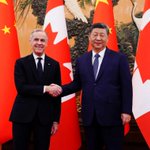
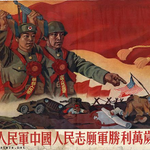
Amid warming China-Canada ties, with Prime Minister Mark Carney's much-vaunted visit to Beijing and seeming repudiation of the US-led "rules-based international order," we must not overlook the constitutive role that Sinophobia has played in Canadian politics for over a century.

Qiao Collective retweeted

On 26 August, a glacial collapse near the Nepal-China border triggered a devastating flash flood that swept 70 kilometres down Nepal's Trishuli River. Horrifying footage captured the moment the torrential mudslide completely destroyed the Gyirong land port and border crossing. As of 1 September, over 1000 people have been confirmed k*lled and nearly 4000 reported missing in Nepal, while China's Xizang (Tibet) Autonomous Region has suffered 16 confirmed de*ths with over 500 still missing.
On the Chinese side, emergency responders instantly sprang into action, working 24/7 to clear debris and search for survivors across the entire affected area. Predominantly Tibetan local cadres of the Communist Party of China are directing an all-hands response involving police and military personnel from across the country. The country's internet is awash with heart-wrenching stories of rescue workers plunging into the effort even as their own loved ones remain buried.
But you wouldn't know any of this from Western outlets such as the BBC, which risibly claims that the Chinese government is censoring images of the disaster. This narrative can be debunked with a cursory search for '泥石流' ('mudslide') or related terms on Xiaohongshu, Weibo, or any other Chinese social media platform. Some of the top search results come from state media, including the very clip the BBC used to illustrate its 'story'.
Analysts considered this a journalistic lack of integrity, and it is yet another reminder that with every natural disaster affecting China comes an equally noxious flood of low-effort Western propaganda. If anything, the much-maligned 'Great Firewall' insulates Chinese netizens at large from the true depravity of Western legacy media.
@qiaocollective

Qiao Collective retweeted
EXPOSING US COMPLICITY AT WORLD'S LONGEST MASS GRAVE
Nearly three years of US-Isr*eli g*nocide in Gaza have normalised the imagery of mass graves, streamed to the world in real time. But such atrocities on the part of the US and its client regimes are nothing new. More than seven decades ago, they launched a comparably g*nocidal campaign across Korea, slaughtering at least 20% of the population over the course of three years.
But while the majority of these deaths were concentrated on the front lines or in the heavily-bombed north, the far-right US puppet regime in the south extended the mass killing to the home front. Mere weeks into the war, the Republic of Korea had massacred an estimated 200,000 accused communist, fearing they would be liberated by the rapidly advancing DPRK forces.
Up to 7000 of these political prisoners, from all across the country, were summarily executed near the centrally located city of Daejeon in July 1950. They were buried at Sannae Gollyeonggol in what many consider the world's longest mass grave, stretching over a kilometre in length. Then all records of the incident were systematically suppressed for half a century. Only in 1999 did the United States declassify its photographic archive, revealing its active complicity in a massacre for which neither it nor the ROK has ever formally apologised.
In the face of ongoing right-wing denialism, aging families are now in a race against time to recover their loved ones' remains and properly memorialise their sacrifice. As part of the US Out of Korea Jaju Solidarity Brigade, Charles Xu brings us an exclusive Sovereign Media report from Daejeon on their fight for justice and accountability.
@qiaocollective
Qiao Collective retweeted
ASIA MUST UNITE TO EXPEL US MILITARY
US Forces Korea commander Xavier Brunson has infamously characterised the Korean Peninsula, with its 80 million people, as a 'fixed aircraft carrier' and a 'dagger' pointed at China. In doing so, he was simply following in the bloodstained footsteps of his distant predecessor Douglas MacArthur. In 1950, on the eve of the g*nocidal US intervention into Korea's civil war, MacArthur had likewise described China's island province of Taiwan as an 'unsinkable aircraft carrier'.
Then as now, the US is intent on linking the Korea and Taiwan theatres into a single front of aggression against China. This is by no means an original idea. It closely emulates Imperial Japan's colonial strategy in the lead-up to World War II: a murderous, decades-long campaign of conquest that claimed tens of millions of lives across the Asia-Pacific region.
The wartime alliance between China and the US, forged in the face of that common enemy, is today but a distant memory. With Japan's help, the US now aims to militarise the entire 'first island chain' extending through Okinawa, Taiwan, the Philippines, and deep into the South China Sea. And the Republic of Korea plays an indispensable role as the US military's only foothold on the East Asian mainland.
But people's movements resist the US war machine in every nation it seeks to colonise, occupy, or otherwise enlist into its suicidal campaign against China. On 14 August, 81 years after Korea's liberation from Japanese colonial rule, representatives of these movements gathered in Seoul for an International Forum on National Liberation. They were joined for the first time by delegates from the US, organised as the inaugural Jaju Solidarity Brigade.
One of them was Sovereign Media and Qiao Collective's own Charles Xu, who made an impassioned call for a mass people's struggle to expel US bases from East Asia; before they must be expelled by force, as Iran has stunningly done across West Asia.
Video credit: Kim Cheolmin
@qiaocollective
Qiao Collective retweeted
KOREA'S 20-YEAR STRUGGLE AGAINST WORLD'S LARGEST US BASE
Sprawling across some 1400 hectares of once-prime farmland outside Pyeongtaek, Korea, Camp Humphreys is the largest overseas US military base in the world. Since 2018, it has served as the headquarters of US Forces Korea, whose commander recently described the country as a 'dagger' aimed at China. Worryingly, he would take operational command of the entire Republic of Korea military in the event of renewed war.
When US occupation forces first plotted their relocation from Seoul to Pyeongtaek, they were likely relieved to escape the capital's militant protest movements. What they didn't account for was the intensity of local resistance to Camp Humphreys' expansion. For nearly two years, the village of Daechuri held out as a hotbed of anti-imperialist mobilisation across the country. When the final 44 households were evicted in May 2006, over 500 solidarity activists were arrested in the ROK's largest domestic military operation since the 1980 Gwangju uprising.
The fires of that struggle still burn today, in a mass anti-US movement that brings over a thousand students, trade unionists, and progressive activists to Camp Humphreys annually. This year, they were galvanised by news of a deadly white phosphorus leak at nearby Osan Air Base just weeks before. But in a historic first, they were also joined by the Jaju Solidarity Brigade, an international delegation hailing mostly from the US and nations under its colonial rule. They were there to deliver a resounding message to the occupation in a language it was sure to understand: US Out of Korea!
@qiaocollective
Qiao Collective retweeted
KOREANS DEMAND US OUT ON LIBERATION DAY
Every year, the US and Republic of Korea (ROK) conduct a massive joint military exercise called Ulchi Freedom Shield, typically culminating in a simulated attack on the DPRK. On the eve of this year's edition, Donald Trump threw a spanner in the works by deciding to "substantially reduce" the war games. They had been slated to run for 11 days beginning immediately after 15 August, Korean Liberation Day.
The irony of this timing has never been lost on the ROK's progressive movement. For them, Korea's national liberation struggle did not end with the defeat of Japanese colonialism on 15 August 1945. It remains essentially incomplete as long as the US entrenches its own imperialist division of the peninsula, occupying over 62 bases in the south and even retaining wartime operational control over the ROK military.
Thus the meaning of Liberation Day has always been contested: between a right that claims the mantle of nationalism while kowtowing to both Japanese and US imperialism, and a left that has resisted both for over a century. And while 15 August has long been a day of both celebration and continued struggle for ROK progressives, recent commemorations have taken an even harder anti-US edge. This year, they were buoyed for the first time ever by the presence of a delegation hailing from the heart of the empire itself.
As part of this inaugural US Out of Korea Jaju Solidarity Brigade, Charles Xu of Sovereign Media and @qiaocollective brings an exclusive report from the streets of Seoul.
Qiao Collective retweeted
THE US WAR ON KOREA NEVER ENDED
In the US the so-called “Korean War” rarely enters the public discourse, earning the offensive myopic moniker of “The Forgotten War”.
But Koreans have never forgotten. Not in the north, where US bombing leveled every building over one storey and slaughtered at least 20% of the population. And certainly not in the south, where the people have suffered under a succession of US-backed military despots.
Every year, two anniversaries in late July evoke solemn remembrance. One marks the No Gun Ri massacre of 26-29 July 1950, when US troops murdered some 400 fleeing South Korean civilians trapped under a bridge. The other commemorates the 27 July 1953 armistice that provisionally ended active combat.
But to claim that these two events bookended the war obscures more than it clarifies. The war actually started as early as 1945, the moment the US replaced Japan as the occupying power in the south and overthrew the popular People's Republic of Korea.
Nor did it end with the armistice of 1953. A state of war exists to this day, with the US refusing to sign a final peace treaty and holding on to wartime command over the entire Republic of Korea military, with dozens of military bases. But just as the US empire has never abandoned its goal of total subjugation, Koreans across the peninsula have never stopped resisting.
Sovereign Media's Charles Xu will be reporting from the frontlines of their struggle in August, as part of the US Out of Korea Jaju Solidarity Brigade organised by @nodutdol.
@qiaocollective
Qiao Collective retweeted
CHINA LAUNCHES GLOBAL SOUTH AI ALLIANCE
The United States' AI industry is fast on its way to cannibalising the country's productive economy, with over $700 billion in projected capital spending this year alone. It's enjoyed Donald Trump's gratuitously self-dealing patronage from literally day one of his second term. Since then, its most visible use case has been the targeted massacre of 168 schoolchildren in Minab, Iran. Domestic opponents of data centres and their ruinous environmental impacts are officially branded 'anti-tech violent extremists' and potential t*rrorists.
And internationally, the US is hard at work cementing its own tech giants' global monopoly status through the 'Pax Silica' initiative. The founding members include a rogues' gallery of g*nocidal settler colonies (Isr*el, Australia) and/or US proxies in East Asia (Japan, South Korea, Singapore). Their target is unmistakable: China, the only sovereign challenger to US hegemony in AI.
Not only have a succession of Chinese models such as DeepSeek, Kimi, and Zhipu equalled their US counterparts at a small fraction of the cost. Their open-source nature undercuts the hyperscalers' entire business model by effectively making AI a public good, especially for the Global South. And through its ability to discipline and direct the industry to socially useful ends, China's party-state poses an equally potent threat to US tech barons' radically anti-human ideology.
On 17 July, China delivered its answer to Pax Silica by unveiling the World Artificial Intelligence Cooperation Organisation (WAICO) in Shanghai. Bringing together 29 nations across Eurasia, Africa, and Latin America — including its surviving socialist bastions of Cuba, Venezuela, and Nicaragua — WAICO unites the very global majority that's rendered surplus by the West's techno-utopian fantasies. Its first flagship initiative, announced by Xi Jinping, is to freely disseminate the AI-powered meteorological warning system MAZU. A clearer contrast with the paranoid securitisation of Pax Silica could hardly be imagined.
@qiaocollective
Qiao Collective retweeted

NEW PATREON EP we're joined by charles xu and feiyang sun of @qiaocollective and @sov_media to discuss taiwan—its history, politics, class dynamics, and contemporary role as a site of contestation in the looming second cold war between the US and china

NEXT WEEK'S PATREON
china pt. 9: taiwan w/ feiyang sun and charles xu of @qiaocollective and @sov_media

Qiao Collective retweeted
NEXT WEEK'S PATREON
china pt. 9: taiwan w/ feiyang sun and charles xu of @qiaocollective and @sov_media
Qiao Collective retweeted
AFRICAN NATIONS BLOCK TAIWAN'S ESWATINI VISIT
When the People's Republic of China finally took its rightful place as the only legitimate representative of China at the UN in 1971, Chairman Mao Zedong proclaimed, “It is our African brothers who have carried us into the UN.” The 26 African nations that swung that pivotal vote have now ballooned to 53. Today, every country on the continent recognises Beijing over Taipei as the legitimate government of China—save one.
The lone holdout is Eswatini, formerly known as Swaziland: a small, landlocked neighbour of South Africa and the last absolute monarchy on the continent. King Sobhuza II reigned for a world-record 82 years, while acting as a loyal enforcer first for his British colonial overlords, then for apartheid South Africa. The regime maintained relations with the Taiwan-based 'Republic of China'. And now Sobhuza’s son, King Mswati III carries on that sordid legacy—enjoying lavish state honours and military aid from Taiwan, while amassing an obscene personal fortune and viciously repressing the people.
Meanwhile, Taiwan's separatist leaders put a disproportionate importance on Eswatini, as the only African nation that still dignifies their pretensions to statehood. There, they can step off their 'presidential' jets and be received with a full honour guard. Until, that is, other African countries decided to do something about it.
This time around, Eswatini's neighbours, Madagascar, Mauritius and Seychelles denied overflight privileges to Taiwan's 'president' Lai Ching-te, forcing him to miss the grandiose birthday party King Mswati threw to celebrate 40 years of his own autocratic rule. The Communist Party of Swaziland rightly claimed it as a victory for popular sovereignty and pan-African solidarity.
This bizarre alliance speaks volumes about Taiwan and Eswatini: two pariah regimes, obstinately stuck in the past, clinging desperately to the imperialist ship as it sinks beneath the tides of historical progress.
@VoxUmmah @venanalysis @qiaocollective
@ProgIntl @KawsachunNews
@OrinocoTribune @blkagendareport
@SoberaniaPod
Qiao Collective retweeted
CHINA STRIKES BACK AT IRAN SANCTIONS
More than two months into his ill-conceived, flagrantly illegal war on Iran, Donald Trump is flailing to salvage any semblance of success. Not only did the US and Israel abjectly fail in their strategic objectives: they're now in a far worse position than before, with Iran firmly in control of the Strait of Hormuz. Until Trump's farcical 'double blockade' and the short-lived fiasco of 'Project Freedom', Iran was even exporting more oil daily than it was prior to the war.
Trump is now turning in desperation to China, the primary buyer of Iranian oil, to extricate him from this debacle of his own making. Just months ago he had expected to waltz into Beijing in late March, having choked off two of its main energy suppliers in just the first quarter of 2026. Now, with just days to go before his rescheduled visit, he's all but begging for a face-saving concession from his unamused hosts.
Absent any kind of leverage over Iran itself, the US has upped the ante by directly sanctioning one of China's largest refineries processing imported Iranian crude. Thus far, the Treasury Department has only gone after small 'teapot refineries' so insulated from the world market that the illegal 'long-arm jurisdiction' of the US can't affect their operations anyway. But Hengli Petrochemical is different: it's an order of magnitude bigger than the others and occupies an essential place in Northeast China's energy matrix.
This time, China was done skirting under the radar. It had no choice but to strike back directly at this affront to its sovereignty. For the first time ever, it invoked the 2021 Blocking Rules and ordered that the sanctions 'shall not be recognised, implemented, or complied with' by any entity subject to Chinese law. In so doing, China is not just depriving Trump of much-needed leverage going into his trip to Beijing. It's making a huge stride toward global delinking from US hegemony and the construction of a genuinely multipolar world order.
@VoxUmmah @venanalysis @qiaocollective
@ProgIntl @KawsachunNews
@OrinocoTribune @blkagendareport
@SoberaniaPod
Qiao Collective retweeted

Wednesday at 12:30 PM EDT
We'll talk to Charles Xu from @qiaocollective & @sov_media about China's use (& non-use) of UNSC vetoes, it's relationships to Iran, Palestine, & "Israel" & how it seeks to navigate declining US imperialism youtube.com/live/WSOzGj7vuAw

ALT text reads "How is China Approaching Iran, Palestine, & US Imperial Decline? with Charles Xu of Qiao Collective & Sovereign Media; MAKC logo; image of Charles; background image of the 18th National Congress of the Communist Party of China: https://commons.wikimedia.org/wiki/File:18th_National_Congress_of_the_Communist_Party_of_China.jpg
Qiao Collective retweeted
CHINA'S REUNIFICATION: ENDGAME IN SIGHT?
On 10 April, Chinese President Xi Jinping greeted an eye-catching guest at Beijing's Great Hall of the People: Cheng Li-wun, the newly elected leader of Taiwan's opposition Kuomintang (KMT) party. In one sense, the meeting was hardly unprecedented. Xi himself had met Ma Ying-jeou in Singapore a decade earlier: the first, and so far only, summit between sitting leaders of mainland China and Taiwan. And Cheng's trip largely retraced her mentor Lien Chan's 2005 'journey of peace' to the mainland, during the KMT's previous spell in opposition.
By 2026, then, there was already a well-worn protocol for Xi and Cheng to follow. Use party rather than state titles exclusively, to sidestep Beijing and Taipei's rival sovereignty claims. Emphasise the shared rejection of 'Taiwan independence'. Reaffirm the '1992 Consensus', under which both sides understand themselves to be part of one China. Pay obligatory homage to Sun Yat-sen, the KMT founder honoured by both parties as the father of modern China.
But for Cheng Li-wun, simply going through these motions was a more radical act than it was for her predecessors. Not just because she herself started out in Taiwan's pro-independence camp. But because China's challenge to unipolar US hegemony, and the West's ideological offensive against it, have escalated to unseen heights in the last decade. And central to that offensive is the insidious claim that Taiwan's people monolithically reject both communism and Chinese identity, to the point of actively desiring US military 'protection'.
While Cheng's meeting with Xi may finally be puncturing that narrative internationally, in Taiwan itself it's in full-blown collapse. And that's why her most radical gesture isn't to extend an olive branch to the communists in power on the mainland, as the KMT has done for a generation. It's to atone for her party's brutal repression of Taiwan's own communists, who died for the cause of socialist unification only to be written out of history for decades. By finally laying to rest the ghosts of China's long-frozen civil war on both sides of the Taiwan Strait, Cheng's journey of peace may prove the most meaningful one yet.
@VoxUmmah @venanalysis @qiaocollective
@ProgIntl @KawsachunNews
@OrinocoTribune @blkagendareport
@SoberaniaPod
Qiao Collective retweeted
TAIWAN OPPOSITION LEADER: PEACE, NOT 'INDEPENDENCE'
In October 1945, Mao Zedong and Chiang Kai-shek held a fateful meeting in Chongqing. Their forces, the Communist Party of China (CPC) and the Kuomintang (KMT), had jointly liberated China from Japanese occupation just weeks before. Within months, their fragile eight-year truce would collapse into civil war. By 1949 a defeated Chiang Kai-shek and his US-backed KMT regime would flee to the island province of Taiwan, never to return.
The two parties' leaders would not meet again for another six decades. By then, they faced a new common enemy: the spectre of 'Taiwan independence'. This US-instigated project threatened to fatally undermine the '1992 Consensus', which united both sides of the Taiwan Strait in the understanding that they were part of one China.
Accompanying then-KMT chairman Lien Chan on that historic 2005 trip to mainland China was a young politician named Cheng Li-wun, who had just defected from the pro-independence camp. Last October, she was elected as the party's most vocally pro-reunification leader in decades. She brought a breath of fresh air to Taiwanese politics: condemning the island's separatist leaders for their warmongering servility to the US and Japan, and honouring the communist victims of the KMT's own White Terror.
Now Cheng is following in her mentor's footsteps with her own historic visit to the mainland, culminating in Beijing with a meeting with President Xi Jinping. Her first stop was laden with symbolism: Nanjing's Sun Yat-sen Mausoleum, the final resting place of the founder of modern China, revered by both the KMT and the CPC.
There, in an emotional speech, she vowed to heal 'the wound carved along the Taiwan Strait by the blade of Japanese imperialism' once and for all. And she invited 'Chinese people on both sides of the strait' to 'plant seeds of peace', watered by the memory of a shared war for national liberation and a still-unfinished struggle for reunification.
@venanalysis @VoxUmmah @qiaocollective @ProgIntl @blkagendareport @OrinocoTribune @KawsachunNews
Qiao Collective retweeted

What is really happening in Xinjiang? Vijay Prashad and Tings Chak shine a light on the accusations of genocide against the Chinese state, from the allegations' sources to the historical factors leading up to today. monthlyreview.org/articles/t…
Image courtesy of @qiaocollective.

Qiao Collective retweeted

SUNDAY: Socialist Chinamaxxing: How China’s achievements are a product of its socialism
📣 @georgegalloway
📣 @chenweihua
📣 @Jingjing_Li
📣 @BenjaminNorton
📣 @GeopoliticsDH
📣 @t_ings
📣 @IleanaCforPeace
📣 @agent_of_change
📣 @qiaocollective
🔗 eventbrite.co.uk/e/socialist…
🤖 Made with AI

Qiao Collective retweeted
A Thread 👇🏿
On the morning of Tuesday 7 April, Donald Trump ominously warned on Truth Social that ‘A whole civilization will die tonight, never to be brought back again’. Many feared a genocidal escalation from his earlier threat to wipe out Iran’s energy and transportation infrastructure if it did not ‘re-open’ the Strait of Hormuz by 8pm US Eastern Time that day.
Barely an hour before Trump’s arbitrary deadline, he executed his most stunning about-face of the entire war. After abjectly failing to achieve any strategic goals and suffering world-historic losses in materiel, the US president effectively agreed to end the aggression on terms dictated by Iran.
While both sides have publicly announced a two-week ceasefire, it is the ‘10 point proposal from Iran’ that, in Trump’s own words, forms ‘a workable basis on which to negotiate’ a permanent peace. The United States’ own farcical 15-point plan, and the highly favourable deal it was on the verge of securing before 28 February, are now all but dead in the water.
Instead, the starting point for negotiations includes terms that would have been all but unimaginable at the start of the war. As laid out in a detailed statement by Iran’s Supreme National Security Council, they include: ‘guaranteeing non-aggression, continued Iranian control over the Strait of Hormuz, acceptance of enrichment, lifting all primary and secondary sanctions, ending all Security Council and Board of Governors resolutions, paying compensation to Iran, withdrawing US combat forces from the region, and stopping the war on all fronts, including against the heroic Islamic resistance of Lebanon’.
Trump’s Israeli partners immediately threw a spanner in the works by unilaterally excluding the Lebanese front from the ceasefire. But there, too, Israel’s humiliating defeats on the battlefield will speak for themselves — especially if it’s forced to fight on alone.
@venanalysis @VoxUmmah @qiaocollective @ProgIntl @blkagendareport @OrinocoTribune @KawsachunNews

Qiao Collective retweeted
WHY CHINA F*CKS WITH IRAN!
The moment the US and Israel launched their brutal war of aggression against Iran, Western commentators began concern-trolling about its implications for China. Convinced that the 'regime' would collapse imminently, many expected the US to seize control of Iran's oil exports as effortlessly as it seemed to do in Venezuela after the kidnapping of Nicolás Maduro in January. Much was made of the fact that 90% of those exports were bound for China.
Barely a month in, those expectations lie in ruins alongside the smoking rubble of US bases across West Asia. Iran has asserted sovereignty over the Strait of Hormuz, demanding payment for safe passage in Chinese renminbi. Its own Asia-bound oil exports have increased while those of its Gulf rivals are cratering. And amid the worst oil shock in history, China's long-term investments in renewable energy stand vindicated as never before.
These developments are accelerating a multipolar transition long in the making. At its heart lies a bilateral relationship between Iran and China that dates back to the Revolution of 1979. Chinese arms helped buttress Iran during the brutal eight-year imposed war against Iraq. Its oil purchases fortified Iran's resistance economy against Trump's 'maximum pressure' sanctions regime. And by welcoming Iran into BRICS and the Shanghai Cooperation Organisation, China is helping it assume its rightful place at the heart of a rising Eurasia.
And where China's official statements at the UN and other forums still smack of diplomatic restraint, its 1.4 billion people have wholeheartedly joined the global information war on the side of Iran as it fights to liberate humanity from the clutches of the Epstein empire.
@venanalysis @VoxUmmah @qiaocollective @ProgIntl @blkagendareport @OrinocoTribune @KawsachunNews
Qiao Collective retweeted
TENS OF THOUSANDS ATTEND FUNERAL OF ALI LARIJANI
"It feels like we lost a father"
From the streets of Tehran, Dr Helyeh Doutaghi interviews Iranians who attended the funeral of Ali Larijani and his son, Iran's former Secretary of the Supreme National Security Council, who was martyred by a US-Israeli airstrike on March 17th.
The funeral, attended by thousands, demonstrates the immense popularity and support for the leaders of the Islamic Republic of Iran, particularly in the face of imperialist aggression.
From youthful students to shopkeepers who lived through the '79 Revolution, the support for Iran's revolutionary leaders transcends generations.
@alinoyal @Khanahouseir @VoxUmmah @heliajaan
Qiao Collective retweeted
HONG KONG LAWMAKER SLAMS WESTERN HYPOCRISY
In January 2026, two months before launching their unprovoked war on Iran, US and Israeli intelligence laid the groundwork with a vast campaign of internal subversion. By day, the streets rang with supposedly 'organic' demands for imperialist intervention and restoration of the Pahlavist monarchy. By night, violent mobs of masked provocateurs launched armed assaults on schools, mosques, state institutions, and vital infrastructure. The attempted 'colour revolution' claimed over 3000 lives, a figure that Western-backed regime-change activists have inflated by a factor of ten or more.
That same playbook had been deployed in China's Hong Kong Special Autonomous Region in 2019, over two decades after its return from UK colonial rule. For nearly half a year, an ostensibly 'grassroots' separatist movement shamelessly paraded with a sea of US flags and banners imploring Donald Trump to 'liberate Hong Kong'. Violent rioters brought the city to a standstill, setting metro stations ablaze and defacing the Legislative Council chamber with symbols of British colonial authority.
In 2020, China's legislature responded by enacting a National Security Law for Hong Kong, fulfilling a legal obligation that had gone unmet for 23 years. The collective West roundly condemned China at the UN Human Rights Council for daring to exercise a modicum of sovereignty over its own territory. Those very same countries would go on to actively abet the US-Israeli holocaust in Gaza and wars of aggression across West Asia, culminating in the ongoing assault on Iran.
On 18 March, Hong Kong lawmaker Dominic Lee took the floor at the Human Rights Council to excoriate the West for its rank hypocrisy. His blistering rebuke spoke for a global majority that will never again passively accept its tormentors' lectures on 'human rights'.
@venanalysis @VoxUmmah @qiaocollective @ProgIntl @blkagendareport @OrinocoTribune @KawsachunNews