PNAS Nexus (@PNASNexus) header
PNAS Nexus (@PNASNexus) profile picture

PNAS Nexus is the fully open access sibling journal to PNAS (@PNASNews) & official journal of the National Academy of Sciences (@theNASciences).

Joined May 2021
Photo by PNAS Nexus (@PNASNexus)Photo by PNAS Nexus (@PNASNexus)Photo by PNAS Nexus (@PNASNexus)Photo by PNAS Nexus (@PNASNexus)Photo by PNAS Nexus (@PNASNexus)Photo by PNAS Nexus (@PNASNexus)Photo by PNAS Nexus (@PNASNexus)Photo by PNAS Nexus (@PNASNexus)Photo by PNAS Nexus (@PNASNexus)Photo by PNAS Nexus (@PNASNexus)
2026 Issue 10 of PNAS Nexus is now available! Explore research on renewing the social contract for science; ancient Ecuadorian genomes and genetic continuity; deep learning without weight symmetry; and more. ow.ly/sYY45104xXa
264
Explore peer-reviewed scientific articles that have stood the test of time. @PNASNews Classics are landmark papers that have opened new avenues of research across their respective fields. Explore the collection: ow.ly/SpZz5108wNE
4
230
The season of baking has begun, but where did our bread come from? 🌾 Revisit a classic @PNASNews Science Sessions episode and explore the origins and genetic history of bread wheat, an important staple crop around the world. 🎧Listen now: ow.ly/KSyt5108wUp
72
A model combining bikeshare data, street view imagery, and human perceptions of streets can help city planners determine where to install painted and protected bike lanes. Protected lanes may be worth the investment on less inviting streets. In PNAS Nexus: ow.ly/wPs95108w4Y
110
Could comb jellies reshape our understanding of animal evolution? Explore their evolutionary history in @labxNAS's Tree of Life series and their remarkable ability to reverse development in @PNASNews Science Sessions. 🎧: ow.ly/iRMn5108x5X ▶️: ow.ly/JFuv5108x5W
109
In this week’s Advance Articles: 3D structure of the mammalian organ of Corti by X-ray nano-holotomography; measuring immigration rhetoric in the UK parliament; the predictive power of early adopters in collective success; and more. ow.ly/TO0I51086Ne
140
Game theory can help explain why cooperation evolved in a world of limited resources. By adding a dynamic variable representing ecological resources, games can model eco-evolutionary dynamics, including population recovery and long-term coexistence. ow.ly/QoZY51086aM
2
3
49
1,691
#SocialMedia can make extreme views seem more widespread than they are. Drawing from a 2025 lecture he delivered at the National Academies, @jayvanbavel explores how social media distorts perceptions of public opinion in a new @ISSUESinST piece: ow.ly/hbLZ5102EnE
11
2
13
3,308
As election season winds down, what barriers shape who rises to political leadership? 🗳️ Revisit a classic Science Sessions episode examining gender bias and the obstacles women can encounter on the path to political leadership. Listen now in @PNASNews: ow.ly/R6T851077Y4
144
Some single-celled organisms have tiny eye-like structures. New research from @theNASciences member Patrick Keeling and colleagues reveals evolutionary differences that may help explain how these structures function. In PNAS Nexus: ow.ly/fWnR51077GY
145
One of the most-viewed PNAS Nexus articles in the last week is “When extremes sound like the majority: Social signal and norm misperception.” Explore the article here: ow.ly/ympe51077QT To submit your own research, visit PNAS Nexus at ow.ly/3OPJ51077QS.
1
231
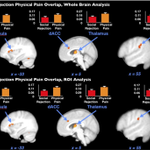
One of the most-discussed @PNASNews articles on Reddit last month was “Social rejection shares somatosensory representations with physical pain.” Explore the article: ow.ly/X1zB51070nS
1
7
520
A study of the website Artbreeder, which hosts daily "remix parties" in which users build on each other's work with AI tools, shows that images become less novel over the course of a party and eventually drift toward the platform's dominant style. ow.ly/Fw6n5107119
1
135
Why does obesity affect males and females differently? A study in mice reveals differences in immune cells and communication within fat tissue, offering clues to obesity-related inflammation. In @UCRiverside: ow.ly/vPT0510710q In PNAS Nexus: ow.ly/ZvcV510710p
120
What can astronomy reveal about the universe? Explore peer-reviewed research on dark matter, cosmic radiation, lunar volatiles, and more in the @PNASNews Astronomy Featured Topic collection: ow.ly/knhJ5106jW8
1
2
212
Interested in publishing with @PNASNews or PNAS Nexus? Explore the new PNAS Early-Career Researcher Portal for resources on publishing, peer review, submission requirements, and opportunities to engage with the journals. ow.ly/fwTN5106jUP
160
As the climate warms, permafrost on the Qinghai‒Tibet Plateau is degrading, causing complex and variable patterns of sinking ground that can damage roads and railways or alter drainage and ecosystems. A model provides a map for monitoring. In PNAS Nexus: ow.ly/h2ay5106jZ5
1
138
Using AI is efficient, but workers can feel alienated from final products. A study compares three different ways to work with AI to write a 1,000-word short story, seeking to balance productivity, creative diversity, and human satisfaction. In PNAS Nexus: ow.ly/s8515106cqK
143
Discover one of the top-performing PNAS Nexus articles on Altmetric for the past three months! “Life on the edge: Mesolithic population size and viability on Malta” by Blinkhorn et al. scored 133—driven by strong media attention. Read more: ow.ly/jagb5106bT6
121
In this week’s Advance Articles: Human naïve regulatory CD4 T cell identity; fish gut microbiota and pollutant-induced toxicity; the influence of nationalist frames on opposition to violent hate crimes; and more. ow.ly/Lj535105RN6
174
A global accounting of the ecosystem services that could be lost to sea level rise exceeds 100 billion in 2020 international dollars per year by 2100, according to a study—and the countries that will lose the most were not the worst emitters. ow.ly/Lf6u5105SeO
2
1
148