

Chief Technology & Innovation Officer @ Accenture. Author “Human + Machine: Reimagining Work in the Age of AI”. Views, opinions my own.
New York
Joined July 2010
- Tweets7.3K
- Following433
- Followers28K
- Likes4.8K








Pinned Tweet
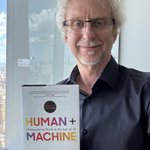
Human + Machine hits the shelves (digital and stores) today! Thanks to all for the support on bringing the H+M vision to life. Extending our offer to send a signed copy to those of you who buy and post a review on Amazon or your book site of choice (dm me for details). @hjameswilson

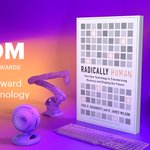
AI — including generative AI — is radically transforming business. Are you ready? Accenture technology leaders @pauldaugh and @hjameswilson are here to help you meet the challenge. Their updated and expanded book, filled with crucial insights and advice, is available now.
bit.ly/4egynfs

Totally agree with Andrew’s PoV here 👇

The loudest voices stoking fears about AI dangers have made tremendous headway in the past two weeks. AI technology has not taken some unexpected, dangerous turn, but the hype around it — propelled by what appears to be a well orchestrated PR campaign — has drummed up considerable fear. I worry that it represents a setback for our field.
I have written frequently that fears of AI are overhyped. AI’s capabilities can be uncannily human-like and unpredictable, and it’s rational to worry when people who are directly involved express concerns. But I see the problems as a sign of the engineering work that ahead, rather than insurmountable barriers or the sky falling. AI technology continues to advance — which is a good thing! — but technical advances, poorly understood by the public, give those who seek to generate hype repeated opportunities to do so.
First, I don’t see any step up in the risk of human extinction from AI compared to a few months ago. The theories about this remain the same fantastical, science fiction scenarios as a few months ago. The biggest change in AI risk is its cybersecurity capabilities — a topic which we should take seriously — but this, too, will not lead to the end of the world.
The most notable recent event leading to increased fear was when an OpenAI team deployed an agent swarm that hacked into Hugging Face. Much of the popular press contained significant hype. For example, some publications reported that a swarm of 1,200 agents carried out the attack. While this was technically accurate, as I write this, I have about 1,300 processes running on my laptop. Yes, the ability to get large swarms of agents to work in parallel on a task is a significant technical advance, And, in computing, many processes run at the same time. So this shouldn’t be seen as some magical capability.
Additionally, OpenAI’s buggy sandboxing and monitoring processes were key to enabling this incident. Fixing these bugs and putting in place improved monitoring would be appropriate fixes, not pausing AI. There are many well known ways to attack software systems. The main advantage of AI agents is that they are relentless. They will tirelessly try many tactics — and have the patience to chain vulnerabilities together — that previously would have taken an infeasible amount of human effort. But in the long term, I believe the advantage will lie with defenders (because they have more information with which to identify bugs, which they can fix), but the cyber-threat landscape has changed significantly. There are still bottlenecks to identifying and exploiting a vulnerability. AI agents still have to try a lot of things to see what works, and taking these actions takes time and might be detected by defenders. This is why, even though it is now easy to obtain versions of leading open weight models that have had their guardrails removed or weakened, so they will not refuse to try to execute cyber attacks, the world has not ended.
I am also concerned about the anthropomorphization of AI in a lot of reporting, where LLMs and agents are unnecessarily treated as if they were people. If I wield a hammer, miss a nail, and accidentally dent the wall, it’s not the fault of the hammer. The problem lies in how I used the hammer. Similarly, if I prompt an agent and it hacks into someone else’s system, the responsibility lies with me, not the agent.
Of course, we want to build systems that are as safe and predictable as possible. (For example, an unsafe hammer would be one whose head randomly flies off under normal use.) Today’s agentic systems are not predictable, but I see no reason why, by applying sound engineering practices, we won’t be able to make them extremely safe to use. One new element in the forecasts of AI-enabled doom is AI companies disclaiming responsibility for their own products. “I didn’t do it; my out-of-control agent did!” There’s a balance to be struck between the responsibility of the tool maker and the tool user, but when something goes wrong, let’s hold the people building and/or using the hammer responsible, rather than the hammer. (By the way, if you’re worried about AI bioweapon risk, David Bellamy has a great post on why this, too, is overhyped. Briefly, the bottleneck in building a bioweapon is not intelligence, but lab work and manufacturing.)
Pausing AI progress will create much more harm than benefit. First, our adversaries will certainly not slow down. Second, engineering requires discovering problems empirically so we can fix them. If we pause AI by a decade, we will also delay finding and implementing safety engineering fixes by about the same duration.
Of course, the incentive to stoke fears — for regulatory capture, to garner attention, or to make one’s technology seem more powerful — remains the same as before. Disclaiming responsibility is a new one. Taking a hard technical look at the actual risks however, I see little factual basis for the degree of fear that’s been stoked up. We still have hard research and engineering work ahead to improve AI safety, but the beneficial applications continue to vastly outweigh the risks, and we should keep building.
[Original text (with links): deeplearning.ai/the-batch/is… ]

Had fun writing this new article on AI-Driven Process Design with @hjameswilson in @HarvardBiz. Agentic AI isn't just a cool/innovative technology thing, it will bring about the biggest ever change in how people and organizations work, as processes are rewired for a new level of human + machine productivity, creativity. And the hook is that techniques like Kaizen can inform the path. Read on for more . . .hbr.org/2025/01/the-secret-t…

Ok, clever video, and more importantly, congrats on the launch @resolveai! Now, back to development :)

Signing and sending first set of books. Listen below for 60 second summary on what you need to know about Human + Machine, how AI is reinventing business and revolutionizing the way we work. (and here is link to order a.co/d/44l3otx)
After 38 years, 5+ million air miles, 997 time reports, 1000's of clients across 6 of the 7 continents, and (at least) 4 major generations of technology . . . today is my LAST day as an @Accenture employee! (Would you have hired this nerdy guy in 1986 😉 ).
What an AMAZING period to be part of. First code I shipped (1986) was Cobol IMS DB/DC on an IBM S/370. Then on to PL/1, LISP, Eiffel, Smalltalk, C++, ObjectiveC, C#, Java, Javascript, Python . . .
And as a nice career bookend (pardon the pun) a new edition of my Human + Machine book comes out on Sept 10, and Jim and I have our latest article featured on this month's cover of Harvard Business Review (first time for us).
There's never been a more fun time to be in tech . . . keep it rockin', keep inventing the future, keep in touch!

“On the cover of HBR . . .” To paraphrase Dr. Hook, @hjameswilson and I are pleased that our latest article, “Embracing Gen AI at Work, is featured on cover of Harvard Business Review mag. We explore how #AI will transform over 40% of work activities and the three crucial “fusion skills” to get the most out of #genAI. And ICYMI, a new/expanded genAI edition of our Human + Machine book is coming September, which the article is drawn from (link in comments). #HplusM
lnkd.in/dRfFPjiu
Preorder: Human + Machine, Updated and Expanded: Reimagining Work in the Age of AI a.co/d/iVnPKw9
Coming Soon: NEW edition of “Human + Machine: Reimagining Work in the Age of AI”, LOTS of updates for GenAI, Agentic, and more. Coined the H+M phrase in 2018, along with the “missing middle” of collaboration between Humans and Machines (AI) that will unlock the next wave of human potential. (Pre)Order yours now, LOTS of new info: a.co/d/ekBtaeB. And if you do a review after you purchase (on Amazon or your favorite site) I’ll send you a signed copy and you can give the copy you bought to a friend. @hjameswilson


Now that #AI can code, learning to code is more important than ever (and AI is here to help). See guidance for CS classrooms: teachai.org/cs. Let's #TeachAI

Are you ready for #QDay? An update from @tomtalks on the NIST #PQC standardization conference. #Quantum #QuantumComputing insidequantumtechnology.com/…
Is #GenAI hype or reality? That was the first question Nele Hussmann from @Wirtschaftswoche asked me in Munich last week, where I was visiting to launch our newest GenAI Studio. Accenture research shows #AI will have a big impact in Germany, affecting 46% of working hours. Some hype yes, but even more real impact. 🙌#Germany #FutureOfWork wiwo.de/unternehmen/it/gener…
From 95° F in Bangalore to 30° F and snowing in Munich . . . What a week! In Bangalore, reviewed incredible innovation from Agentic AI to Insilico Bio to Robotics to India-based startups/VC’s and much much more. In Munich, I was really excited to be part of our new #GenAI studio launch with many clients, ecosystem partners and our fantastic ASG team. So proud of our teams, and the major investments @Accenture is making to bring the future to life for our clients and our communities!


Yep.
Multi-agent collaboration has emerged as a key AI agentic design pattern. Given a complex task like writing software, a multi-agent approach would break down the task into subtasks to be executed by different roles -- such as a software engineer, product manager, designer, QA (quality assurance) engineer, and so on -- and have different agents accomplish different subtasks.
Different agents might be built by prompting one LLM (or, if you prefer, different LLMs) to carry out different tasks. For example, to build a software engineer agent, we might prompt the LLM: "You are an expert in writing clear, efficient code. Write code to perform the task …".
It might seem counterintuitive that, although we are making multiple calls to the same LLM, we apply the programming abstraction of using multiple agents. I'd like to offer a few reasons:
- It works! Many teams are getting good results with this method, and there's nothing like results! Further, ablation studies (for example, in the AutoGen paper cited below) show that multiple agents give superior performance to a single agent.
- Even though some LLMs today can accept very long input contexts (for instance, Gemini 1.5 Pro accepts 1 million tokens), their ability to truly understand long, complex inputs is mixed. An agentic workflow in which the LLM is prompted to focus on one thing at a time can give better performance. By telling it when it should play software engineer, we can also specify what is important in that subtask: For example, the prompt above emphasized clear, efficient code as opposed to, say, scalable and highly secure code. By decomposing the overall task into subtasks, we can optimize the subtasks better.
- Perhaps most important, the multi-agent design pattern gives us, as developers, a framework for breaking down complex tasks into subtasks. When writing code to run on a single CPU, we often break our program up into different processes or threads. This is a useful abstraction that lets us decompose a task -- like implementing a web browser -- into subtasks that are easier to code. I find thinking through multi-agents roles to be a useful abstraction.
In many companies, managers routinely decide what roles to hire, and then how to split complex projects -- like writing a large piece of software or preparing a research report -- into smaller tasks to assign to employees with different specialties. Using multiple agents is analogous. Each agent implements its own workflow, has its own memory (itself a rapidly evolving area in agentic technologies -- how can an agent remember enough of its past interactions to perform better on upcoming ones?), and may ask other agents for help. Agents themselves can also engage in Planning and Tool Use. This results in a cacophony of LLM calls and message passing between agents that can result in very complex workflows.
While managing people is hard, it's a sufficiently familiar idea that it gives us a mental framework for how to "hire" and assign tasks to our AI agents. Fortunately, the damage from mismanaging an AI agent is much lower than that from mismanaging humans!
Emerging frameworks like AutoGen, Crew AI, and LangGraph, provide rich ways to build multi-agent solutions to problems. If you're interested in playing with a fun multi-agent system, also check out ChatDev, an open source implementation of a set of agents that run a virtual software company. I encourage you to check out their github repo and perhaps even clone the repo and run the system yourself. While it may not always produce what you want, you might be amazed at how well it does!
Like the design pattern of Planning, I find the output quality of multi-agent collaboration hard to predict. The more mature patterns of Reflection and Tool use are more reliable. I hope you enjoy playing with these agentic design patterns and that they produce amazing results for you!
If you're interested in learning more, I recommend:
- Communicative Agents for Software Development, Qian et al. (2023) (the ChatDev paper)
- AutoGen: Enabling Next-Gen LLM Applications via Multi-Agent Conversation, Wu et al. (2023)
- MetaGPT: Meta Programming for A Multi-Agent Collaborative Framework, Hong et al. (2023)
[Original text: deeplearning.ai/the-batch/is… ]
Proud to share that @Accenture is among the top 10 in this year’s Fortune 100 Best Companies to Work For! Much gratitude to our incredible people, clients, partners and communities for making this possible. Together, we're at the heart of change! #100BestCos #TheHeartOfChange #GPTWcertified
6 years ago this month: Human + Machine was published. We were overwhelmed with the reception, and were among the first to call out AI’s ability to reimagine work and human potential, and anticipated many of the amazing advances and applications to come. . . and now . . . 🥁 🥁 🥁
@hjameswilson and I are very excited that a new edition of Human + Machine will be coming soon - with fresh research, insights, and updates for #GenAI and more. Stay tuned!

From building a robot when she was only 16 that was used to teach English to children in China to leading Accenture’s #AI practice – what a ride. Thanks #TechBrew for putting the much-deserved spotlight on Lan Guan! emergingtechbrew.com/stories…

Better than I could have done myself ;). Great summary of our @accenture #TechVision24 with some added insights!

AI will unleash the next level of human potential. Here's how it happens - and when
In the coming years, businesses will have an increasingly powerful array of technologies at their disposal – and across the board, the technology is becoming more human. @Accenture 's #TechVision 2024 report offers details - and dates.
Here are some predictions about "A match made in AI":
- By 2025, a leading airline will announce that customers are just as satisfied with chatbot agents as human agents.
- By 2027, data poisoning (adding malicious data to ML models) will be a top cybersecurity threat to enterprises.
- By 2028, major corporations will have proprietary chatbots to assist with knowledge management, research, and task completion.
- By 2029, AI advisors will receive more search traffic than traditional search engines.
- By 2031, a smartphone will launch that replaces the app-based interface with an agent-based one.
- By 2025, a new code repository will launch for open-source code written by agents.
- By 2026, three-fourths of knowledge workers will use copilots every day.
- By 2028, the first truly lights-out car manufacturing plant will open.
- By 2030, one-half of home mortgages will be approved and serviced by agents.
- By 2032, authorities will dismantle an insider trading ring that was using intelligent agents to collect protected information.
zdnet.com/article/ai-will-un…

Thanks Ray, excited about this one. Human By Design is the headline - why more human-like tech unlocks human potential and business reinvention.

MyPOV: @Accenture Tech Vision sees human-ish AI, spatial computing, body-sensing tech on horizon bit.ly/3vtMyNi AI, spatial computing and body-sensing innovations will become more human-like, omnipresent, and almost invisible,
@pauldaugh @adampburden #CES2024 #WEF24

Excited to share the #Thinkers50 award with @hjameswilson! And this is good motivation/reinforcment as we prepare for a new #GenAI inspired release of Human+Machine (coming soon)

@pauldaugh and @hjameswilson receive the #Thinkers50 2023 Digital Thinking Award! They are the authors of ‘Radically Human,’ in which they explain how new AI-powered technologies have led to more human technology.
#Thinkers50AwardsGala23 #ReconnectRethinkReset

Grab your sunglasses and beach blanket - our book "Radically Human" (the one where we anticipated #GenAI) selected for this summer reading list .. . . @hjameswilson barrons.com/articles/j-p-mor…