
The latest stories in science, brought to you by the @ScienceMagazine news team.
Washington, D.C.
Joined October 2008
- Tweets45.8K
- Following638
- Followers765K
- Likes1.1K
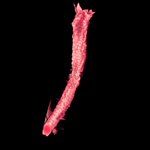
Ninety-nine million years ago, this lizard tail parted ways from its owner—the first direct evidence of tail shedding in the fossil record.
Learn more: scim.ag/4dKPR6e
Amid a U.S. push for “deprescribing,” researchers are finding new ways to match patients to their optimal treatment. scim.ag/3VLzsIu
On 6 October, James Maynard was nervously checking his phone under the table throughout dinner. He’d heard rumors of a tsunami heading for the shores of math. When he checked in one last time from bed, the swell struck: OpenAI had released more than 700 math papers, generated with an advanced version of its AI model. They appeared to topple hundreds of long-standing problems, forcing researchers to face the reality that no problem in math is off-limits for machines.
At first, Maynard, a mathematician at the University of Oxford and recipient of the Fields Medal, math’s most prestigious prize, feared for colleagues whose work would be upended. But then he spotted a paper that offered progress on one of his favorite pastimes: the Riemann hypothesis, a puzzle about prime numbers and one of seven famed Millennium Prize Problems, often considered the most formidable in all of math. “I was like a kid at Christmas,” Maynard says. “Even if it was some scary monster giving me a gift, I was just so excited.”
The release comes less than 1 month after OpenAI announced a solution to the Navier-Stokes equations, another Millennium Prize Problem. OpenAI’s latest proof solves only a weaker version of the Riemann hypothesis. But Maynard, who made the most recent notable Riemann advance in 2024, says it is “groundbreaking” and likely to have payoffs for other problems across math. “Within analytic number theory, it’s obviously the best headline result for the past 100 years in the field.”
Learn more: scim.ag/4s9F8Ip
Atop the bleached dunes of White Sands National Park in New Mexico lie the 40-centimeter footprints of a now-extinct giant ground sloth that roamed more than 11,500 years ago.
Within those tracks, researchers noticed little human footprints—remnants of an ancient playground.
Learn more on #InternationalSlothDay: scim.ag/3WfmsI1
In 2025, researchers for the first time used CRISPR to repair a faulty gene in humans.
Learn more on #WorldCRISPRDay: scim.ag/4bRpnNZ
A Massachusetts jury has awarded biologist David Sabatini $6 million—plus interest—in damages in his defamation case against Kristin Knouse, a former colleague at the Whitehead Institute for Biomedical Research.
The physician-scientist’s claims led one research institution to fire Sabatini and precipitated his resignations from Whitehead and the Massachusetts Institute of Technology, where he was a tenured faculty member.
Read more: scim.ag/4jxig3b
Do you have what it takes to win Science’s #DanceYour PhD competition? We want you to top last year’s winning entry from a scientist who translated physics’ piezoelectric effect into dance.
Submit your entry by 29 January 2027: scim.ag/4i5WelJ
The traditional Inca chronology has collapsed. New radiocarbon dates show the empire lasted longer than was previously thought—and met more resistance. scim.ag/4zDt4le #LongReads
From a perch high in Chile’s Atacama Desert, a cluster of telescopes is taking aim at the oldest light in the universe. scim.ag/4803Txb
When coral bleaches during a heat wave and ejects its symbiotic algae, it usually means either a death sentence or a slow recovery over months or years. But scientists working separately at two labs an ocean apart have found a faster acting shortcut, one that has scientists hoping it could eventually help coral recover from bleaching and endure future heat waves.
The approach is deceptively simple. By touching a piece of bleached coral to a healthy piece, a kind of algal transfusion can occur. Symbionts flow through a bridge of tissue and then rapidly reproduce, repopulating the bleached piece in as little as 4 weeks.
Learn more: scim.ag/4s7hY5h
A dump of 722 AI-generated papers has mathematicians wondering: Has their field been decimated or invigorated?
Read more: scim.ag/4jXnLbu
Japan’s MMX mission aims to retrieve samples from Mars’s mysterious moon. They could reveal how it formed—and hold pieces of Mars itself. scim.ag/4ybLS9Z
A lavish 1919 dinner party that ended up killing five people. An attempt to save the canning industry in the 1920s. A World War II biological weapons program and a CIA plot against Fidel Castro. A cosmetic product, best known as Botox, that erases facial wrinkles and exploded into a multibillion-dollar business.
A new analysis of more than 1000 bacterial genomes connects these disparate episodes in U.S. history in a piece of microbiological detective work. Detailed in a new paper, the study shows how scientists unwittingly triggered the evolution of a dangerous bacterium into one with major medical and commercial advantages.
Learn more: scim.ag/4yuuayu
Exclusive: The National Institute of Justice has announced it plans to fund research into a possible link between gender dysphoria and violent crime, raising concern among scientists and activists that the initiative is driven by political bias and proposes work that can’t be done rigorously with available data. scim.ag/4k3z1mK
Ecologists are mobilizing to save threatened species and track ecosystems’ responses to record heat. scim.ag/4BbKhDJ
The U.S. Department of Agriculture will spend $180 million over the next 2 to 3 years for gene sequencing of samples held in its repositories. scim.ag/4rWYPmo
Home decorating isn’t unique to Homo sapiens.
More than 40,000 years ago, bands of Neanderthals turned a spacious rock shelter in the mountains of Spain into a cozy home, fashioning wood into tools and windbreaks and burning it for heat and light.
That picture comes from a first-of-its-kind trove of Neanderthal wooden artifacts from a domestic space, found at a cliffside site called Abric Romaní, 50 kilometers west of Barcelona.
Learn more: scim.ag/4hO4R4l
Naegleria fowleri is a harmless pond-dweller—unless it ends up in the nose of a human swimmer.
Once inside, the amoeba can crawl along nerve fibers in the nasal cavity and through little openings in the skull until it reaches the brain. There, it can cause an infection that is almost universally fatal, earning it the frightening moniker the “brain-eating amoeba.”
Exactly why N. fowleri, which normally feeds on bacteria, exhibits this behavior has long been unclear. But a recent study suggests a possible reason: The parasite loves to seek out tight spaces.
This “claustrophilic” behavior may help it find its prey—and explain why it occasionally ends up deep in the human brain.
Learn more: scim.ag/4AUikjM
When Tessa Montague learned about CRISPR, the gene-editing system that was supposed to make it easy to modify any organism, she set her sights on the cuttlefish. The Columbia University neuroscientist dreamed of injecting its embryos with genes that would prompt its neurons to fluoresce as they fired.
The flashes would let her track how this tentacled creature's brain controls one of its most striking behaviors: camouflaging itself by copying patterns it perceives in its surroundings onto its skin. Unlike most animals, she says, “cuttlefish can actually tell us what they see.”
Six years and thousands of embryos later, she has reached a milestone: seven cuttlefish that glow red under fluorescent light. Every cell in their boneless bodies contains a gene encoding a synthetic fluorescent protein—even their eggs and sperm, which means their cuttlebabies glow, too.
The work, posted as a preprint, marks the first time anyone has successfully added a new gene to a cephalopod. Learn more: scim.ag/4y27x4l
Amid a U.S. push for “deprescribing,” researchers are finding new ways to match patients to their optimal treatment. scim.ag/3VLzsIu