

Now: @HarvardIOP. Previously: @USUNDeputy, Senior Advisor to @SecBlinken, @StateDeptSpox, @NSC44, & @CIA. Personal account / my views alone, esp the good ones.
Washington, DC
Joined February 2010
- Tweets5K
- Following3.4K
- Followers89.5K
- Likes4.1K





Pinned Tweet
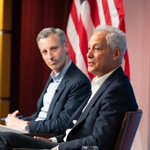
The Kennedy School’s Institute of Politics has been a part of my life for more than 15 years, first as a student and more recently as a Fellow. Today, I’m honored and humbled to take the helm of @HarvardIOP as interim Co-Director, alongside Beth Myers, as it prepares for its next chapter. thecrimson.com/article/2025/…

It's almost certainly a lie that Putin and Xi are pushing for trilateral arms control talks. China has consistently rejected the idea, including during Trump's first term. What they would like to discuss is carving up their respective spheres of influence, and Trump seems eager to oblige, even as he tries to obscure the subject of talks.

This would be Ukraine’s nightmare, sure. But it'd also confirm the worst suspicions of our allies and partners around the world -- from Taiwan and the Philippines, to the Baltic states and Moldova, and everywhere in between -- who’ve stood firm against powerful, imposing neighbors. They’d be right to wonder what would keep them from being carved up, too.

Russian President Vladimir Putin has proposed that he, President Trump and Chinese leader Xi Jinping meet next month to attempt to negotiate an end to the war in Ukraine that would favor Moscow, said people familiar with the discussions. on.wsj.com/4BeZLqz

Buying diesel from Russia — which, beyond doing nothing to ease prices, is patently illegal — has been roundly condemned. But Trump’s so-called “energy ceasefire” is even more objectionable because it’s not an “energy ceasefire” at all — it’s a refinery ceasefire.
Why does that matter? It would remove Ukraine’s most important source of leverage, while allowing Russia to continue pummeling Ukraine’s sources of electricity, heat, and clean water. It puts Russian revenue on the same plane with Ukrainian survival, especially during what could be a brutal winter. And it’s especially pernicious because, while any ceasefire sounds worthy on its face, this arrangement is nothing more than a Russian Trojan horse.

🇺🇸🇺🇦🇷🇺President Trump's announcement Sunday about an "energy ceasefire" between Russia and Ukraine referred to a potential "refinery for refinery" deal, and he expects Volodymyr Zelensky to abide by it, a White House official said. My story on @axios
axios.com/2026/10/11/russia-…

You can take it from those of us who’ve spent years working on terrorism: the surest way to spawn more radicalized zealots is to glorify violence, embrace a cult of death, and create a martyr for the cause. Or take it from AQ and ISIS, whose tactics offer the closest modern-day approximation of Hegseth’s proposal.
Either way, it’s hard to conjure a more vivid example of his trademark performative bravado, which routinely damages America’s image and, in this case, so ghoulishly leaves us more vulnerable.

I offer the same piece of advice in nearly every conversation about 2028: the next president needs a values-aligned team by his/her side. Democratic administrations have too often mistaken staying power across bipartisan presidencies for strength and judgement -- especially in the national security realm, where we still, inexplicably, seem to lack confidence in our own bench. The next president should leave that dangerous reflex behind once and for all.
25 years ago, I was barely two weeks into my freshman year at Georgetown University when the phone, a landline, woke me up at what seemed to my 18-year-old self like an ungodly hour. What I heard — and later saw from the rooftop of a nearby dorm — shaped not only the rest of my time on campus, but also the career that followed.
Shortly after graduation, I joined the CIA’s Counterterrorism Center, determined to do all I could to help prevent the horrors of that day from happening again. In an office where even what hung on the walls was often classified TOP SECRET, I remember — and can safely quote — a large banner on the opposite wall: “Today is September 12.” It was meant to keep the attacks, and the fear and anxiety they provoked, fresh in our minds as we carried out our work.
But I later came to understand that ethos as something larger than any banner or office — and with more pernicious implications. It became an animating approach to successive administrations’ foreign policy: harnessing fear for policy outcomes, including far too many costly misadventures around the world.
The challenges have changed over the past quarter century, but the approach largely has not. Warnings of looming threats, real or figurative ticking time-bombs, and catastrophic danger were central to the public case for war in Iraq in 2003 and Iran in 2026. In the interim, it justified the systematic brutalization of detainees, the secret and vast expansion of America's surveillance apparatus targeted, in part, at U.S. citizens, and the deployment of thousands of service for an enduring presence in harm's way across the Middle East, Africa, and beyond. All the while, we became involved in conflicts, in some cases secretly, increasingly attenuated from our own national security.
That attenuation has continued. The so-called “narco-terrorism” threat now undergirds our shadow war in the Caribbean and predicated the case against Maduro. Most recently, we’re hearing ominous claims of Cuba’s drone program, as Havana is again in Washington’s sights.
Perhaps most tellingly, even prudent investments in our own infrastructure, manufacturing base, R&D, education system, and diplomatic ranks became necessary to counter the threat from China, not for their potential to improve the lives and livelihoods of our fellow citizens.
Our leaders have too often told us what to fear instead of what America stands for in the world. If we once had “nothing to fear but fear itself,” American foreign policy has since come to rely on virtually nothing but fear.
On Saturday, it will again be September 12 — September 12, 2026. A quarter century later, it’s past time to leave that approach behind. We have an opportunity to rely on our strengths: the power of our economy, the ingenuity of our people, the resilience of our democratic institutions, and the enduring appeal of our model, even as it’s being tested like never before.
This week, we remember the lives lost that day and all that followed. If we learn anything from our missteps since that cloudless morning 25 years ago, it should be that America can do great things in the world — and, chiefly, for ourselves — when we aren’t running scared.
It's past time to give that a try.
Maintaining communication with Moscow is a good thing, and this discreet intelligence channel has proved valuable in recent years. But the Russians will assess any Cabinet-level warning against years of presidential statements casting doubt on Article 5 and America’s commitment to the Alliance. No face-to-face admonition, however stern, can erase that public record. wsj.com/politics/policy/cia-…

Ned Price retweeted

Excited to welcome our Fall 2026 @HarvardIOP fellows! An extraordinary group, and a great semester ahead for our students. #PublicService #Leadership #HarvardIOP

We're pleased to introduce our IOP Fall 2026 Resident Fellows: Ambassador Kelly Craft, Governor Doug Ducey, Ambassador Chris Lu, Secretary Alejandro Mayorkas, Ambassador Nathalie Rayes, and Chris Whipple!
Learn more: iop.harvard.edu/fellows

I’ve traveled overseas with multiple presidents and recognize that subterfuge is sometimes a necessary safeguard. But misleading reporters in the moment and, worse yet, continuing to lie to the American people weeks later is never acceptable. As far as I know, it’s unique to this White House.

The Democratic brand is in the tank because too many voters feel the party hasn't responded to -- or delivered on -- their priorities. My unsolicited take: We should focus on that -- listening, responding, and delivering up and down the ballot rather than attacking an outgrowth of voters' dissatisfaction.

NEWS: Third Way has a new $15 million program to take on — and try to take down the rising democratic socialism movement.
“We are preparing for the next war."
More on how reeling centrists are aiming to strike back —>
nytimes.com/2026/08/06/us/po…

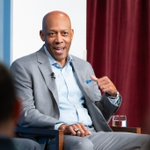
Great chatting with Arun Gupta at the @AspenSecurity Forum about his book, The Mission Generation, and the important work of inspiring the next generation to pursue the noble work of public service.

The most important signal of the health of our democracy won’t be any alleged foreign threat we hear tonight. Far more revealing will be who chooses to air it. If the networks carry it live, it will be another sign that our institutions are caving to domestic pressure, a far greater threat than any external adversary.

The pro-war crowd will be quick to characterize this as a failure of deescalatory diplomacy and the resulting MOU. It's not. Rather, it's an inevitable consequence of the original decision to launch a foolish, unnecessary war lacking clear objectives or off-ramps. washingtonpost.com/world/202…

Great to be back with @CNN’s @thelauracoates discussing another busy day of foreign policy developments.
The fixation on individual irritants at NATO -- Iran, Greenland, defense spending, etc -- masks the broader challenge: the Alliance is so focused on avoiding the worst-case that it can't do much, if anything, on the affirmative ledger. It's a heck of a time for NATO to be able to do little but, at best, muddle through. theguardian.com/world/2026/j…

We’re thrilled to announce @BFischerMartin as the next Director of @HarvardIOP. Betsy brings decades of experience at the intersection of politics, policy, and media, and we could not be more fortunate to have her at the helm as the IOP begins its next chapter. view.comms.hks.harvard.edu/?…
Most comparisons between the Trump MOU and Obama's JCPOA miss the point that the latter was a nuclear agreement, while the former aspires to become a nuclear agreement after providing Iran massive inducements.
And claims that Trump's MOU is "worse" than the JCPOA are entirely misleading... because the JCPOA was a strong document, verifiably blocking all of Iran's pathways to a bomb without firing a shot, putting our service members in harm's way, or disrupting the global economy.
The JCPOA was the result of principled coercive diplomacy, coordinated with allies and partners. The MOU is the cost of fighting and conceding a foolish war.