

Inspiring a lifelong love of science in everyone - in museums, classrooms and online. We believe in a world where science belongs to everyone.
Boston, MA
Joined April 2009
- Tweets15.9K
- Following1.8K
- Followers51.8K
- Likes8K






Vampire bats survive entirely on blood! 🦇
Rather than sucking it out, these sanguivores nick a resting animal with razor-sharp teeth and lap up what flows. Since blood is mostly water, their digestive systems rapidly absorb the fluid while their specialized kidneys filter out the excess, meaning the bats can pee mid-meal!
That clever trick keeps them light enough for the flight home.
Did you catch the Orionid meteor shower last night? Share your photos with us, or any other amazing October night sky shots! 🌠
These shooting stars are tiny bits of debris left behind by Halley’s Comet, streaking through our atmosphere at about 41 miles per second!

🌊 A study of more than 2,580 marine heatwaves at 20 U.S. estuaries found that standard measurements underestimate total heat exposure by more than 150% on average, because warm water often lingers for weeks or months around each event.
🐌 Two tiny new snail species were just discovered in Montenegro, with shells that close like doors. Even Europe still hides animals unknown to science.
What a way to kick off our Luminaries series! ✨ @Trevornoah took the stage in front of a sold-out crowd in the our new space, the William and Charlotte Bloomberg Public Science Common!
Joined by AI pioneer Oren Etzioni and moderator @kaliouby, Trevor explored some of the biggest questions surrounding artificial intelligence, from who sets the rules to the human choices shaping its future. Thank you to everyone who joined us for an incredible evening of curiosity and conversation!


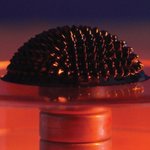
What is ferrofluid and what can it do? 🧲
@AlexDainis explains that ferrofluid is made of tiny pieces of magnetic metal suspended in an oily carrier fluid. When exposed to a magnetic field, those metal pieces form spikes and patterns that align with the field. Beyond the cool shapes, ferrofluid is also useful for reducing friction, transferring heat in loudspeakers, and forming seals in hard drives.
See more from Alex Dainis here: youtube.com/watch?v=6iz8KHk2…
Bring your curiosity. Bring your questions. 🔬
On Sunday, November 8, join us for Trust in Science Community Day at the William and Charlotte Bloomberg Public Science Common!
👩🚀 Meet astronauts
📚 Enjoy family story time with author Ainissa Ramirez and browse the book fair
✨ Explore immersive experiences and hands-on activities
🌎 Hear from experts on space, climate, health, and more
🎟️ Community Day programming is included with Exhibit Hall admission. Explore the lineup: mos.org/events/trust-science…

☄️ The Orionid meteor shower peaks this week, and every meteor is a grain of dust shed by Halley’s Comet. Some are no bigger than sand, yet they hit our atmosphere at about 66 km per second.
We're 2 weeks away from the SCICOM Summit, and we're thrilled to announce that @NASA will be joining us for a panel on building trust and the @NASAArtemis digital strategy. Request an invite at SciComSummit.org.

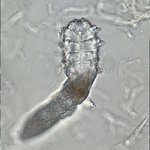
Right now, while you read this, tiny animals are tucked into the pores on your face. Don’t worry, they found you first. 🔬
Our friend Chloé Savard, also known as tardibabe on Instagram, zoomed in on Demodex, the microscopic mites that live on nearly every adult human. Two species call us home: Demodex folliculorum settles into hair follicles, while Demodex brevis burrows a little deeper into the oil-producing sebaceous glands. At just 0.2 to 0.4 millimeters long, they’re far too small to see without a microscope, with stubby legs up front and a long tapered body trailing behind.
They’re not alone, either. Our bodies host roughly as many bacterial cells as human ones, plus yeasts and other microbes, making each of us a walking ecosystem.
Face mites keep a strict schedule. During the day they stay tucked inside their follicles, and at night they crawl out across the skin to find mates and feed on sebum, the natural oil our skin produces. For years, scientists thought they had no anus at all, but a 2022 genetic study proved otherwise. They do poop, just in very small amounts.
For most people with a healthy immune system, Demodex are harmless roommates. Problems usually only show up when their numbers climb too high, and dermatologists have effective ways to treat that.
We aren’t the only ones playing host. Plenty of mammals have their own Demodex species, from Demodex canis on dogs to Demodex musculi on mice and Demodex bovis on cattle. 🐮
All of that, quietly happening, every night while you sleep.
On Friday, October 23 & Saturday, October 24 at 7PM, face a terrifying creature stalking the crew of the Nostromo with the horror classic "Alien" as part of our Sci-Fi Supersized movie run.
Get tickets here: bit.ly/4xwo5BX

A brand new moon mission is launching, and it isn’t going to our moon! 🌕
On October 19th, the Japanese mission MMX (Martian Moon Exploration) launches to become the first mission to orbit a Martian moon, Phobos. It will also be the first mission to land a rover on a moon other than our own and the first to take a sample from this moon. Then MMX will bring that sample back to Earth as the first mission to return from Martian space.
Can a chunk of dry ice make spooky fun AND carbonate your drink? 🧊🎃
@GWolf_Science proves it does both, starting with how this -109°F solid carbon dioxide sublimates straight from a solid to a gas. That ghostly fog in the jack-o’-lantern isn’t CO2, which is invisible, but water droplets that form as the cold gas hits the surrounding air. Drop dry ice into your favorite beverage and the CO2 creates bubbles, but wait until every last piece disappears before you sip.
🦖 A new study suggests Spinosaurus may have spent most of its life underwater, making it a very different kind of dinosaur than the land hunters we usually picture.
What a night with @JacobCollier! 🎶
We talked about music, creativity, and the science of sound, and then he turned the entire audience into a multi-part choir. Thank you for making the William and Charlotte Bloomberg Public Science Common sing.


The Sun used to have no sun spots for a long period of time! ☀️
Astrophysicist @ErikaHamden explains this phenomenon from 400 years ago called the Maunder Minimum. Normally the Sun follows 11-year cycles, peaking with lots of sunspots, solar activity, and coronal mass ejections before calming down at the trough. Scientists still don’t know why some cycles are more active than others, so this quiet period is one clue to what drives the solar cycle.
This project is part of IF/THEN®, an initiative of Lyda Hill Philanthropies.
Wildfire smoke can travel thousands of miles. What does it take for a community to become truly "smoke ready"? 🌲
Join us November 4 for Smoke Ready: Wildfire, Forests & Public Health at the William and Charlotte Bloomberg Public Science Common. In this free, interactive program, explore how wildfires affect forests and people, share your perspective, and weigh the actions communities can take to prepare.
📅 Wednesday, November 4 | 4:30–6:30 PM
Created with World Forestry Center and supported by The Air We Share.
Register here: mos.org/events/smoke-ready-w…
