Museum of Science (@museumofscience) header
Museum of Science (@museumofscience) profile picture

Inspiring a lifelong love of science in everyone - in museums, classrooms and online. We believe in a world where science belongs to everyone.

Boston, MA
Joined April 2009
Photo by Museum of Science (@museumofscience)Photo by Museum of Science (@museumofscience)Photo by Museum of Science (@museumofscience)Photo by Museum of Science (@museumofscience)Photo by Museum of Science (@museumofscience)Photo by Museum of Science (@museumofscience)Photo by Museum of Science (@museumofscience)Photo by Museum of Science (@museumofscience)Photo by Museum of Science (@museumofscience)Photo by Museum of Science (@museumofscience)
How does an entire planet just disappear? 🪐 @NASA's TESS tracked TOI-2535 b crossing its star for seven years before the planet dropped out of sight. A new study suggests its orbit tilted until it no longer passes in front of its star from our point of view. The likely culprit is the gravity of a massive, undiscovered world in this system.
1
3
11
516
Now through January 1, join Rudolph, Hermey, and Yukon Cornelius on a snowy adventure to save Christmas in our immersive 4-D Theater with Rudolph the Red-Nosed Reindeer 4-D! Get tickets here: bit.ly/4zITmSO
6
250
Will you be on the lookout for tonight's Beaver Supermoon? 🌕 It's shining about 13.5% brighter than an average full moon, so catch it rising in the east after sunset and share your best shot with us!
2
8
568
🔭 The Vera C. Rubin Observatory has already found two previously unknown companions of the Milky Way using early data covering just 7% of the night sky. Astronomers know of about 65 satellite galaxies, but hundreds more may be hiding.
5
573
What can the remains of an exploded star tell us about its final hours? 💥🔭 Massive stars are built a bit like onions, with layers of different elements forming inside them as they age. But just before one star exploded, those layers may have started mixing! Using @NASA's James Webb Space Telescope, scientists studied Cassiopeia A, the remains of a massive star that went supernova. They discovered clumps of dust containing different materials, including silica, carbon, and magnesium-rich minerals in a region nicknamed the "Green Monster." Combined with X-ray observations, these findings suggest that some of the star's inner layers began merging just hours before the explosion, changing which elements were released into space. And those elements have a future of their own! They can eventually become part of new stars and planets, continuing the cycle of stellar life. Image Source: NASA, ESA, CSA, T. Temim (Columbia University), R. Arendt (UMBC), D. Milisavljevic (Purdue University). Image Processing: J. DePasquale (STScI).
4
344
Give the gift of a whole year of discovery! Purchase a Museum of Science membership by November 26, and your recipient will receive a special welcome packet filled with fun science-themed surprises and extra Museum perks to kick off their year of exploration! Gift a membership here: bit.ly/3Vwcy86
1
2
384
Museum of Science retweeted
Tyrannosaurus rex takes a scenic ride down Boston’s Charles River on its way to the Museum of Science in April 1972. (Ted Dully/Boston Globe)
4
52
3
356
7,932
🧪 What’s one science concept you wish someone had explained to you sooner?
1
2
408
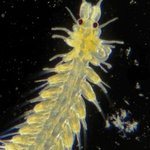
A single drop of sea water holds a whole hidden world. 🔬 Quinten Geldhof, also known as Microhobbyist, zooms in on plankton, a thriving mix of tiny crustaceans, algae, and mollusks. These microscopic organisms anchor the ocean’s food web and feed everything from small fish to giant whales. Phytoplankton even helped produce roughly half of Earth’s oxygen!
2
6
1
17
1,032
Ever feel like just a speck of stardust in the cosmos? ✨ @SirishaBandla felt the overview effect firsthand when she saw Earth against the vastness of space. She felt small, but never insignificant. Knowing no nearby world supports life as diverse as ours left her ready to make a difference back home.
2
4
411
⚡ Researchers at NC State used a laser to create a beam of plasma that transmits radio waves, the first demonstration of its kind. Nicknamed the “lightsaber” antenna, it could one day let spacecraft adjust antennas without bulky mechanical parts.
1
1
7
812
Starting November 21, step into a wintry wonderland of miniature trains, snowy peaks, and tiny townsfolk at All Aboard! Trains at Science Park, our beloved seasonal tradition. Get tickets here: bit.ly/4zu9TtC
2
8
630
Straight A’s mean you’re smart, right? 🎓 @Trevornoah argues that memory recall is only one function of the human brain. He defines human intelligence as one-shot problem solving, the ability to process a completely new idea in an instant. Our brains can identify the problem and the solution simultaneously, a cognitive feat that makes humans truly unique.
1
1
6
501
🦃 What’s one scientific discovery or invention you’re most thankful for?
2
420
🔥 El Niño sets off a cascade of tropical fires, starting with drought and peat fires in equatorial Asia and then moving to the central and eastern Amazon. NASA scientists say the 2026 El Niño has followed that same pattern.
1
5
644
This past weekend, we celebrated Native American Heritage Month with a full day of live music, dance, Meet-a-Scientist moments, and a one-day-only film screening. Thank you to Delta, and every partner who joined us, and to everyone who came out to celebrate indigenous heritage with us.
2
7
430
Imagine a telescope as big as our entire planet. 🔭🌎 Astrophysicist @ErikaHamden explains that the Event Horizon Telescope is really a global network of telescopes stretching from Greenland to Antarctica. They observe the same object at the same moment, then combine their images to act like one Earth-sized telescope. The result is the highest resolution images ever captured of black holes, including the one at the center of our Milky Way. This project is part of IF/THEN®, an initiative of Lyda Hill Philanthropies.
2
16
770
Happy Voyager Day! 🛰️ Earlier today Voyager achieved a distance of one light day away from Earth. Learn more about the journey with us on Substack: substack.com/home/post/p-224…
1
3
517
🦇 A huge genomic and fossil study suggests bats first evolved in Europe around 65 to 60 million years ago before spreading across the globe.
4
670
Starting November 21 until January 15, climb aboard a freight train for a music-infused journey across America with “Train Time” in our Mugar Omni Theater, sponsored by @MathWorks. Get tickets here: bit.ly/4kgwupA
5
331