

@MizzouEcon Prof | Health Economist | PI @NIH lab on #tobacco & #audiology | Dir @TobPolicy | Fellow @IZA_bonn | Guiding impactful, high-quality research. 🧘⚾🎮
Joined August 2013
- Tweets1.7K
- Following592
- Followers1.5K
- Likes2.9K







Michael F. Pesko 🇺🇸 🇺🇦 retweeted

If you are interested in applying economic policy research to better understand how different types of policy changes affect innovation, productivity, and economic growth, please consider applying to work with my research team at Dartmouth:
apply.interfolio.com/194525
Michael F. Pesko 🇺🇸 🇺🇦 retweeted

Final: Brewers 6, Dodgers 4
The Milwaukee Brewers are going to the World Series. Holy crap, the Milwaukee Brewers are going to the World Series. Soak it in, Wisconsin. You deserve it. The Milwaukee Brewers are going to the World Series, and they swept the Dodgers to do it.


Michael F. Pesko 🇺🇸 🇺🇦 retweeted
YOUR MILWAUKEE BREWERS ARE HEADING TO THE WORLD SERIES!!!!!!!!!!!!!!!!!!!!!!
Interesting real-world example of job lock. #EconTwitter


Michael F. Pesko 🇺🇸 🇺🇦 retweeted
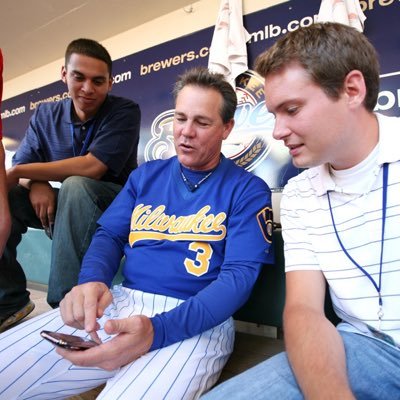
Goodness, Garrett Mitchell caught what would have been the tying homer at the short fence in center field.
Michael F. Pesko 🇺🇸 🇺🇦 retweeted

⏰One week left! Submit or nominate TOPS-notch research for next season’s lineup:
✅ quasi- & experimental tobacco policy research
✅ just-published or almost-ready research
👉 exposure to a diverse global audience
👉 helpful feedback from audience comments
📅 Deadline: October 12
✏️ Submit: tobaccopolicy.org/call.html
Michael F. Pesko 🇺🇸 🇺🇦 retweeted

The fans. Contreras. Lara jumping around. Yeli and Sal crashing into each other. Murph expressionless in the bottom right. Absolute cinema

Michael F. Pesko 🇺🇸 🇺🇦 retweeted

We are hiring 2 tenure-track applied micro AP roles
@Miami_Econ!
One in health
One more general applied micro
Come join a dynamic department in a beautiful college town, less than an hour from Cincinnati.

Michael F. Pesko 🇺🇸 🇺🇦 retweeted
AI is a big W for 40-somethings. Old enough to have learned how to do things the right way, young enough to learn some new tricks.
Michael F. Pesko 🇺🇸 🇺🇦 retweeted

The open access early view of my Dec. 2026 JRU article, The Value of a Statistical Life Year, is now available at rdcu.be/LFF2NJzVduwa. These new estimates can improve and sometimes correct @benefitcost valuations for situations involving short life extensions.
Got a review request from a medical journal and noticed this interesting note in the email:
“We welcome your collaboration with a junior scholar on the review as long as you maintain oversight of the quality and substance of the review. Please acknowledge any collaborator when submitting your review.”
This may be controversial, but I think more economics journals should explicitly allow and encourage this. The “suggest another reviewer” option gets at something similar, but some people may hesitate to use it and instead accept reviews they clearly do not have time for.
IMO, this option could both improve peer review and provide useful training for junior scholars.
#EconTwitter
Michael F. Pesko 🇺🇸 🇺🇦 retweeted

A public-use version of the Open Research Unconditional income Study (ORUS) dataset is now posted! This RCT paid $1000/month to a treatment group for 3 years. Test your favorite hypotheses about the effects of guaranteed income!
data.openresearchlab.org/
Michael F. Pesko 🇺🇸 🇺🇦 retweeted
I have had a couple of conversations with students recently who have had big concerns (and crazy experiences!) about how AI was impacting them and their job search.
So I polled my classes to take their temperature on the issue, and the results surprised me!
A quick 🧵...
New cross-sectional database linking tobacco specialty stores to foot traffic. Also, follow @SocialImpactLab for regular updates on the interesting research happening in our lab.

Michael F. Pesko 🇺🇸 🇺🇦 retweeted

There is something amiss on Capitol Hill. Senator Richard Blumenthal (@SenBlumenthal) and Rep. Debbie Wasserman Schultz (@DWStweets) have introduced the "Preventing Opportunities for Teen E-Cigarette and Tobacco Addiction (PROTECT) Act" to address what they say is "the alarming rise in e-cigarette use among youth." It proposes spending $500 million on a @CDCgov initiative "to address this alarming trend" through research, grants, "the development of evidence-based policies," and other activities "to combat the rise in e-cigarette use among youth." blumenthal.senate.gov/newsro…
The acronym may be impressive, but the premise is false.
The PROTECT Act is promoted as a response to an “alarming rise” and “alarming trend” in youth vaping. But the latest federal data say exactly the opposite.
Youth #vaping has fallen dramatically—nearly 70% from 5.38 million users in 2019 to 1.63 million in 2024—and declined further to about 1.44 million in 2025.
fda.gov/news-events/press-an…
fda.gov/tobacco-products/you…
And some context for that 1.44 million figure matters: “current use” in the federal survey means having used an e-cigarette on at least one day in the past 30 days—not necessarily regular use.
While 5.2% of all middle and high school students reported any e-cigarette use in the past 30 days, only about 2.1% of all students used e-cigarettes on 20 or more of those 30 days, and only about 1.4% used them daily.
Youth vaping remains an important public health concern, and continued efforts to prevent youth use are important. But describing a steep, sustained decline as an “alarming rise” or “alarming trend” misrepresents the reality. It also obscures the extraordinary public health progress we have made in reducing youth vaping while youth cigarette smoking has fallen to historically low levels.
So why portray a dramatic decline as an alarming rise?
Sound public health policy—and the messaging around it—should be driven by accurate public health evidence.

Michael F. Pesko 🇺🇸 🇺🇦 retweeted

1/ ~20,000 vape, smoke, and cigar shops.~50 million monthly visits. SIL affiliates built a national database linking specialty tobacco retailer locations to foot traffic.Their new paper shows that: shops cluster hardest in low-income areas and density rises as edu levels fall🧵