

Explore 5,000 years of history from across the globe right here at The Met. Plan your visit → https://xitter.cf/t.co/DIK031YWPg
New York, NY
Joined October 2008
- Tweets35.1K
- Following1.2K
- Followers4.2M
- Likes11.2K
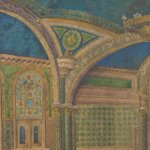


Antes de ser vidrieras, lámparas y mosaicos icónicos, fueron dibujos sobre papel. ✨
Acompáñenos para una charla con la conservadora de obra sobre papel Marina Ruiz Molina, quien lleva dieciséis años conservando las acuarelas de "Designing the Gilded Age: Drawings from the Studios of Louis C. Tiffany".
Descubra cómo las visionarias ideas de Tiffany Studios evolucionaron hasta convertirse en obras maestras, y conozca el trabajo de conservación que devolvió a estos dibujos su belleza original.
📅 Martes 27 de octubre, 2 pm
🎟️ Gratuito con la entrada al Museo
👉 Regístrese ahora: met.org/4it4vAD

What do you see when you look at art?
Join Met staff as they share their thought-provoking and surprising answers to this question and discuss a range of objects from famous highlights to little-known gems in celebration of the recent publication Points of View: 100 Connections to Art.
Listen to excerpts from the book directly from contributors and hear new reflections and behind-the-scenes stories on looking at art in unexpected ways.
🗓️ Sunday, October 18
🕰️ 2 pm
🎟️ Get tickets: met.org/4zzYRDt

Discover the surprising story of Japanese porcelain—from objects made for everyday life in Japan to works that became must-haves for collectors across Europe.
Join Met curators Monika Bincsik and Iris Moon for an online study group on how Japanese porcelain emerged in the 17th century and quickly captured imaginations, including those of women collectors in Europe.
🗓️ Wednesday, October 21
🕰️ 3 pm
🎟️ Get tickets: met.org/47lePoZ

ALT A porcelain figurine dressed in a traditional Japanese kimono with vibrant floral patterns and geometric designs. The figurine has a serene expression and is posed with one hand slightly raised. The intricate details on the attire showcase a variety of colors, including blue, red, and green.
Join us tonight at The Met Cloisters for a conversation with The Met and Vacheron Constantin Artisans in Residence: woodworker Aspen Golann, ceramicist Ibrahim Said, and goldsmith Joy Harvey.
Hear from the artisans about their creative processes, the importance of preserving traditional craft techniques, and how they reinterpret these practices for today.
📍 The Met Cloisters
📅 TONIGHT, 6:30–9 pm
This event is free, but advance registration is required. Space is limited.
Learn more and register: met.org/3U1Ovgt

On this day in 1924, the Surrealist Manifesto was published and launched an artistic revolution. Today, The Met launches a new annual digital publication, “The Bluff Almanach,” focused on Dada and Surrealism.
The inaugural issue centers on the artist Man Ray, the visionary known for his radical experiments that pushed the limits of photography, painting, sculpture, and film.
For the Dada and Surrealism buffs, dive into Alex Da Corte’s one-night-only lecture as Marcel Duchamp, Jim Jarmusch and Carter Logan on scoring Man Ray’s films, and Man Ray’s arrival in 1930s colonial Korea.
Explore The Bluff Almanach: met.org/4il4srp
___
The Bluff Almanach is a project of The Bluff Collaborative for Research on Dada and Surrealism, a Met initiative that merges historical and material research with contemporary thinking to offer a platform for new views and conversations.
Celebrate Frederic Edwin Church, one of America's most well-known landscape painters of the 19th century, with an afternoon of presentations and conversation by scholars to mark his 200th birthday.
Learn more about The Met's collection of paintings by Church, reflect on Church's legacy, and explore how we interpret 19th-century American landscape paintings in the present moment.
🗓️ Sunday, October 25
🕰️ 2 pm
🎟️ Get tickets: met.org/4zT1AZ5

Join us for a conversation with The Metropolitan Museum of Art and Vacheron Constantin Artisans in Residence!
Learn about the residency program, which emphasizes the preservation and reinterpretation of traditional craft techniques, as well as the below artisan's work and process.
Aspen Golann, woodworker
Ibrahim Said, ceramicist
Joy Harvey, goldsmith
🗓️ Thursday, October 15
🕰️ 6 pm
🎟️ Get tickets → bit.ly/4yHuRWg

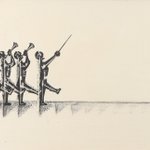
📣 Now open! See "There Are No Words: Si Lewen's Parade" on view at The Met.
“The Parade” is an epic cycle of 63 charcoal, pencil, and ink drawings conceived by Si Lewen in the aftermath of World War II. The work unfolds a visual narrative on war, memory, and the human condition, informed by the artist’s extraordinary life—from fleeing Nazi persecution with his family and immigrating to the U.S. to arriving at the Buchenwald concentration camp shortly after its liberation in 1945 while serving in the U.S. Army.
Experienced together as a sequence, the drawings carry viewers from military pageantry to conflict, devastation, and mourning through the cumulative force of their imagery.
The power of "The Parade" lies not only in its historical origins but in its ability to speak across generations with urgency, asking viewers to confront the persistent cycles of violence that continue to shape our world.
———
Si Lewen (American, 1918–2016), "The Parade" (detail). ca. 1950. Manufactured charcoal, pencil, crayon, ink, scratching, and hand applied gesso on paperboard. The Metropolitan Museum of Art, New York, Purchase, Estate of Louise Graham, Lila Acheson Wallace and Mark Fisch and Jessica Kayll Gifts, 2024 (2024.487.1–.63). Image Courtesy the Estate of Si Lewen and James Cohan, New York.

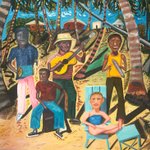
🌴 At first glance, it's a sunny beachside scene, likely set in the Dominican Republic, where the artist has a home. Look closer and you'll find layers of race, class, and maybe a little tension.
Five figures face us head-on, as if waiting to be photographed. A trio of musicians plays a small drum, a guitar, and a güira while wind-bent palms seem to sway to the merengue. Off to the side, a man who resembles the artist stares away, unmoved by the serenade.
Rafael Ferrer, born in Santurce, Puerto Rico, rose to prominence in the mid-1960s as a conceptual artist making ephemeral, politically poetic work. By the 1980s he turned to painting, using a style rooted in Caribbean folk art.
Bright, rhythmic color and playful distortions of scale and proportion tell a story about the people and places of the Caribbean, and the complicated relationships between the U.S., Puerto Rico, and neighboring islands.
___
🎨 Rafael Ferrer (American, born San Juan, Puerto Rico), "Merengue en Boca Chica," 1983. Oil on canvas. © Rafael Ferrer.

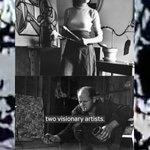
📣 Now open! "Krasner and Pollock: Past Continuous" is the first major New York presentation devoted to either artist in more than 20 years. Featuring over 120 works, it is the first exhibition to look at the full arc of their careers together.
🎟️ Plan your visit and learn more → met.org/4e5xLvA
Cigarettes and fruit scatter the floor. Bare bulbs hang from the ceiling. Seven musicians stare blankly ahead in an overcrowded room, while a pair of dancers, smaller and wildly alive, kick up their legs. You can almost smell the sweat, tobacco, liquor, and cologne that fill the space.
Fernando Botero's art often depicts scenes of leisure, with people drinking and dancing. These satirical renderings may seem humorous at first, but they are often threaded with social and political commentary.
On view in Gallery 681.
___
Fernando Botero (Colombian, Medellín 1932–2023 Monaco), "Dancing in Colombia," 1980. Oil on canvas. © Fernando Botero.

"Autumn Rhythm" is on the move! 🚗
Opening October 4 at The Met, "Krasner and Pollock: Past Continuous" is the first major New York presentation devoted to either artist in more than 20 years. Featuring over 120 works including "Autumn Rhythm: Number 30, 1950," it is the first exhibition to look at the full arc of their careers together.
💡 Learn more and plan your visit → met.org/3TritKL
Last call for long nights. 🎬
Our final Long Films for Long Nights screening is Culloden (1964): a 1746 battle covered like breaking news from the front lines, with amateur actors and in black and white. Stay after for a discussion with Sukhdev Sandhu and Neil Cox.
🗓️ Friday, October 9
🕰 5–7 pm
💡 Free with admission. Register: met.org/3VcitPk
Now a New York Times Critic's Pick: "Krasner and Pollock: Past Continuous" opens at The Met October 4!
Read the review: met.org/4hAdkrM

🎸 Before he takes the stage, Kingfish takes some iconic Met guitars for a spin.
Grammy-winning, Billboard chart–topping guitarist Christone “Kingfish” Ingram stopped by The Met to try out instruments ahead of his upcoming Met Live Arts Guitar Icons performance, where he'll journey through the past and future of the blues alongside his all-star band plus a few special guests featuring The Met collection.
🗓️ October 2 and 3 at 7 pm
📍 The Met
🎟️ Buy tickets and learn more → bit.ly/4yZDB9P
Celebrate Día de Muertos at The Met Cloisters!
Join us for a day of remembrance honoring loved ones who have passed away. Enjoy bilingual activities like art making, Storytime, music, community storytelling, The Met Cloisters gardens, and more!
🗓️ Sunday, October 11
🕰 10 am
💡 Learn more → met.org/4xIS35a
———
¡Celebrar el Día de Muertos en The Met Cloisters!
Acompáñanos en un día en la que conmemoramos a nuestros seres queridos que han fallecido.
Disfruta actividades bilingües como arte, el cuentacuentos, música e historias comunitarias, los jardines de The Met Cloisters ¡y mucho más!
🗓️ Domingo, 11 de octubre
🕰️ 10 am


A dreamland in blue and purple, captured in glass. 💙
Recently installed in the American Wing galleries, this Tiffany window brings cascading wisteria to life in shimmering shades of blue and lavender under a glorious sky, with a sun-dappled bay afar.
Created in 1908, the window is thought to evoke both the landscape around Louis C. Tiffany’s Long Island estate and the wisteria vines that surrounded the country home of William Skinner, for whom the window was originally made.
———
Louis C. Tiffany (1848-1933), Tiffany Studios (1902-32), "View of Oyster Bay," 1908. Leaded Favrile glass. On loan from the Charles Hosmer Morse Museum of American Art.
Alex González of Maná stopped by to see his drum kit in our “Musical Bodies” exhibition and told us more about the meaning behind its design!
📣 Closing soon! See "Musical Bodies" on view at The Met through September 27.
———
🥁 John Douglas (American), Drum Workshop Inc. (American, founded 1972), "Drumkit for Alex González of Maná used during the 2023-2024 México Lindo y Querido tour," 2023. Maple and aluminum. Collection of Alejandro González.
What’s it like to see music you listened to 10 years ago become part of an exhibition you helped create?
Meet Zelda Tian, an intern in The Met’s Department of Musical Instruments who contributed research to the "Musical Bodies” exhibition, including a display of album covers exploring the relationship between the body and musical instruments.
"Musical Bodies” is on view through September 27.
Happy National Dance Day! 🩰
The Met's bronze cast of Edgar Degas's "Little Fourteen-Year-Old Dancer" has captivated generations of visitors at the Museum for almost 100 years.
Originally made with beeswax, human hair, fabric, and ballet slippers, it was the only sculpture Degas exhibited during his lifetime and was praised—and criticized—for its striking realism.
After his death in 1917, the sculpture was reproduced in bronze, preserving remarkable details of the original, including the texture of the hair and bodice and even a crack in the dancer’s arm.
In 2018, a new tutu was created to more closely reflect Degas’s original vision, showing how art conservation continues to shape our experience of this iconic work.
———
Edgar Degas (French, Paris 1834–1917 Paris), "The Little Fourteen-Year-Old Dancer," modeled 1881, cast 1922, modern tutu. Partially tinted bronze, cotton tarlatan, silk satin, and wood. On view in Gallery 815.
