

Product guy, helping to build @cueyofficial. Collecting evergreen insights @productweets. Coffee, podcast or trail recs always welcome ✌️
Mill Valley, CA
Joined September 2006
- Tweets11.2K
- Following451
- Followers3.6K
- Likes79.7K


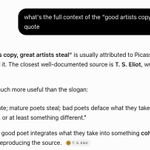




“That's literally the craft of what comedy is...figuring out an idea and packaging it to where people can absorb it”
Love that line about “packaging an idea so people can absorb it.” That’s a skill that goes way beyond comedy.

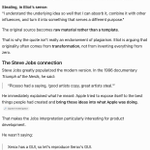
Mark Normand admits comedy is mostly failure, and reveals that when he complained to Seinfeld about how much explaining crowds needed, Seinfeld told him packaging an idea so people can absorb it is literally the craft
"Sadly, it's mostly failure. Comedy is mostly failure. If you're doing it at a high level, it's a lot of failure, you know. Just like trying a new joke, bombs. Get a tough crowd. You have a heckle, you try to get the heckler and your line sucked. You know, it's just a lot of failing."
"I think learning it is just doing it. That's the only way to learn, is to do. That is, like, I yelled at, I didn't yell, but I was talking to Seinfeld once, and I was like, 'That annoys me how these crowds, they get weirded out by this and that. I just want them to understand. I just want them to get what I'm talking about. I have to do so much explaining.'"
"And he's like, 'Yeah, that's what we're doing here. That's literally the craft of what comedy is, is figuring out an idea and packaging it to where people can absorb it.' I just want them to get my jokes, but you still have to make them get it."

Dear designers...along with your taste, don't forget to leverage:
1. courageous curiosity: a function of your willingness to experiment and try new things
2. clarified desire: your ability to enquire, refine, and articulate what it is you actually want.
via: xitter.cf/jonnym1ller/status/208…

“If you think technology will solve your problems, you don't understand your problems and you don't understand technology.”


Adam Kazwell retweeted

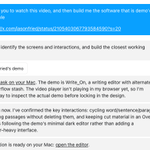
This is probably true. For example, I asked Claude to watch a YouTube launch video for a software product, and it recreated a custom version of it specific to my needs based only on frame sampling + my prompt.
That's...insane. I don't think this was possible 6 months ago. I'm able to make increasingly complex tools based on increasingly simple prompts.
Adjust your expectations accordingly...

Using Dot to create and refine slides in Figma does not spark joy.
Just the basics like "is this thing running?" are NOT obvious. It's so painful.

It's also maddening that the other ChatGPT capabilities don't seem to be leveraged by Dot at all....
I wanted to create a compelling image for our opening slide....did Dot help create that? Nooo...But if I go to chatgpt and select "create image", does it do exactly what I want? Yes!
cc @thsottiaux
Very excited to see creators reimagining the most fundamental ways we express and engage with ideas:
Writing
xitter.cf/jasonfried/status/2105…
Reading
xitter.cf/tareqistyping/status/2…


Very cool, @craigmod made a mini-site cataloging all of the long walks he’s taken since 2009, with maps and GPS tracks and links to essays/books/media that resulted from them: craigmod.com/walks/
Here's the specific walk from Things Become Other Things: craigmod.com/walks/#kii-peni…

Adam Kazwell retweeted

Now that the Lenny & Friends Summit is a few weeks behind us, I’ve had a chance to reflect on the day. Here are the themes and takeaways that have stuck with me most:
1. There’s a huge need for (curated) IRL events right now
I’ve rarely felt this much PMF for anything I’ve done. It’s wild. My sense is that the more time we spend working with agents, the lonelier the work becomes, and the more we need to find a place to connect with other humans. I heard this theme more than anything else from attendees:
- “Things are certainly different now, but underneath all this technology, we’re still just ancient humans looking for connection.” —Charlie Koch
- “I left filled with gratitude for the experience, the conversations, and the reminder that even in a role that can sometimes feel lonely, we don’t have to figure everything out alone.” —Hemanth Babu Shekar
- “I left feeling genuinely sparked by what’s possible, and also a little less alone in figuring out what comes next.” —Attendee
- “I left this conference having fallen in love with product all over again.” —Jenny Zhao
2. Nobody has it figured out
Should we be building software factories? Are roadmaps over? Should PMs be shipping to production? We had speakers take both sides of these debates throughout the day. But what everyone agreed on is that there’s no one way to do it. My takeaway is we’re all still figuring it out, and the best way to do that is together. We heard this theme from both speakers and attendees:
- “The answer that we have come to is: it depends. It depends what type of product it is. It depends on what phase in the product it is.” — @TYehoshua, Atlassian
- “We don’t know the answer. We don’t think anyone knows the answer. We’re all going to discover it. And we’re all fundamentally on the same team.” —Ami Vora, Anthropic
- “This is just one way. There’s so many ways to build products. You probably heard 10 other ones today that were just as valid as this one. You should decide on what makes sense for you.” — @rmstein, Google Search
- “The best practices have not been written yet. We get to do that.” — @lil_dill, Stripe
3. It’s never been easier to build something nobody wants
As building gets easier, choosing the right thing to build, knowing what good looks like, and caring enough to fix it are becoming increasingly important for successful product teams. Almost every speaker touched on this theme:
- “And now we can ship all our bad ideas, like congratulations to us.” — @clairevo, How I AI
-“If almost anything you can think of can get built, it’s more clear to me than ever that the actual true value of PM is around judging. It’s around taste. It’s around doing something extremely well.” — @rmstein, Google Search
- “They’re not impressed if we animated something with Three.js and Blender in 30 minutes. They are impressed by us solving their problems and clever touches in the details that show we anticipated their needs.” — @lil_dill, Stripe
- “The output is not the product. Customers are not buying the lines of code.” — @karrisaarinen, Linear
- “Is this useful or is it just new? It’s a big thing you need to differentiate.” — @danshipper, Every
4. The PM job is expanding, not disappearing
Instead of the PM, eng, and design circles of the Venn diagram collapsing into one “builder,” each role is instead evolving and expanding.
- “Roles are overlapping, but they are also expanding. . . . Everyone can do so much more than they could do before.” — @TYehoshua, Atlassian
- “PMs will absolutely evolve and expand their role to not just the product organization but the marketing organization, the sales organization, the growth organizations, the operational organizations. PMs will become GMs, and they will own the actual business outcome and lead the entire function.” — @geoffintech, Ramp
- “I build and change the pricing page. I build prototypes, I deploy to production myself. I do the user research, I do the analysis, I do all of the optimizations.” — @ElenaVerna, Lovable
5. It’s important to be reminded of what’s possible—and to raise our ambitions
One of the most inspiring parts of the experience for me, and for a lot of people at the Summit, was to be surrounded by people at the top of their craft, demonstrating what great looks like. This is especially important now that AI allows us (and forces us) to be a lot more ambitious.
- “If we only use AI to make the things that we already make just faster, then we are definitely missing out on the most interesting part. AI can help us raise the ceiling, not just the floor.” — @lil_dill, Stripe
- “The biggest constraint is honestly people’s understanding and ability to absorb what you’re giving them.” — @thenanyu, OpenAI
- “I think next year is the ambition game. . . . What experiments can I run in two weeks, three weeks, that would have taken us a year last time?” — @clairevo, How I AI
- “Other conferences collect a bunch of people seeking validation that what they were doing in product wasn’t too off the mark. Whereas this group set the bar for what’s possible.” —Attendee
To get a taste of what the day was like, I’ve pulled my favorite messages from attendees: afterglow.lennyssummit.com/
Also, a little slideshow. It’ll warm your heart. 👇
“Just tried Cuey, it’s excellent. I’m a heavy AI user and constantly bounce btw ChatGPT & Claude to sanity-check answers. Cuey turns that whole workflow into one click. Really polished implementation of a problem I didn't realize could be solved this seamlessly.”
via producthunt.com/products/cue…
Adam Kazwell retweeted

Ever get an answer from your AI and wonder if it's actually right?
That's the whole reason we built Cuey. We're #3 on Product Hunt today. Come tell us about the time AI burned you.
producthunt.com/products/cue…
#producthunt

ALT Product Hunt leaderboard showing Cuey at #3 with 26 comments.
"In today's world, there's no excuse not to spend an extra hour to inject some whimsy and fun."
Whimsy and fun are now requirements, not nice to have.
@benspringwater's well is full of good examples, best to pay attention.

Speaking of whimsy, wanted to share a new feature on @cueyofficial...
Ever wondered what your AI persona would look like if it came to life?
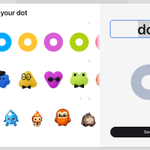
Our new Insights characters turn your AI chat history into a playful creature inspired by the questions you ask, the ideas you explore, and your signature rabbit holes.
(It’s entirely opt-in: install Cuey, connect your chat history, then head to Insights and choose to generate your character)
Here's mine: cuey.io/share/QAte6skTHh
