

Big believer in the powers of innovation, empathy and great storytelling. Former WarnerMedia CEO. Hulu founding CEO. Amzn. Tar Heel. Proud product of the Burgh.
Joined April 2007
- Tweets2.4K
- Following323
- Followers40.2K
- Likes6.6K




Pinned Tweet
Today is the final day of operation for WarnerMedia as it becomes Warner Bros. Discovery. To mark the occasion, I am taking a moment to share some important things, especially about the WarnerMedia team and the creative partners with which we get to work. 1/x

A fascinating (to me at least) part about media is the dynamic around new formats/genres. What is initially mocked or dismissed by lots of smart people can sometimes become an industry standard.


It is going to be fun to see prompt-based 3D printing roll out. Given how easy it already is to use prompts to generate text, photos/illustrations, and video…it’s not hard to see how useful it will be to do the same for the creation of physical objects.
New York Times trying to become CNN (the place to watch news) before CNN can become the New York Times (the news franchise with a financially compelling digital business). thewrap.com/media-platforms/…

Update 1 year later: the internet continues to be one of the best things that could have happened to the New York Times and its ability to impact the world through journalism. Value of the company is up 50% in the last year. Great story about a tenured incumbent leaning into the future. Kudos to the team.


I love this photo because it sheds counterintuitive insight on what matters when it comes to entertaining 100K people via a night of baseball. A proper left field is not one of those things. 🫡 @YellowTuxJesse

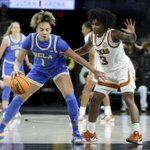
Big win for UCLA…playing for the national championship this Sunday. @MLTJohnRice and @awrice are surely smiling this evening!

I am looking forward to that point in the future when Amazon search results go from their current blue link style execution to Gemini style (personal, understanding context, persistent memory, generative when/where needed, overall more responsive/helpful).
M&A has reduced competition in Hollywood (Disney’s acq of Fox). But the even bigger reason that competition in Hollywood is being dramatically reduced each day is 1) incumbents are not navigating themselves well digitally, and 2) licensing their series/films to Netflix + Amazon
More context on the second item mentioned above.
Sharing observations about licensing library series and movies in the streaming era…and what it can mean for media companies and their valuations. I get asked about this topic a lot (when I am not being asked about naming strategies for streaming services 🎬🙂)
In an earlier era, when PAR/Warner/NBCU/DIS used to license their libraries to other *linear* TV channels, it was strategically a win without caveats given that 1) their own linear TV channels were already fully stocked and well taken care of (there was simply no shelf space left on the linear TV channels they owned given the capped-at-24hr programming grid and the large size of their respective libraries), and 2) licensing attractive library series and movies to other linear TV channels (even though those TV channels were owned by a competitor) made the Pay TV bundle overall more attractive to consumers…which in aggregate meant more paying subscribers to the Pay TV bundle and thus more affiliate fees to the likes of PAR/Warner/NBCU/DIS for the linear channels they did own (because linear TV channel owners got paid $ each month for every subscriber to the Pay TV bundle, regardless of what those subs watched each month). More linear Pay TV subs = more money. And by far the biggest pot of gold in media in that era was - and still is for several - affiliate fees (and the related ad revenue) from the linear Pay TV bundle complex. The more everyone licensed to each other, the more the linear Pay TV bundle tide would rise, lifting all boats.
But as Hollywood incumbents - those that own streaming services like HBO Max, Peacock, Paramount+ and Disney+/Hulu - currently aggressively license their libraries to Netflix and Amazon, I'll posit that the strategic consequences are different compared to the linear television era. In today’s world, the consumer appeal of streaming services are often a function of quality, exclusivity, and quantity given the fundamental nature of on demand services. Ask any Netflix exec and they will surely tell you that even after investing $17B+/year to program their service, they wish they could offer even more given the varied appetites of the world’s consumers. No streaming service is yet fully stocked and no streaming service is yet fully taken care of…and indeed the market is still up for grabs each day. What this means is that licensing out libraries to others simply means less value for one’s own streaming service. The second strategic consequence - and this is the bigger of the two - is that with each decision made to license a library series or movie to Netflix, Netflix becomes more attractive and all of the value from that (more paying subs, lower churn, etc) accrues to Netflix and only Netflix. There is no rising tide, no situation where all boats are getting lifted as Netflix’s subs and engagement continue to go up*. That is a massive shift from what used to happen in the linear Pay TV era. Today, Wall Street seems to have internalized this strategic reality - and other realities of course - given what they have assigned in market cap to Netflix (nearly $500B, more than 5x what it was 3 yrs ago) and what they have assigned in market cap to the incumbents which a) are all dealing with the secular decline of linear Pay TV and b) in aggregate license and provide 50% of Netflix’s viewing minutes each month with their libraries (Warner’s market cap is $23B, down over 50% over the same 3 year period, Paramount is $8B, down 2/3, etc).
The overall point is that licensing in today’s era has different strategic consequences than what used to be. A secondary point is that licensing is very small economically compared to the value that can be created and captured from thoughtfully executed, well received aggregation. It is a very different and fascinating new era for sure compared to media's earlier days. And yes, things are still up for grabs.
P.S. To this day, Netflix has never to my knowledge licensed any of its library to another streaming service. Yes, they could perhaps today get a billion or more per year from doing so aggressively. I suspect it would reduce their future prospects (including their valuation) by 100x that amount.
*For those that may make the argument that licensors can ask for more $ from Netflix as Netflix’s scale and pocketbook gets larger: keep in mind that no single series or movie is a must have for Netflix…as their value proposition is not that they will have everything or even any one thing, but that they will have something that you will love tonight when you open Netflix first. So they can walk away - and do walk away - from the licensing table if they are asked for more than they are willing to pay. Netflix has the leverage given its ability to walk away, knowing they will be fine in doing so.
Two of the most important things for any media company continue to be having a *viable* digital strategy + the conviction/ability to execute it for the long term. NYT has it, as do Netflix, YT. Without those 2 things in place (see so many others), things do not/will not end well
Not sure how Obama was able to keep his focus yesterday being interviewed by @ReggieMillerTNT at the same time that Red Panda was clearly performing miracles


Though the % of the US population that watched the NFL was higher 35 years ago vs today (no internet back then to compete with) the NFL continues aggregating audiences each week unlike any other sport. Amazing.
2025 NFL reg season avg US media aud per game: 18.7M (5.4% of US pop)
2025 NBA: 1.6M
2025 MLB: hundreds of thousands when considering the avg across all time slots
2025 NHL: 445K
2025 MLS: 133K
In 1989, a typical regular season NFL game would attract 19M, which was 7.7% of the US population

If I was tasked with doing so, I could not think of a more effective way to reduce competition in Hollywood than selling WBD to Netflix

