

JBJS Inc. is an independent, non-profit organization dedicated to producing the best content and education for all musculoskeletal health professionals.
Needham, MA
Joined March 2009
- Tweets15.4K
- Following3K
- Followers46.9K
- Likes3.4K






"Use of a 3D-Printed Personal Graft Cage in Treatment of Critical Size Bone Defects" by Dadpey et al.
Read online at: bit.ly/4dWqluS

Can multi-domain platform trials navigate cross-domain interactions and type-I error control without losing their operational advantages?
In this commentary on O’Hara et al., Peter Greenstreet examines the design rationale of the Musculoskeletal Adaptive Platform Trial (MAPT), exploring how shared participants across multiple intervention domains create unique methodological questions.
The commentary highlights two key considerations: the potential for cross-domain interactions to dilute or inflate treatment effects, and the broader question of why overall type-I error is rarely controlled across platform trials with multiple 2-arm domains. The author discusses how evaluating these trials as they progress will provide valuable insights into sample size requirements and statistical rigor in complex adaptive designs.
Read the full commentary 👉 bit.ly/3WsOS4D
And read the original study 👉 bit.ly/4feqoCC
#JBJS

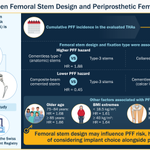
"Impact of Stem Design on Periprosthetic Femoral Fracture Risk. Findings from 182,118 Primary Total Hip Arthroplasties in the Swiss National Joint Registry" by Bouché et al.
Read the full article 👉 bit.ly/4itvoFO

"Pharmacological Inhibition of STING with H-151 Promotes Rotator Cuff Healing in Aged Rats" by Cai et al.
Read online at: bit.ly/4izmaGO

3,066
Can supplementing standard pelvic fixation with triangular titanium implants reduce fixation failure in adult spinal deformity surgery?
In this commentary on Elder et al., Reuben C.C. Soh examines a rigorous multicenter randomized trial demonstrating that adding triangular titanium implants (TTI) to standard S2-alar-iliac screws significantly lowers radiographically evident pelvic fixation failures (11.0% vs. 20.4%).
The study highlights how achieving dual points of sacroiliac fixation improves construct stability through enhanced load-sharing, though the author discusses the need for extended follow-up to monitor potential proximal force redistribution, bone density interactions, and overall cost-effectiveness.
Read the full commentary 👉 bit.ly/4k047f9
And read the original study 👉 bit.ly/4BGzCBr
#JBJS

2,915
📚 Our Hip & Knee Special Collection just dropped! 🦴✨
12 top JBJS articles | 100 pages | 100% FREE 📘
Explore hip and knee arthroplasty, knee alignment, implant fixation, robotic surgery, and hip surgical techniques—plus pain management, rehabilitation, and activity after joint replacement.
This convenient digital collection brings together 12 of the most-read hip and knee articles from JBJS over the past two years.
👉 Complete the short form to download your FREE 100-page PDF:
bit.ly/4ySB162
#JBJS #Orthopaedics #HipAndKnee #Arthroplasty

2,860
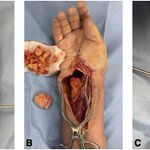
"Carpal Osteomyelitis Caused by Mycobacterium Intracellulare Treated with Vascularized Bone Graft Reconstruction" by Kuno et al.
Read online at: bit.ly/4jTx24z

Can large language models remain clinically objective when faced with misleading user prompts and biased framing?
In this commentary on Perry et al., Graham Ka Hon Shea and Hongfei Wang examine how AI large language models exhibit "sycophantic behavior" in orthopaedic contexts, demonstrating that hints, opinions, and misleading user beliefs drastically reduce model accuracy across benchmark exams and literature reviews.
The study found that models frequently default to agreeing with user input rather than acknowledging ambiguity, highlighting the risk of reinforcing false medical information. The authors discuss the critical need for AI literacy among clinicians, emphasizing that safeguarding against sycophantic tendencies is essential as these technologies integrate into orthopaedic workflows and patient interactions.
Read the full commentary 👉 bit.ly/48zqAZv
And read the original study 👉 bit.ly/4813Ykt

3
2,960
🎸ROCK YOUR FRCS EXAM PREP WITH THE BEST! 🤘
Come rock Miller’s Orthopaedic Review Course, Oxford, with Professor Steven L. Haddad, MD, a five-time recipient of the Faculty Member of the Year Award, and an esteemed lineup of world-class orthopaedic faculty!
🏆 Meet our five-time award winner: bit.ly/4A4O2te
🎓17 Years. 99% Pass Rate. Award-Winning Faculty.
Now in its 17th year, this proven FRCS exam preparation course brings together leading orthopaedic experts to help you build knowledge, sharpen your skills, and prepare with confidence.
⚡THREE WAYS TO ROCK YOUR FRCS PREP IN 2027:
📍Complete Course: January 5–10 | Oxford
💻NEW Virtual Lecture Course: January 5–8 | Live online + on-demand
🦴Clinical Examination & Viva Course: January 9–10 | Oxford
🎸Learn from the best. Prepare with confidence. Rock your FRCS!
👉 Explore your options and secure your place: bit.ly/46VIyTk
#FRCS #JBJS #Oxford #MRCOxford

2,545
"Preoperative Revision Anterior Cruciate Ligament Reconstruction Tunnel Evaluation Using Curved Planar Reformation: The Waterslide Technique" by Hazzard et al.
Read online at: bit.ly/3WlB2ky

💡On the cover of this week’s JBJS issue: “Reimagining Orthopaedic Research: The Musculoskeletal Adaptive Platform Trial (MAPT) Design Rationale” by O’Hara et al.
“The flexible structure of the MAPT framework can accelerate evidence generation for clinically important research questions.”
Read the full article here: bit.ly/4zBDmT2

Can an early periprosthetic femoral fracture after total hip arthroplasty be viewed as a routine complication, or is it a systemic crisis?
In this commentary on Acuña et al., Philip Linke examines data highlighting that fractures occurring within 30 days of surgery are associated with dramatically worse short-term and long-term outcomes, reframing them as a sentinel event signaling profound vulnerability.
The study emphasizes that early periprosthetic fractures represent a distinct clinical phenotype linked to recurrent fractures, reoperations, and sustained morbidity. The author discusses how these findings challenge current quality metrics and bundled payment models, urging the orthopaedic community to elevate early periprosthetic fractures to the same level of concern as early infections to drive upstream prevention and targeted multidisciplinary management.
Read the full commentary 👉 bit.ly/4sIn34t
And read the original study 👉 bit.ly/4k03JNJ
#JBJS

1
4
2,423
"Three-Dimensional Computed Tomography–Based Mapping of the Intraosseous Safe Zone for Acetabular Cup Screw Fixation" by Sato et al.
Read online at: bit.ly/3UpzSnC

Do you know the correct answer? Scroll down to reveal the answer
.
.
.
.
.
.
.
.
.
.
.
.
.
.
.
.
Answer: A
A. Internal rotation of the femoral component
Gap balancing requires making the flexion gap the same as the extension gap. Over- releasing of the medial structures makes the flexion gap bigger in flexion on the medial side of the joint. This forces the femoral component into relative internal rotation.


8
2,745
🎓 The Countdown Begins—with a NEW Added Benefit!
Diploma in Shoulder & Elbow Surgery | 17 November 2026
There’s still time to enroll—and now your registration includes complimentary access to OrthoEvidence through January 2028!
Advance your expertise with this online Diploma from JBJS MRC Oxford, led by Course Director Professor Tom Cosker and an esteemed faculty of specialists.
Through 25 live, one-hour sessions plus on-demand access, explore rotator cuff disorders, shoulder instability, arthroplasty, trauma and complex elbow conditions—building knowledge for clinical practice and exam preparation.
📅 Starts 17 November 2026
🕕 Tuesdays at 6 p.m. UK | Live online
💻 Learn live or catch up on demand
🎁 NEW: Complimentary OrthoEvidence access through January 2028
🎓 Diploma awarded upon successful completion
Ideal for senior residents and registrars, fellows, new consultants and early-career surgeons—including those preparing for FRCS (Tr & Orth), EBOT or Board examinations.
👉 Register today and take advantage of this newly added benefit!: bit.ly/4scTTKo
#ShoulderSurgery #ElbowSurgery #Orthopaedics #OrthopaedicEducation #SurgicalEducation #JBJS
"Global Projection of Revision Total Hip and Knee Arthroplasty Through 2060" by Adolf et al.
Read online at: bit.ly/4yIYTYW

2
2,321
In this month’s Editor’s Choice, JBJS Senior Editor for Pediatrics and Social Media, Dr. Matthew R. Schmitz, spotlights a critical new study examining outcomes for patients who sustain periprosthetic femoral fracture (PFF) within 30 days following primary total hip arthroplasty (THA).
The findings reveal alarmingly high rates of readmission, overall complications, and refracture among early PFF patients.
Read the article here 👉 bit.ly/4BQc5OC
#JBJS

1
1,569
Can femoral stem design significantly alter the risk of periprosthetic femoral fractures in total hip arthroplasty?
In this commentary on Bouché et al., Jan-Erik Gjertsen examines registry data from 182,118 primary total hip arthroplasties in the Swiss National Joint Registry, analyzing how different cemented and cementless stem designs influence fracture risk.
The study found that stem design is a major determinant of periprosthetic fracture risk, with cementless anatomic stems showing an increased risk compared with double-wedge stems, while short calcar-loading stems and collared designs demonstrated strong protection. The author discusses how these nationwide findings challenge traditional implant selection habits, emphasizing the need to tailor choices to individual patient risk profiles and bone quality.
Read the full commentary 👉 bit.ly/4zuk1Di
And read the original study 👉 bit.ly/4zzIRly
#JBJS

1,447
💡Featured on the cover of this week’s JBJS issue: “Placement of Triangular Titanium Implants Suprajacent to Pelvic Fixation Screws Reduces Pelvic Fixation Failure in Multilevel Spinal Fusion. Results of a Randomized Controlled Trial” by Elder et al.
“Pelvic fixation failures meeting the primary radiographic end point definition were observed in 12 (11.0%) of the 109 patients assigned to S2AI+TTI [S2-alar-iliac screws + triangular titanium implants] versus 23 (20.4%) of the 113 assigned to S2AI alone (p = 0.0415).”
Read the full article here: bit.ly/4imP12f

🌍 Your FRCS preparation. Your choice of how to attend.
For 2027, Miller’s Orthopaedic Review Course Oxford gives FRCS candidates three ways to prepare — including our NEW live virtual option.
⭐ Complete Course — The full Oxford experience
💻NEW Virtual Lecture Course — Four days of expert-led lectures, streamed LIVE. No travel required.
🎓Clinical Exam & Viva — Focused, in-person preparation for the clinical exam and viva
Whether you want the complete Oxford experience, need focused clinical preparation, or want to join the Oxford lectures from anywhere in the world, there’s an option designed for you.
17 years of trusted FRCS preparation. 99% pass rate. Now accessible worldwide.
👉 Explore all three options and register: bit.ly/4iyacik
#FRCS #Orthopaedics #FRCSExam #OrthopaedicEducation #MedicalEducation #MillerReviewCourse
1,095