

I run @LuceyFund which owns tech companies including @spottitt, @hipsy_ai, @idappcomLtd, @superfoodmarket, @Art_Gallery_UK. Also with @boscabox.
Dublin, Ireland
Joined April 2009
- Tweets7.7K
- Following2.1K
- Followers2.9K
- Likes9.8K







Ian Lucey retweeted

Tigger sliding down the text of the book in Winnie the Pooh (1977) blew my mind as a kid.
The idea that the narrator is holding the very book we’re watching is one of animation’s smartest meta moments. It also suggests 3-D space while staying entirely 2-D.
Hand-drawn genius.
Ian Lucey retweeted

207 Grey Seal pups counted so far this autumn - must be nearing the end of the Rathlin pupping season now but found a couple of newish youngsters to add today. This one wanted to cuddle with mum and took some persuading to get back to feeding 😄
Ian Lucey retweeted

No, no, I think the whole country thanks you Monty for inspiring us every week.
Wishing @TheMontyDon all the very best for his new chapter on what has been a remarkable life! 🌸💚🌹🌼🙏

Ian Lucey retweeted

Some good news! The first know #Osprey to be born in #Donegal in over 150 years fledged this Summer to untagged, unringed parents who have been migrating to the County for over 5 years so are not part of any reintroduction programme. Isn't she beautiful?

ALT The first known #Osprey to be born in #Donegal, Ireland in over 150 years.
Ian Lucey retweeted

HARDWOOD: CORK - EPISODE TWO 🏀
presented by Domino’s Cork. 🍕
Neptune need a win. Demons need an identity. Two Cork clubs, two coaches and the pressure that never leaves. 🎬
BUY ONE, GET ONE FREE on Medium & Large pizzas using:
CODE: E32BOGOF
👉 Order through linktree.
Ian Lucey retweeted
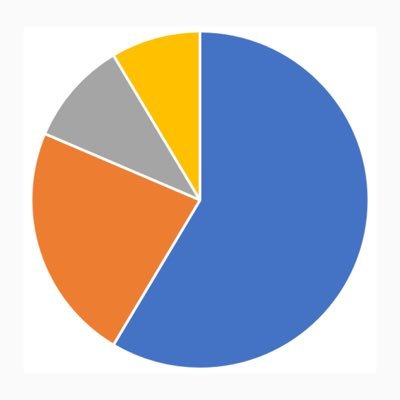
🚗 Volkswagen factory in Germany vs China
Labor cost per hour
🇩🇪 Emden: €74
🇨🇳 Tianjin: €12
Annual working hours per worker
🇩🇪 Emden: 1,282
🇨🇳 Tianjin: 2,065
Sick leave rate
🇩🇪 Emden: 10.5%
🇨🇳 Tianjin: 1.0%
Cars built per employee per year
🇩🇪 Emden: 29
🇨🇳 Tianjin: 51.3
Factory cost per vehicle
🇩🇪 Emden: €4,850
🇨🇳 Tianjin: €1,078
Electricity cost per kWh
🇩🇪 Emden: €0.15–0.23
🇨🇳 Tianjin: €0.06–0.10
Source: BILD, Deutsche Welle (September 2026)
Ian Lucey retweeted

Halo is a Great Pyrenees who was born without front legs and later had one back leg amputated for health reasons. She just got her prosthetics, and this is the first day of her life she’s been able to run with her friends.
Ian Lucey retweeted

The most important briefings of the day.
Karl Deisseroth, professor of bioengineering and of psychiatry and behavioral sciences, shares the news of his Nobel Prize with his kids.
Ian Lucey retweeted

Rainmaker just produced ~19M gallons of water in Alaska via next-gen cloud seeding over 3 hours of operations.
We are the first company to provably produce precipitation in Alaska. As promised, we’ve linked our white paper and relevant data.
In the future, Rainmaker will protect and restore glaciers with man-made snowfall.
Immediately, this demonstration shows how Rainmaker will add new water to the Colorado River and Great Salt Lake in the coming months.
We turned around this analysis and white paper just a couple days after operating. There are many data sources I want to deepen our understanding of the atmosphere and increase our provable production; we’re building the instruments to collect that data in subsequent operations. But at Rainmaker, we won’t tout LOIs, simulations, or lab tests. What matters is physically measuring that you’ve affected the atmosphere; proving that we’ve produced water. We prefer sharing only the tech that has proven to make more water for farms, industries, and ecosystems in need.
Expect a regular cadence of these from us as we build the best atmospheric science lab in the world. Feedback is welcome in the interim.
Rainmaker Century.
rainmaker.com/blog/alaska-va…



Ian Lucey retweeted

Ken Bates saved Chelsea. Not only back in 1982 when Bates rescued the club from potential oblivion. But still now, even following the sad news of his passing aged 94, Bates’ legacy continues to protect Chelsea. He created the CPO, Chelsea Pitch Owners, which safeguards the future of the stadium.
Bates achieved much in an extraordinary life. He fought to protect the FA Cup, fought for the new Wembley to be built, stabilised Leeds United and fought for smaller clubs but his greatest legacy revolves around Chelsea. Combative, controversial, loyal and principled in his way, Bates was driven by a desire to prove himself, to make something of himself, to take on the establishment in its varied forms.
Much of this drive stemmed from memories of growing up without parents (his mother died, his father disappeared and he was raised by his grandparents) and frustration at a childhood disability destroying his dream of making it as a footballer at Arsenal. He'd been a good attacker.
It was April 2 1982, when Bates rescued Chelsea. He spoke to the club bankers who’d run out of patience. “We have two cheques here,” the bank told Bates. “One is for the share of the (FA Cup) gate which has to go to the FA. And one is the players’ wages. Which one can we bounce?”
He came in, invested money to tide the club over and started cutting costs. Entering the Bridge boardroom for the first time pre-match, Bates was shocked to see the number of guests, the feast laid on, even a cigar box being passed around at a club losing £12,000 a week. Chelsea even had a club chauffeur. Not for long.
Bates’ cost-cutting was brutal but vital. Chelsea recovered, fought off property developers through Bates’ strength of personality, established themselves as a force in the Premier League and became more involved in European competition. Bates loved Chelsea. He loved entertainers. His favourite was Gianfranco Zola because the Italian played with a smile, dribbled and lit up stadiums and fans’ lives.
Even after selling to Roman Abramovich in 2003, taking over Leeds where his cost-cutting (and Chelsea past) alienated many fans, and then living in retirement with his beloved Suzannah in Monaco, Bates would try and return to watch matches at the Bridge. He kept a flat full of mementos nearby.
On the sideboard was a framed copy of Bates’ CPO share. One day while Chelsea chairman, a fan shouted about the possibility of “your grandson sells the land for houses”. Bates’ initial reaction was, typically, “You ungrateful bastard”.
But he realised that was a very real threat – the Bridge was prime London land. Developers craved it. So Bates created the CPO; it now numbers 13,000 fans owning 23,000 individual shares (Thomas Tuchel has one) and a large majority would be required to vote for any change in use of the pitch. And they aren’t for change. As Bates intended.
We last spoke on May 18. Ken sounded frail but was typically opinionated on the footballing issues of the day. Bates had his difficult side, vendettas and views, but he was passionate about family, football and Chelsea FC. RIP, Ken.
Ian Lucey retweeted

This is not good for Ireland Inc - a creative tech startup leaves Ireland due to rampant NIMBYism and is already thriving in America within weeks and set to employ 1000 Americans

Chapter 2:
thenextweb.com/news/manna-dr…


Ian Lucey retweeted

In 1960, Ormond Gigli turned a doomed row of New York brownstones into something unforgettable. With no budget, he gathered 43 women, gave them full creative freedom, and placed them in empty windows just hours before demolition. Shot from a fire escape, the result wasn’t just a photo—it was a fleeting moment of beauty, frozen seconds before it vanished forever.
© History Pictures
#archaeohistories


Ian Lucey retweeted

Let me explain exactly why every new subdivision in America looks like the top photo, because the math is wild.
A mature tree increases a home's value by 7 to 19 percent. On a $400,000 house, that's $28,000 to $76,000. A single shade tree produces the cooling equivalent of ten room-size air conditioners running 20 hours a day. One tree on the west side of a house cuts energy bills by 12 percent within 15 years. The bottom photo is worth more, costs less to live in, and sells faster. This has been documented by the University of Washington, Clemson, Michigan State, and the USDA. The data is not in dispute.
Removing those trees saves the builder roughly $5,000 per lot. Concrete trucks need twice the dripline radius of every standing tree. Utility trenches need flat ground. A bulldozer flattens 200 lots in an afternoon. Preserving trees adds weeks and thousands per home.
So the developer pockets $5,000 in savings and the buyer eats $50,000 in lost value for the next two decades. The person making the decision and the person paying for it have never been in the same room.
The Woodlands, Texas is the proof of what happens when they are. George Mitchell bought 28,000 acres of Houston timberland in 1974 and preserved 28% as permanent green space. He forced McDonald's to build behind the tree canopy. That McDonald's became one of the highest-volume locations in Texas. The first office building, designed to reflect the surrounding forest so you couldn't see it from the street, leased completely.
The Woodlands median home price today: $615,000. Katy, a comparable Houston suburb that clear-cut: $375,000. Named #1 community to live in America two years running.
Fifty years of data. The trees are worth more than removing them saves. Developers clear-cut anyway because they sell the house once and leave. You live in it for 30 years.


Ian Lucey retweeted

The In Memoriam at the 2026 #ActorsAwards
this is some excellent journalism. @shaunwalker7 theguardian.com/world/ng-int…

1
118
