Official @ESA feed for #Hubble Space Telescope — the space-based observatory which has revolutionised modern astronomy. #BFFinSpace with @ESA_Webb

space
Joined April 2010
Our #HubbleTopImage features a shot of a strange galaxy! The Coma Galaxy Cluster is one of the closest very rich collections of galaxies in the nearby Universe. The cluster is about 320 million light-years from Earth, and contains more than 1000 members... 1/2
20
163
7
933
19,289
NGC 4921 is one of the rare spiral galaxies in Coma, and a rather unusual one — it is an example of an ‘anaemic spiral’ where the star formation that creates a spiral’s bright spiral arms is much less intense. As a result, there is just a delicate swirl of dust in a ring around the galaxy. Much of the spiral structure in the outer parts of the galaxy is unusually smooth and gives the whole galaxy the ghostly look of a vast translucent jellyfish 🪼 Read more: esahubble.org/news/heic0901/ 📷 @NASA, @ESA , and K. Cook (Lawrence Livermore National Laboratory, USA) 2/2
1
6
1
53
3,429
Our #HubbleTopImage features the Red Planet! 🔴 This is a combination of Hubble images of Mars taken from 28 to 30 December 2024. At the midpoint of the observations, Mars was approximately 98 million kilometres from Earth. Thin water-ice clouds 🌨️ that are apparent in ultraviolet light give the planet a frosty appearance. The icy northern polar cap was experiencing the start of Martian spring. Read more: ow.ly/yzeP50ZVIMp 📷 @NASA , @esa , STScI
6
117
5
882
29,485
In the 2026 ESA/Hubble and ESA/Webb calendar, the month of October features the flocculent spiral galaxy NGC 5335. It has patchy streamers of star formation across its disc 🌟 and a bar structure slicing across its centre! Ready to print .pdf here: esahubble.org/products/calen… 📷 @NASA , @ESA , STScl
2
54
353
13,791
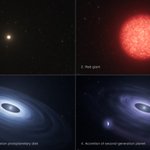
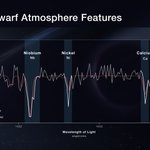
🆕 This suspected second-generation planet has solved a Hubble cold case 🕵️‍♂️ Since 1999, mysterious chemical signatures from a white dwarf, HS 0209+0832, have sat in the Hubble archive. Now, sleuthing astronomers have revealed unusual chemical abundances, including of the element niobium. 1/3
6
99
4
684
26,772
The abundance of niobium points towards the possibility that the white dwarf may host ‘a second-generation planet’: a world that formed of material that is not from a star’s birth 👶 but from its death 💀 2/3
1
14
1
89
4,379
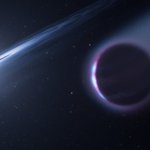
Once the star ejected this chemically enriched material, the astronomers theorise that some of it coalesced into a gas giant about the size of Jupiter! Read more: esahubble.org/news/heic2613/ Artist's concept: @NASA , @ESA , L. Hustak (STScI) 3/3
13
95
3,646
A voyage to a strange spiral galaxy in Virgo! NGC 4698 is one of over 1000 galaxies in the Virgo Cluster. Its serene appearance belies the chaos within 🫨 it has a bulge that extends from its disc at a right angle, and the stars and gas near its centre rotate perpendicular to the rest of the disc! 1/3
10
107
7
666
32,484
The data used to create this latest Hubble image of the month came from an observing programme focused on galaxies in the Virgo Cluster, zooming in on the details of the galaxies and studying how their journeys through the cluster affects their evolution. 2/3
1
8
37
3,691
Read more here: esahubble.org/images/potm260… 📷 @ESA / @Hubble_Space & @NASA , KPNO/NOIRLab/NSF/AURA, DSS2, D. Thilker, N. Bartmann (ESA/Hubble), D. de Martin, S. Hopkins, A. Block, N. Risinger, E. Slawik, M. Zamani (ESA/Hubble) 🎶 Tonelabs – The Red North (www.tonelabs. com) 3/3
6
31
3,267
Happy 200,000 orbits to Hubble! 🥳 Hubble completed its 200,000th orbit around Earth on 19 September 2026. On that day, it completed an observation pertaining to one of its scientific legacies: measuring the expansion rate of the Universe. This observation involved the galaxy cluster MACS J0417 (left-centre of this image). 1/2
13
142
10
947
25,483
More than 36 years after launch 🚀 Hubble is still reaching new heights of scientific productivity, its ability to see in ultraviolet and visible wavelengths the perfect complement for other observatories. Read more: esahubble.org/images/opo2623… 📷 @NASA , @ESA , STScI, M. Pascale (UCLA) Image Processing: J. DePasquale (STScI) 2/2
8
1
35
3,888
Our #HubbleTopImage features a famous galaxy! 🤩 This is Messier 104, better known as the Sombrero Galaxy. It has been imaged many times, with this Hubble view released recently, in 2025. 1/2
9
118
4
838
27,034
Located around 30 million light-years away in the constellation Virgo, the Sombrero Galaxy is instantly recognisable. Viewed nearly edge on, its glowing bulge and sharply outlined disc resemble the rounded crown and broad brim of the Mexican hat 🇲🇽 from which it gets its name.
1
6
35
3,377
A galaxy in a chaotic spin! 🫨 Access more space-themed .gifs at our giphy page: ow.ly/fIH150ZPwj1
11
44
2
345
25,135
A small portion of the Rosette Nebula features in this #HubbleTopImage 🏵️ The Rosette Nebula is a star-forming region spanning 100 light-years across – this detail of the nebula measures just 4 light-years across! 1/2
17
124
5
892
27,037
Dark clouds of hydrogen gas are being eroded and shaped by radiation from the cluster of stars in the centre of the nebula. An embedded star seen at the tip of a cloud in the upper right portion of the image is launching jets of plasma that are crashing into the gas around it. Read more: esahubble.org/news/heic2505/ 📷 @NASA , @ESA , STScI 2/2
14
51
3,210
The spiral galaxy NGC 4698 is more chaotic than its appearance may suggest… Not only is it one of a few known spiral galaxies with a bulge that extends out from its disc at a right angle – the stars and gas nearest its centre also rotate perpendicular to the rest of the disc! 1/2
9
115
3
812
31,725
Find out why here: esahubble.org/images/potm260… 📷 @ESA / @Hubble_Space & @NASA , D. Thilker, the MAUVE-HST Team, N. Bartmann (ESA/Hubble) 🎶 Stellardrone - Ascent 2/2
10
34
3,406