

We're researchers, scholars, policy advisors & storytellers who envision a world where basic needs insecurity isn't a barrier to pursuing + completing college.
Philadelphia, PA
Joined April 2014
- Tweets16.2K
- Following4.8K
- Followers7.1K
- Likes8.2K




From recommendations to action! 🎉
MiLEAP’s $5M federal Basic Needs Grant will help Michigan students access basic needs support and stay on track to graduate. We’ve been proud partners to help advance their critical work.
michigan.gov/mileap/press-re…

More Listening to students, more grounding decisions in research, more turning recommendations into action.
Explore our partnership with Michigan and read “Barriers to Bridges,” the task force report helping guide their next phase of work:
hope.temple.edu/projects/mic…

At the end of September, the federal government awarded nearly $100 million that Congress had allocated for institutions of higher education and their state partners to support their basic needs.
hope.temple.edu/newsroom/hop…

We applaud the winners of these competitive federal grants, but recognize how much more investment is needed to address the crisis of 3 in 5 students experiencing basic needs insecurity.
The Hope Center for Student Basic Needs retweeted

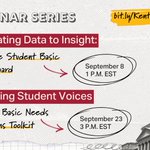
THIS WEEK: Join us Oct. 8 for a webinar on the student basic needs crisis and proven strategies to help students stay on track. Hear from:
➡️ Angélica Gutiérrez, @TICAS_org
➡️ Bryce McKibben, @hope4college
➡️ Alexis Newman, @SBNC_USA
Register here: bit.ly/AcrossTheFinishLine

We agree. Students deserve easier access to overcome barriers in applying for food assistance; 67% of eligible students don't receive SNAP. Text messages are a common-sense step for state agencies.

NEW: Student Defense is calling on all states to use text messaging to expand access to SNAP benefits.
Too often, a missed interview, deadline, or mailed notice can mean eligible people lose out on food assistance.
For college students, the stakes are especially high: nationally, 67% of eligible students don’t receive SNAP benefits.
It’s hard to focus on completing your degree when you don’t know where your next meal is coming from.
Read the full brief: defendstudents.org/all/stude…

When we support students’ basic needs, we're also supporting their academic outcomes, keeping them enrolled, and supporting their wellbeing as humans. But doing so requires care and creativity. So, how can we better do this?
That's the question we asked at our most recent webinar, "Basic Needs Are Health Needs: The Role of Campus Health & Wellbeing Practitioners." We brought together partners from various institution types to discuss their campus's approach.
Watch: youtube.com/watch?v=lBvD8sAs…
A big thank you to our partners at @dallascollegetx, @Columbia & @SetonHill for joining us for this deeply informative session.
Grateful to @ECMCFoundation for bringing so many partners together in MN for thoughtful conversations about what it takes to strengthen student basic needs security—and how we keep moving from ideas to policy change and implementation.


Many of those big ideas for state level change can be found in our "North Stars"—points of orientation + actionable policy opportunities to create student basic needs security.
When we all reach for the same goal, we can make big change.
Read here: hope.temple.edu/north-stars

The Hope Center for Student Basic Needs retweeted

I met Jazmyn at San Bernardino Valley College, and her story about not being able to use SNAP benefits on campus inspired me to write legislation to address that issue.
So - I hope you will share your thoughts and ideas too.
Hearing your experience helps me to craft a meaningful policy response.
🚨NEW REPORT:
An unexpected $500 expense shouldn’t derail a college education.
But for millions of students, a car or medical bill, or rent increase can do exactly that.
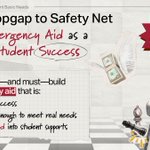
@MarkHuelsman looks at how states can build emergency aid into a real student safety net. 🧵

We know what happens when emergency aid is funded at scale.
Federal funding made emergency grants widely available during the pandemic. Students used funding to pay for basics. Since HEERF ended, the share of students reporting they received emergency aid has drastically fallen.

Some states have stepped up. Our report examines programs in CA, MI, MN, NC, TN, VA + WA—and what policymakers can learn from them.
The goal: emergency aid that is accessible, flexible, integrated into student supports + built to last.
🔗: hope.temple.edu/stopgap-safe…

We’re excited to be in MN with higher ed leaders + partners at @ECMCFoundation's first policy forum—and to share something we’ve built. ✨
Our "North Stars” offer states a roadmap to advance student basic needs security. ⭐
hope.temple.edu/north-stars
Stay tuned for more!
Basic needs are health needs. 🩺🍎🏠
Join us next Thurs, 10/1 3 p.m. ET for a convo—informed by @ACHA_Tweets—on the role campus health & wellbeing professionals can play in student success.
With @dallascollegetx, @Columbia & @SetonHill.
Register: temple.zoom.us/meeting/regis…

Getting into college and knowing how to navigate it are not the same thing.
More than 1 in 4 undergraduates are first-generation—yet too often, colleges expect students to arrive knowing the unwritten rules of a system they’ve never encountered. 🧵
For our summer intern Rachel Chen, intentional pre-orientation support made the difference.
51% of students in specialized summer bridge or pre-orientation programs said the experience helped them make friends, compared with 21% of first-gen students who didn’t participate.
Colleges don’t need elaborate programs to make a difference. Peer mentors, early move-in support, workshops, virtual advising & clear resource guidance can reveal the “hidden curriculum”—and help students thrive from day one.
Read the blog: hope.temple.edu/newsroom/hop…
