





Pinned Tweet
This is my third reflection on AI and freedom. My goal is to post once every three months. So far, the quarterly progress is blowing my mind. I've never seen a field evolve so blazingly fast. And for now, the winds are very much blowing in the direction of individual freedom.
My first post was 6 months ago, in early March, riding the zeitgeist of the OpenClaw revolution.
In the span of a few weeks between December 2025 and March 2026, we went from vibe coding websites on corporate platforms to hosting our own full-on personal agents on our own hardware. Systems and tools that hadn't even existed in early January had by late February become daily drivers for millions of people. Non-technical individuals could now instantly outsource technical tasks to machines, and become massively more productive. I was hooked.
At HRF we ran our first Agent Camp in mid-February, equipping human rights activists with their own personal agents. Looking back, to what seems like forever ago, the setup was crude: early OpenClaw software running on a Macbook, connected to Opus 4.6. Everything struggled to work. But when it worked, it was pure magic. I still remember, during that first session, one of the Campers recording himself playing guitar and signing, alongside one of the instructors playing the piano, and then the Camper uploaded the recording via their phone to their agent, and then directed it to create, out of that, a killer gospel rock anthem. It was glorious. And a great example of how machines can help humans boost and advance creativity, not kill it.
During that heady time we began working closely with the AI experience company Finite, whose goal is to make humans more human, and liberate them from tasks that are easy for machines. Over the next few months we collaborated on a better way to provide personal agents to activists, switching to a cloud-based model that could be accessed anywhere, moving from OpenClaw to the more stable and self-learning Hermes, and eventually hooking up to confidential compute inference, so that third party servers couldn't read our prompts.
In January we worked with Rod Roudi and the AI Freedom Lab to host the first AI Hack for Freedom. What was novel about that first hack in Austin was that the human rights activist team captains worked with developers who, thanks to vibe coding, could make really useful software in just a matter of hours, instead of weeks or months. In May, for the second AI Hack for Freedom, things had advanced so much that activists actually could code now and were leading the effort, instead of just telling developers what to do. Talk about a step change.
A few weeks later, at the Oslo Freedom Forum at the end of May, we set up an Apple Store-style AI experience lounge where hundreds of dissidents were able to use a personal agent for the first time to start hacking away at fun creative projects. And that's, in my view, a critical first step towards understanding the intelligence revolution that is happening all around us: using a personal agent and developing the muscles to understand what you can do with an agent, how it can help you, and how it will start shaping the new AI-powered world. Integrating an agent into your workflow and life takes time, but you have to start somewhere.
My second post followed soon after all this in early June, just as local AI was really becoming a thing. Before the summer, local AI could only get you so far: a cool chatbot, a neat but basic research assistant. With apps like Atomic Chat, people could indeed harness the intelligence, for example, that already exists on your iPhone, to obtain an impressive ChatGPT-like experience, fully local and offline. But with the rise of new smaller models from Qwen and Deepseek, people could actually start to run frontier-quality intelligence on machines at home, on hardware that cost less than $10,000. Full tool calling, running agents, on laptops!
Today, 3 months later, it's staggering to reflect on and absorb the speed of what is happening. Back in June, the benchmarker extraordinaire @0xSero showed me a version of DeepSeek that he was running on his MacBook Pro. It was capable of some pretty amazing, fast, complex stuff: he sat down and showed me how it could instantly scan massive legal documents for analysis, fully on-device. But again, comparing those models to what you can run now on a similar machine, it's just a whole different ballgame.
For comparison: 6 months ago, confidential compute was possible, but the models that powered it were not that impressive. The gap between Opus 4.6 and "open weights" back in February was massive and very noticeable. 3 months ago, with the rise of Kimi 2.6, and then GLM 5.2, it was a big leap forward. It was finally a moment when I felt like I wasn't being handicapped by using open weights versus for example Opus 4.7 or ChatGPT 5.5, which were leading the frontier world at the time. But in the past 6-8 weeks, with Kimi K3, GLM 5.3 Flash, and just in the past day or two, DeepSeek 4.1 Flash, we've entered a world where open weights are legitimately going toe-to-toe with the best proprietary models, and sometimes even outperforming them.
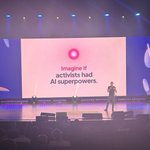
My mission is to give activists and dissidents AI superpowers. When Justin Moon first showed me what was possible back in January just on the Claude Code desktop app, a couple days after it came out, I knew that I had to give this awesome power to all my friends. And OpenClaw evolved that power significantly, by helping people choose what kind of intelligence they wanted to run, where they want to run it, and how they wanted to talk to it. This, I realized, had to be in the activist toolkit.
Today I can say we are truly cooking with gas. My Finite agent today runs on GLM 5.3 Flash, in a TEE, giving me privacy and frontier-intelligence. The Hermes-based harness knows me, knows what I am working on, and auto-learns as I go. I also run my own OpenClaw, still on my own machine, connected to Astra, for fun and comparison's sake. I talk to both agents from my phone on the go and often give them the same tasks to compare. I would say that for most things that I am working on, GLM 5.3 is nearly or just as good as Astra. Which is a crazy thing to consider. Certainly, for advanced mathematics, science research, or complex engineering, one would prefer Astra. But for 95% of the daily tasks the average person needs help with, open weight models are perfect, and often snappier.
And maybe this is where we are headed: to a "minimum viable intelligence" being available openly and cheaply to the world at large, getting constantly upgraded to within a few percentage points of the very best proprietary models, and with those most elite, very expensive, very gatekept highly-specialized models being primarily used by governments and companies for cutting edge research. But with this advantage only being ephemeral, being constantly erased and eroded in a matter of days or weeks by open weight models.
The trend is clear: not only are open weight models dominating corporate ones in terms of usage on platforms like Openrouter -- mainly because they offer near-equal quality at a fraction of the cost -- but they also are increasingly being able to be run on reasonable hardware at home. In my next update, in December, I am excited to reveal what I'll be able to do at home... I can only imagine what kind of local models will be available, and I will have a 128GB Macbook Pro to run them on. I get my hands on the beast in October and will report back.
If you are still reading, thank you, and good for you, as I have completely buried the lede.
The single biggest difference between today and 3 months ago, and certainly between today and February or March, is the rise of the organizational brain. At HRF we have built one in the past few weeks for our Freedom Tech team, and I use my GLM 5.3-powered agent to interact with it. I think the best way to explain the brain is to detail how we set it up, and how we use it.
The first thing we did is dump all Freedom Tech historical content into a folder. All reports, public updates, relevant social media posts, anything public or external the Freedom Tech team produced over the past 7-8 years at HRF. This took our team a few days. Then, each member of the team uploaded an interview where they talked about what they do on the team, what they have been working on, and what they are doing moving forward. Finite then helped us arrange this into an encrypted database that uses nostr as infrastructure for user permissions and access. Here's where it gets really interesting: starting in early August, every week we started ingesting the transcript of the weekly all-hands meeting of the team into the brain. (I also get an email summary of this meeting, drawn up by our agent-brain combo, instead of by Google). Then every Friday, every team member reports to the brain a short brief by voice or email on challenges, opportunities, changes, etc. A slack achievements channel and social media posts and mailchimp emails and newsletters are all ingested. The results are extraordinary.
I can now ask the Freedom Tech brain for updates on what is happening with the team, and where points of stress might be. I can ask for beautifully-designed reports about certain aspects of our work. The brain has transformed things like donor updates, annual reports, and impact briefings from exhausting team efforts that once took weeks or months to something my agent can extract in minutes. Instead of having to call a meeting to figure something out, or to set up a phone call to find out a key piece of information, I can just ask the intelligence and get it instantly. And GLM 5.3 is just so damn smart. It notices trends, gaps, and issues. It can spot problems and opportunities. And we are just getting started.
In March, I had no idea what an organizational brain was. In June, I barely grasped its importance. Now, in September, I can't imagine going back to a world without one. That shows how fast we're moving. I fully expect most innovative organizations to have some kind of organizational brain by the end of this year, and most organizations period, by the end of next year, if not sooner. Jack Dorsey and Roelof Botha's paper "From Hierarchy to Intelligence" gave the earliest, clearest picture of what a "brain" is and what it can do back in March, but to really grok it, like with anything in AI, you have to set one up and experience it yourself.
I also wanted to share a few words on big picture AI topics:
Open weights are the only thing separating us from a techno-totalitarian future. If intelligence is in the hands of a small few, tyranny is the only possible outcome. Full stop. This is why we must push back against restrictions on open weights, and on the breathless frantic moral panic of "AI Safety". Just consider: we were told earlier this summer that Fable and Mythos had catastrophic abilities, and that it was too powerful for mere mortals. But since then, that original version of Fable is in the rearview mirror, being already superseded by Astra and even possibly DeepSeek 4.1.
Did the world change because of Fable and K3-level intelligence? Yes! Cyber-systems are being pushed to their limits. We saw this most clearly in the past 6-8 weeks as Bitcoin systems (canaries in the coal mine) came under new AI-powered pressure: first the ColdCard hack, then the BTCPay Server vulnerability, then issues with Lightning infrastructure, then the Liquid theft. But did the world end? No. In fact, as a result of AI-powered "red team" white hat hackers, Bitcoin systems are now being constantly monitored for vulnerabilities and are now, possibly, stronger than ever. It's true that hackers now have powerful tools to probe systems for flaws. But it's also true that defenders can now aim those same powerful tools, constantly, at infrastructure, to spot weaknesses and shore them up. And often, open-source models are the only ones that can be used for cyber-defense, as the proprietary models often refuse these kind of tasks.
Of course, the mainstream media presents a very different picture. We are being told in the past 48 hours that cutting-edge AI models have a 10% chance of killing everyone on earth. But the reality is that the models the MSM is dreading will be essentially totally irrelevant in 6-8 months and will be able to run on anyone's laptop in a year or two.
The real outcome we should fear, in my view, is that the most elite frontier intelligence ends up being restricted to a handful of governments or companies, and power centralizes even more grotesquely than it ever has centralized in the history of humanity. The only thing that can stop this is open weights: super-intelligence for everyone. Here, personal responsibility will matter. There is a tradeoff to consider. Do you want to rely on the corporate stack of using Meta's agent, or Grok's agent, or ChatGPT's suite of products? And be a slave to those companies? And watch what you say lest you get banned? Or do you want to control your own intelligence and run it yourself and be free? In some ways the tradeoffs are similar to Bitcoin. Do you want to do the hard work of learning how to self custody and be your own bank? Or take the easy way and have someone else hold your money? Here, in the AI world, you'll be able to run your own intelligence, or you can trust someone else to control the limits of your thinking and creativity.
One key thing to remember: you can't obtain privacy-protecting frontier cloud-based inference from the big labs, at least not at the moment. The ONLY way to get encrypted inference at the frontier level is from open weight models. So anyone who is against open weights (cough Anthropic cough) is necessarily against privacy.
Now, what of China? I think the CCP is likely making a mistake by pushing open weights so heavily. It's a gift to humanity, but it's something that will eventually rock Xi Jinping's extremely centralized control. I still think the CCP is likely to shift course and stop sharing open weights, potentially very soon. So, download all the good models while you can! Clearly, Xi's short term objective of commoditizing US super lab value IS working. Anthropic and OpenAI are not nearly as important as they once were. So much of their value can be downloaded for free off the internet. But this gamble comes with great political risk for the CCP as more and more individuals become more and more powerful.
We see this in our own work, as we now have helped dozens of the world's top dissidents learn how to use personal agents. They are much more powerful when equipped with AI tools. They'd probably never have a shot at challenging AI-powered dictators without AI, but with AI? They stand a chance. For those curious: YES the irony of human rights activists depending on the CCP for freedom tech never ceases to amaze me.
Even if China cracks down on open weights, it seems we are heading in the right direction in the US, and globally, on the issue. NVIDIA is leading the way with a variety of other AI infrastructure and hardware companies who know that a diverse world with a lot of inference players is best for their business, not a world where two or three superlabs control everything and can dictate pricing.
So what next? I am excited for the coming few months as local AI gets smaller and more potent, and as TEE-powered cloud inference gets more powerful. We are, in a huge shift from sentiment and reality one year ago, simply **barreling** toward a future where everyone can run their own super intelligence, if they wish.
I'm also excited for a future where we are liberated from "being on our computer" all day. The computer should do most of that work! The amount of time you spend glued to a screen should, for most people, shrink dramatically in the next year. This is especially true for leaders, and activists. AI certainly isn't the only factor here, to help free up people's time to focus on what they should be focusing on, but it's a big one.
This moment, today, and in the next few months, is a CRITICAL opportunity for human rights activists to gain new powers, save time, dial in more on what they are good at, harness creativity, automate boring and time-consuming tasks, and scale their work. That is what I am focused on.
I hope you all can join me.
See you in December for update #4!
Alex Gladstein 🌋 ⚡ retweeted

NEW @citizenlab report (in collaboration with The Share Foundation)
We find more cases of Pro-Democracy figures in Serbia 🇷🇸 targeted with NSO Group's Pegasus spyware
citizenlab.ca/research/pegas…🇷🇸🇷🇸

Very interesting stuff

Privacy for Bitcoin.
Without compromising scale.
Going live to talk about Shielded CSV ⛊ xitter.cf/i/broadcasts/1mGPaZeOZ…

🔥

mxfp4, nvfp4, exl 2.875 bpw, and exl 3.5 bpw versions of the new deepseek checkpoint are out now, fully uncensored! jailbreak bench, inference perf, quality measurements are all in the links comparing each version to each other. so you should only need to click on one to decide from the charts ive added. im personally using the mxfp4 version on my local 4x rtx pro 6k rig. enjoy :)
huggingface.co/Infatoshi/Dee…
huggingface.co/Infatoshi/Dee…
huggingface.co/Infatoshi/Dee…
huggingface.co/Infatoshi/Dee…

Alex Gladstein 🌋 ⚡ retweeted

Me showing up to a macro interview in the coming weeks and getting asked about Europe.

Alex Gladstein 🌋 ⚡ retweeted

🚨NEW INVESTIGATION: University of Belgrade Rector who resisted crackdown on students was hacked with zero-click Pegasus.
Authorities raided his offices in March.
Serbia's snap elections are 6 days away.
There are more targets 1/
With @ShareConference citizenlab.ca/research/pegas…


Alex Gladstein 🌋 ⚡ retweeted

Sometimes my GLM 5.3 Flash running locally is smarter than Opus 5.5 on High. Happened to me a couple of times today.
Not "smart" in the sense that it produces better files, but smart in that it makes way fewer stupid mistakes.
I'm now 100% sure Opus 5.5 has been nerfed.

Alex Gladstein 🌋 ⚡ retweeted

Most chewing gum is plastic and rubber. The pack calls it gum base.
Extra reads sorbitol, gum base, glycerol, natural and artificial flavors, then under 2% of sweeteners, soy lecithin, BHT and color. Orbit and Trident read about the same. Gum base is the part you actually chew, and none of the 3 say what it is.
FDA rule for gum base names 46 things a company can use and still print those 2 words. Polyvinyl acetate is on it, and that's the polymer in white glue. So is polyethylene, the same family as a grocery bag, and butyl rubber, which is what inner tubes are made of. Then paraffin, petroleum wax, polyisobutylene, pine rosin esters to soften it, and lanolin, which is the grease out of sheep's wool. Pick any mix and the label reads gum base.
It's why gum doesn't dissolve no matter how long you chew. The sweetener and the flavor wear out in a few minutes and what's left in your mouth is the polymer, which is also why it stays on a sidewalk for years. Gum used to be chicle, a tree sap. Simply Gum and Glee still use it and say so on the pack.
AI has predictably replaced the “brute force” stuff that used to take up 70% of the time of game developers
What’s surprising, according to Tim, is how much of the other 30% of creative work it is able to do

When I was writing Unreal Engine 1, my time was divided as follows:
- Around 30% went to seriously deep coding on hard problems: assembly language texture mappers, C++ BSP trees, data persistence, object oriented systems design, and networking.
- Around 70% was just typing and refactoring large bodies of code needed for a complete engine feature set. This was not hard, and while I was doing it my mind was mostly on the deeper coding topics, thinking and planning for what's next. It didn't feel much different from vibe coding today, except that it was just me typing code on an IBM Model M keyboard rather than prompting it and reviewing the results.
So, it has always seemed perfectly logical that we would rely on AI for that 70%, once the AI could do it with a similar quality standard as we could, which has never been perfection. It came as no surprise that, after a few years of AI model evolution, it was able to take the reigns on that 70% and free up programmers' time for more valuable tasks.
What's more of a surprise is the emergence of AI as a sort of insta-Carmack able to solve hard technical problems quite cleverly and often cleanly, and that it's able to reason about and work in complex 3D scenes both by operating the tools and by directly understanding the raw data files.
I abandoned assembly language in 1998 when out-of-order CPUs made much simpler C/C++ code faster, and never I missed it. If prompting through architectural documents, concept art, and design plans can transcend typing code and tweaking vertices, that will enable developers to spend their time on higher-level, higher value technical and creative tasks.
What matters is the end product, whether it's a game or an engine. Anything developers can do to try out more ideas and make better software and games faster is a win for everyone.
Alex Gladstein 🌋 ⚡ retweeted

This doesn’t seem to be a very robust strategy in the era of AIs that can use your computer on your behalf.

notice..
> Delta is blocking AI agents from booking flights
> JPMorgan Chase and Charles Schwab block agents from accessing accounts
> Yelp requires paid data licensing for agents
> Amazon has blocked Grok bot and other shopping agents.
the internet is starting to block AI agents that were supposed to do everything for us
Alex Gladstein 🌋 ⚡ retweeted

DeepSeek-V4.1-Flash-1017 is the new kimi k3.
I'd advise rescanning your code with this model, it finds things everything else previously missed, and its cheap!

Alex Gladstein 🌋 ⚡ retweeted
OpenCode got hacked.
Frontier models started refusing to help.
You need a fire extinguisher that works every time, not one that will unpredictably refuse to discarge because it has misunderstood the situation.
Open weight models fix this.


The rain starts with a single drop…

Today in Chandigarh, just one person showed up for our Bitcoin meetup. We sat down, had a conversation, and started with a simple question: What is money?
We went deep into how to build a solid foundation, exchanged some read's like The Internet of Money and Broken Money to understand further.
Every conversation counts when it comes to orange-pilling the world! 📚🚀

Alex Gladstein 🌋 ⚡ retweeted

GLM-5.3-Flash now at 3200+ tok/s prefill, 155+ tok/s interactive decode on a $19k tinybox red flash. Get yours before prices go up!

Alex Gladstein 🌋 ⚡ retweeted

It was a pleasure to join The Dissident’s Mic for a wide-ranging conversation about my experiences and work, including the importance of education for Afghan girls. Thank you, @HRF, for having me. Tune in October 21.

The Taliban banned Afghan girls from school. They couldn't stop the classrooms.
@RoyaMahboob students sewed the jacket she's wearing — learning, earning, and refusing to disappear, one stitch at a time.
Her story on the next episode of The Dissident's Mic — out 10/21.
Learn more: hrf.org/podcast/the-dissiden…
Alex Gladstein 🌋 ⚡ retweeted

DeepSeek V4.1-Flash-1017 has released, beating GPT 5.6 Sol on Terminal-Bench while being ~17x cheaper.
It improves the previous DeepSeek V4.1-Flash result by 35%, accomplished with "no algorithmic innovation" but instead by RL training it on multiple coding agent harnesses.

Alex Gladstein 🌋 ⚡ retweeted

founder mode
zuck understands most inference will run locally

Muse Spark Open -- weights releasing today -- runs great on new Mac Studios thanks to work with @johnternus and Apple.


Alex Gladstein 🌋 ⚡ retweeted

Now that's a spectacular show! 🌋
Lava fountains light up the night sky at Kīlauea in Hawaiʻi Volcanoes National Park, offering a breathtaking glimpse of the powerful forces that continue to shape our planet.
Alex Gladstein 🌋 ⚡ retweeted

Told you so.

Here's how exactly Telegram provides user data to U.S. authorities. A letter recently filed in court shows how Telegram transfers that data, such as IP address and phone number.
More: 404media.co/heres-what-teleg…
