

Transforming conventional farmland into sustainable organic farms. Managing 19,000+ acres across CA, OR, and WA.
San Francisco Bay Area
Joined November 2009
- Tweets759
- Following1.5K
- Followers1.2K
- Likes240



Today we recognize and appreciate all the farmers around the world who spend their lives growing the food that feeds us all. We're very lucky to work with the best #regenerativefarming talent on the planet at Green Spring Farms. Thank you also to our tenant farmers who are amazing stewards of the land. Happy #NationalFarmersDay! 🫡

The @USDA estimates that starlings, blackbirds and crows cause more than $150 million a year in damage to U.S. grain, fruit and berry crops.
On our vineyards in Oregon and Washington, the answer is trained hawks and falcons. They start flying over the blocks as veraison begins and keep working through harvest. The flocks read the vineyard as a hunting ground and move on.
These are working animals. They are our teammates, not pets, and they love their job except for the fact that we don't let them drive...yet.
Timing and persistence are the point. Propane cannons and other noise devices lose their effect as birds get used to them. Birds do not get used to being hunted, so a live predator works as well in the last week of harvest as in the first.
The wild raptors are part of the program too. At Wanderstone in Walla Walla, the local National Audubon Society chapter donated owl boxes, and the Washington Department of Fish & Wildlife helped re-establish raptor sites beyond the vineyard blocks.
A 2018 Michigan State University study in the Journal of Applied Ecology reported that each dollar spent on kestrel nest boxes in cherry orchards saved $84 to $357 in fruit.
You can read more about how we farm sustainably and regeneratively at farmlandlp.com/impact


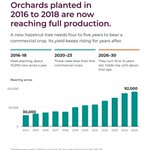
Oregon's 2026 hazelnut crop is forecast at 143,720 tons, a third straight record and roughly 4X the 2014 crop. @USDA credits orchards planted in 2016 to 2018 that are now reaching full production.

Frank Savage never set out to be a pioneer of regenerative farming at scale. A product of a multigenerational farming family, Frank was a lifelong rancher and a manager of large-scale construction projects before he met Craig Wichner and Farmland LP. What sold him was the soil.
He had a front-row seat to watch it transform and perform. He said he started literally tasting the difference from year to year as soil diversity improved and the farm expanded from 3 crops to 8 and then 12, and from 2 tenants to 7. For 14 years he tended to and transformed Burns Farm in California to such a degree that the land is now worth triple what it was purchased for. And then we lost him. He died on the farm in 2025. We miss him very much.
He meant so much to us, and to the land itself, that we renamed Burns Farm to Frank's Farm. If you watch the video below you'll see that Frank loved to inspire people with his work. He wanted to share the magic of regenerative farming with as many people as possible.
So in his honor, we partnered with UC Davis to fund a fellowship in sustainable agriculture. You can learn more, and give in his memory, here: give.ucdavis.edu/CAES/325986
Watch Fridays on the Farm with Frank on our YouTube channel: youtube.com/playlist?list=PL…

The 2026 Regenerative Food Systems Investment Forum takes place October 7 and 8 in Denver, and Farmland LP is a proud sponsor.
Our founder, Craig Wichner, will also give the opening keynote at 9am on October 7th, where he will lay out the investment case for organic farmland conversion.
The Forum brings together 450+ investors, funders, practitioners and other key stakeholders working to advance the conversations, investment strategies, and market opportunities driving the transition to regenerative agriculture and food systems.
Here are this year's themes.
🌱 Agriculture as Essential Infrastructure.
🌾 From Niche Strategy to Strategic Advantage.
🏛️ Turning Today's Market Pressures into Momentum for Regeneration.
🔑 Unlocking Investment Opportunities Across the Value Chain.
🛠️ Building the Financial Architecture for Regenerative Systems at Scale.
We are proud to support a great community, and drop us a note if you're attending! If you haven't registered or if you would like to attend, 👉 Register at rfsi-forum.com/2026-rfsi-for…. Use code FARMLANDLP10 to save 10%.
@Invest_RegenAg #RFSIForum26 #RegenerativeAgriculture #FoodSystems #Investing

We harvest 90% of our Oregon wine grapes by machine.
On this episode of Fridays on the Farm, Daniel Pasculli, Farm Manager at Green Spring Farms, walks through the harvest across Farmland LP's four Willamette Valley vineyards.
🍇 A Pellenc Optimum 2 harvester with a sorting head that removes leaves and stems so only fruit drops into the gondola
⚙️ Settings tuned to each vineyard and each variety. Pinot Gris crops heavier, so the sorting runs faster. Pinot Noir comes in lighter, so the machine can move faster down the row
⏱️ 3-9 tons an hour depending on crop load, and several 16-18 hr days with a cleanout between shifts
🌿 One pass per row. The machine gently shakes the vines, and the fruit drops onto catcher plates, with the vines, trellis, and irrigation lines intact
🚛 Gondolas to tipper trailers to the truck, 18-25 tons per load, bound for wineries across Oregon
Fridays on the Farm is a video series featuring our farm managers on the ground. See more episodes on YouTube: youtube.com/playlist?list=PL…
#FridaysOnTheFarm #WillametteValley
"Climate is the third dimension for agriculture."
The framing comes from the newest BMO Sustainability Leaders Podcast. Map farmland in two dimensions, and you implicitly assume growing conditions hold forever. Add the climate dimension, and the picture sharpens. Risk and opportunity become more legible. So does where to put capital.
Craig Wichner of Farmland LP and Alyssa Go of RRG Capital Management (RRG) join host Angela Adduci of the BMO Climate Institute to walk through what changes when climate scenarios drive the underwriting. The conversation covers water rights as one of the most misunderstood asset classes in farmland, why the American West remains a structurally durable growing region, and how regenerative practices show up on the income statement.
Listen on BMO Capital Markets, Apple Podcasts, or Spotify.
🔗 BMO: capitalmarkets.bmo.com/en/in…
🎧 Apple Podcasts: podcasts.apple.com/us/podcas…
🟢 Spotify: open.spotify.com/episode/1FK…

When billionaires like Stan Kroenke, Bill Gates, and Jeff Bezos are all aggressively moving capital into the same asset class, it's worth paying attention.
Kroenke just became America's largest private landowner, with 2.7 million acres, after recently purchasing 1 million acres in New Mexico.
Farmland values have grown at an average annual rate of 5.8% from 2019 to 2024, according to the USDA. But here's what the headlines miss: the U.S. loses 2 million acres of farmland every year to development and soil erosion.
No one is tearing down a shopping center to create more of it. The ultra-wealthy have figured out what we've known for years: farmland is one of the most reliable stores of value in an uncertain market, and the supply is only shrinking.
cnbc.com/2026/01/15/stan-kro…

Good land stewardship means working with water, not against it. Sometimes the best farming decisions are the ones you make between seasons.
On this episode of Fridays on the Farm, Daniel Pasculli, Assistant Vineyard Manager at Green Spring Farms, walks us through the erosion control work his team put in this fall at one of our Willamette Valley vineyards.
🍇 A vineyard section that was struggling with water erosion
💧 A purpose-cut channel directing water flow to a drain
🌱 Cover crop planted to hold soil structure and prevent future erosion
✅ The result: a healthier vineyard area doing exactly what we want it to do
Fridays on the Farm is a biweekly video series from Farmland LP featuring our farm managers on the ground. See all 27 episodes on YouTube: youtube.com/playlist?list=PL…
Crop rotations. Pollinator habitats. Soil health monitoring. Carbon tracking. Managing all of that across thousands of acres takes more than good intentions. It takes technology. 🐝
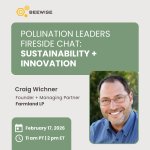
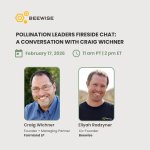
On Feb. 17, our Managing Partner, Craig Wichner, sits down with @BeewiseT Co-Founder Eliyah Radzyner to discuss how AI and AgTech enable regenerative farming to work at scale.
Register here: beewise-800.my.webex.com/web…
#AgTech #RegenerativeAgriculture #Pollinators #OrganicFarming #FarmlandInvesting #SustainableAg #FarmlandLP

Most farmland strategies optimize for yield per acre. That leaves soil biology, pollinator ecosystems, and carbon sequestration as unmonetized value.
Feb. 17, Craig Wichner and @BeewiseT's @EliyahRadzyner discuss how Farmland LP manages that complexity across 19,000+ acres of regenerative and organic farmland.
Register: beewise-800.my.webex.com/web…

Soil may be one of the most investment-ready climate solutions available today.
Regenerative agriculture can begin removing carbon within the first growing seasons, using land already in production. No decades-long wait. No speculative permanence.
msn.com/en-us/weather/topsto…
That shift from pledges to practice matters.
Earlier this year, Farmland LP and Carbon Friendly submitted the first regenerative farming soil carbon credits in the U.S. to Verra for issuance, based on measured soil data and third-party verification. (read more: businesswire.com/news/home/2…)
Climate solutions scale when they are operational, verifiable, and compatible with institutional capital.


The @USDA's new Regenerative Pilot Program is an important moment for agriculture. Federal support for soil health and water stewardship signals the broader shift toward farming practices that ensure long-term productivity while reducing inputs.
Read more about the program here:
usda.gov/about-usda/news/pre…
At Farmland LP, regenerative practices are part of our daily work. Our 2024 outcomes show what this looks like at scale.
Last year, our farm portfolio:
🌱 Planted 6,586 acres of cover crops
🦉 Permanently protected 414 acres of wildlife habitat
💧 Used precision irrigation on 60% of operated acres
👩🌾 Supported 60 full-time farm jobs across three states
🚫 Avoided 8.8M pounds of synthetic nitrogen and 267,215 lbs of pesticides
🌎 Avoided or sequestered more than 20,672 metric tons of CO₂e, bringing our cumulative total to more than 134,068 metric tons since 2013
Learn more about our approach to regenerative and organic farmland management: farmlandlp.com/impact/
Read our 2024 Impact Report: info.farmlandlp.com/hubfs/Fa…
We look forward to engaging with the @USDA Natural Resources Conservation Service as the program rolls out and exploring how this initiative can support the work already underway on our farms. Watch the program announcement here: youtube.com/live/bGCwdYCM0-Q…

Farmland LP retweeted

⚙️ @farmlandlp: Investing in the Land That Feeds America | As Seen on @CNBC & @FoxBusiness
For generations, U.S. farmland has been one of the highest-performing, lowest-volatility asset classes — delivering stable, double-digit annual returns while staying historically uncorrelated to stocks and bonds.
As inflation rises and markets swing, farmland has quietly outperformed inflation by over 6%, proving its strength as a durable store of value.
As one of the largest regenerative farmland managers in the country, Farmland LP oversees 19,000+ acres across key agricultural regions — enhancing land value through organic conversion, improved soil health, water efficiency, and biodiversity.
For investors, that means access to a tangible, income-producing real asset that feeds the world and anchors wealth through every economic cycle.
Learn more: b-tv.com/post/farmland-lp-in…
The Integrity Council for the Voluntary Carbon Market (ICVCM) has approved the first agricultural methodologies to earn its Core Carbon Principles label, including Verra’s VM0042 Improved Agricultural Land Management methodology.
Farmland LP and Carbon Friendly are already generating regenerative farming carbon credits under this same Verra protocol, one of only two methodologies worldwide to meet ICVCM’s highest integrity standards.
This recognition reinforces the rigor behind our field-level “measure, re-measure” approach, which quantifies soil carbon removals directly from regenerative farmland. It validates the credibility, permanence, and scalability of nature-based carbon solutions developed through our platform.
Farmland LP continues to set the benchmark for transparency, durability, and verified climate impact by translating ecological value into long-term financial performance for investors.
Read more about the ICVCM News: icvcm.org/integrity-council-…
Read more about the Farmland LP / Carbon Friendly Credit Submission: businesswire.com/news/home/2…

For most of the past century, agricultural productivity has been driven by scale, chemistry, and machinery: bigger tractors, more synthetic fertilizer, higher-yielding seeds.
Today, we’re reaching the biological and economic limits of that model. The next productivity revolution in agriculture will not come from more inputs or machinery. It will come from intelligence.
AI is already reshaping how we measure the value of farmland. Beyond yield, it can quantify soil health, biodiversity, and water use, connecting regenerative practices to financial performance.
On Green Money, Craig Wichner outlines how technology will enhance stewardship, improve returns, and strengthen food security.
Read the full article here: greenmoney.com/farming-smart…

Recent weeks have reminded investors that market calm can mask structural weakness.
Morningstar notes that investors may be overlooking the red flags emerging beneath the surface of markets: a single social media post moved markets by nearly 3% in a single day. Crypto fell sharply. Gold saw its largest one-day drop in a decade. Strategists say that while market fundamentals remain solid, investors should avoid being swept away.
Farmland LP’s approach is built for precisely these moments. We invest in productive farmland managed regeneratively to enhance long-term cash flow, resilience, and appreciation. Farmland’s performance has historically been stable, inflation-resistant, and uncorrelated with daily market sentiment.
Real assets create real value.
Full Article here: morningstar.com/markets/are-…

What’s the best investment anyone has ever made?
@maxinomics has the answer in their latest video exploring how geography shapes nations and why land with the right sunshine, soil, and water becomes the ultimate compounding asset.
Watch here: youtu.be/0O2EolPa2NM?si=aXdQ…
Thanks to @morningbrew and @phlndrews for the great work.
