

The mind behind IAM, Dad Bod Transformation, and Semeion.
United States
Joined October 2009
- Tweets13.5K
- Following3.6K
- Followers4.6K
- Likes1.9K





California is restricting creatine sales to minors in 2027. But the scientific community doesn't entirely agree on whether such restrictions are justified.
Starting January 1, 2027, California's Assembly Bill 2030 will restrict sales of certain dietary supplements marketed for muscle building or weight loss to anyone under 18 without a prescription. Creatine is specifically mentioned in the legislation, although it is not banned as an ingredient.
I've been looking into the research behind this decision, and I think there's an important conversation missing from much of the coverage.
Creatine monohydrate has been studied for decades and remains one of the most extensively researched supplements in sports nutrition.
A 2026 analysis examined 684 randomized controlled trials involving more than 12,800 participants. Researchers found that reported adverse effects were uncommon and identified no consistent dose- or duration-related increase in side effects compared with placebo at the study level.
Another 2026 systematic review examined creatine safety in adolescent populations. Across five eligible studies, researchers found no consistent short-term concerns involving kidney function, liver enzymes, or cardiometabolic markers, and no serious adverse events attributed to supplementation.
However, they also acknowledged that larger studies with longer follow-up periods are needed.
And this is where the scientific discussion becomes particularly interesting.
The International Society of Sports Nutrition (ISSN) considers creatine supplementation acceptable for adolescent athletes under appropriate supervision, with proper nutrition, responsible dosing, and structured training.
In February 2025, the ISSN went further, publishing a statement opposing legislative restrictions on creatine sales to minors, arguing that the scientific evidence does not justify them.
The American Academy of Pediatrics (AAP) takes a more precautionary position. Its guidance emphasizes that most teenagers should focus on nutrition, training, recovery, and sleep rather than performance supplements. It also raises concerns about limited pediatric research, possible side effects, and supplement quality.
Both positions deserve to be represented accurately.
But there's another distinction worth discussing.
Recommending that teenagers avoid unnecessary supplementation is not the same as establishing that restricting access to a particular ingredient will improve public health.
And while limited long-term research warrants caution, it should not automatically be interpreted as evidence of harm.
I'm not suggesting that every teenager should take creatine. Nor am I dismissing legitimate concerns about contaminated products, irresponsible marketing, or potentially dangerous weight-loss supplements.
What I am questioning is whether we have sufficient ingredient-specific evidence to justify including creatine monohydrate in these particular retail restrictions.
If the concern is product contamination, perhaps product quality and independent testing deserve greater attention. If the concern is misleading marketing, then advertising claims should be scrutinized.
But if the concern is creatine itself, the scientific justification should be equally clear.
Public health decisions should distinguish between demonstrated harm, scientific uncertainty, and precautionary recommendations. These are not interchangeable.
I'm interested in hearing from researchers, clinicians, coaches, and parents. Where should we draw the line between responsible guidance and restricting access?
Sources:
California AB 2030:
leginfo.legislature.ca.gov/f…
2026 analysis of 684 randomized trials:
pubmed.ncbi.nlm.nih.gov/4204…
2026 systematic review of adolescent safety:
pubmed.ncbi.nlm.nih.gov/4212…
ISSN position statement:
link.springer.com/article/10…
ISSN February 2025 statement:
sportsnutritionsociety.org/P…
AAP pediatric guidance:
healthychildren.org/English/…
1
74
I just released something I’ve been working on: Semeion Brief.
semeion.dev/brief
Think about what happens when a major cloud service goes down, banking systems experience problems, flights are disrupted, or a cybersecurity incident becomes public.
Within a relatively short time, information is scattered across provider notices, news websites, social media, and dozens of other sources.
Some reports contain new information. Others repeat what was already published. And sometimes the status of an incident remains unclear long after the headlines move on.
I wanted to make that easier to follow.
Semeion Brief is a public, source-linked incident monitor that organizes reporting across six categories, including outages, cybersecurity, banking, transportation, recalls, and government services.
It shows who reported an incident, the order in which the reports appeared, documented geographic impact, and the status actually stated by available sources.
There’s also a live dashboard, regional overview, weekly summaries, and a historical reporting record.
One important principle behind the project: repetition is not confirmation.
The system doesn’t decide what’s true. It makes the reporting trail visible and keeps uncertainty in the record.
This is the public-facing part of the larger Semeion project I’ve been developing.
It’s newly released, and I’d welcome feedback from anyone who follows outages, cybersecurity incidents, infrastructure, or public-service disruptions.
I’d especially like to know what’s useful and what could be clearer.
2
98
The federal government eased its position on six peptides. Kentucky isn’t following that direction.
On October 30, HHS announced federal enforcement discretion for qualifying compounding involving BPC-157, TB-500, Epitalon, Semax, KPV, and MOTS-c.
On November 18, Kentucky’s Board of Pharmacy voted to enforce its existing restrictions, with no exceptions or grace period.
Pharmacies cannot compound these substances for human use in Kentucky or dispense and ship preparations containing them into the state.
Here’s the important distinction: Federal enforcement discretion is not FDA approval, and it does not override state law.
Kentucky also cites unresolved safety and scientific evidence concerns.
This raises a much bigger question.
If Washington changes its enforcement approach but individual states maintain different requirements, how consistent can access to emerging treatments really become?
And will other states follow Kentucky?
Source: Kentucky Board of Pharmacy, November 19, 2026.
pharmacy.ky.gov/Documents/Fr…
1
114
AI isn't going away. But are we building enough infrastructure to support it?
I've been thinking about this quite a bit lately, especially with all the reports of cyberattacks, cloud outages, and disruptions affecting services millions of us depend on every day.
I'm not a cybersecurity expert, nor do I pretend to be one. But I've been involved in IT since the days of the Sinclair ZX Spectrum 48K, when having 48 kilobytes of memory was something to get excited about. 😁
I've watched computing evolve from those early machines to personal computers, servers, cloud platforms, and now AI systems requiring extraordinary amounts of computing power.
And something about our current situation made me curious.
We're building enormous data centers, competing for GPUs, electricity, cooling capacity, and network infrastructure. At the same time, we're seeing cyberattacks and major outages affecting some of the largest technology providers in the world.
Could these things be connected? And what happens if our infrastructure can't keep up?
Instead of guessing, I commissioned a deep research analysis examining 12 documented incidents involving AWS, Microsoft Azure, Google Cloud, Cloudflare, and others, alongside reports on global data center capacity.
The results were interesting.
There was no verified evidence that AI compute demand directly caused any of those 12 incidents. Most disruptions originated from software defects, configuration mistakes, networking failures, power problems, or vulnerabilities in interconnected systems.
But several incidents revealed something important. When infrastructure failed, limited network bandwidth, processing capacity, or available resources sometimes made the disruption worse or recovery more difficult.
Think of it like a crowded highway. Heavy traffic doesn't cause every accident, but when something goes wrong, the lack of available space can turn a minor incident into a massive traffic jam.
Now consider what happens when the highway is the infrastructure supporting banking, healthcare, online businesses, communication, and countless everyday services.
And the capacity problem itself is very real.
According to the International Energy Agency's 2026 research (iea.org/reports/key-question…), global data center electricity consumption is projected to nearly double, from approximately 485 TWh in 2025 to 950 TWh by 2030.
Meanwhile, CBRE reported (cbre.com/press-releases/nort…) that vacancy across North America's primary data center markets was just 1.4% during the first half of 2026, despite record construction activity.
That doesn't mean cloud providers have only 1.4% of their computing capacity available, but it demonstrates how difficult securing additional physical infrastructure has become.
And here's where this becomes personal.
Right here in Lake County, Illinois, residents are challenging the development of a massive T5 data center campus in Grayslake. The dispute has reached the courts, with residents questioning the approval process and raising concerns about the impact on their community.
Here is the November 10 Daily Herald coverage (dailyherald.com/20261110/bus…).
Lake County has also adopted a temporary moratorium on data center development in unincorporated areas, although that is separate from the Grayslake project.
I understand why people are concerned. Electricity costs, water consumption, noise, environmental impact, and transparency are legitimate issues. Communities deserve answers, and developers should be held accountable.
But I also believe we need to recognize something.
AI is not going away, and neither is our growing dependence on the infrastructure that makes it possible.
We need more data center capacity, not just for AI, but to support the digital services and technologies we already rely on. And we need that capacity to come with adequate power, cooling, networking, redundancy, and responsible planning.
Building more facilities won't magically eliminate cyberattacks or software failures. However, sufficient reserve capacity and resilient infrastructure can make an enormous difference when something goes wrong.
That's the part I think deserves more public attention.
We can debate where data centers should be built, how they should be powered, and how communities should be protected. Those are necessary conversations.
But we also need to discuss what happens if infrastructure expansion fails to keep pace with demand.
After decades of watching computing evolve, I've learned that technological progress depends on more than faster processors and better software. Eventually, everything depends on the physical infrastructure underneath it.
The question isn't simply how much computing power we can build. It's whether we're building a digital future that can withstand failures without disrupting the services society depends on.
I'd genuinely like to hear from cybersecurity professionals, infrastructure engineers, data center operators, and people living near proposed developments.
How do we balance the need for additional infrastructure with community concerns, and are we investing enough in reliability alongside capacity?
Additional research:
- [ENISA Threat Landscape 2026](enisa.europa.eu/publications…)
- [Uptime Institute Global Data Center Survey 2026](intelligence.uptimeinstitute…)
- [Google Cloud's October 2026 outage report](status.cloud.google.com/inci…)
- [Lake County's official data center information](lakecountyil.gov/5375/Data-C…)

184
AI is changing software development, but it’s also changing how we discover, exploit, and defend against security vulnerabilities.
There are some remarkable security tools available today, many of which help developers and small teams identify problems that previously required specialized expertise, significant resources, or both.
What’s particularly interesting is that they don’t all do the same thing. Some examine source code, others test running applications, and a growing number focus specifically on AI systems and autonomous agents.
Here are 12 worth checking, and I grouped them by purpose.
Source Code, Dependencies & Secrets
1. Semgrep: Static analysis that identifies potential security flaws in source code before deployment.
2. Trivy: Scans containers, dependencies, infrastructure configurations, and secrets.
3. TruffleHog: Searches repositories and other sources for exposed credentials, API keys, and secrets.
Application & Infrastructure Security
4. Nuclei: Template-based vulnerability scanning for applications and infrastructure.
5. Strix: AI-powered penetration testing that attempts to validate exploitable vulnerabilities.
6. ClamAV: Open-source malware scanning for files, servers, and traditional malware threats.
AI Security & Experimental Defenses
7. NVIDIA SkillSpector: Analyzes AI agent skills for prompt injection, credential theft, and other risks.
8. Microsoft PyRIT: A framework for systematically red-teaming generative AI systems, including testing how they respond to adversarial inputs.
9. BLA (Blind LLM Agents): An experimental defense intended to obstruct AI-assisted software reverse engineering, rather than discover vulnerabilities.
AI-Assisted Security Auditing
10. Cloudflare Security Audit: A coding-agent audit skill that includes independent verification of findings.
11. OpenAI Codex Security: Uses AI-assisted analysis to discover, investigate, validate, and help remediate security vulnerabilities.
12. Claude Code Security Review: Integrates AI-assisted security analysis into development workflows.
What interests me is how these tools complement one another.
You can scan dependencies, inspect code, check for exposed secrets, test applications, and evaluate the AI agents you increasingly rely on to write and maintain software.
Not long ago, putting together this kind of security workflow often required significant expertise, specialized tooling, and substantial resources. Today, many capabilities are becoming accessible to individual developers, startups, and smaller organizations.
Not everything is free, open source, or local. Some tools require APIs, hosted services, subscriptions, or additional infrastructure.
And none guarantees security. Automated tools can miss vulnerabilities, produce false positives, or create risks when granted excessive permissions.
But the direction is difficult to ignore. Security testing is becoming more accessible, more automated, and increasingly integrated into the development process itself.
And never build your security strategy around GitHub stars or the number of AI tools installed. Know what each tool protects, what it misses, and how to verify its findings.
As AI agents gain the ability to write, test, modify, and deploy software, perhaps we should rethink security altogether.
If AI agents increasingly build our software, shouldn’t independent security testing be standard for every deployment rather than something we do after problems appear?
4
193
Emil Uzelac retweeted

My good friend and personal trainer @benhackshealth has a few slots open for his program to get yourself into gear.
Ben completely changed my life. Always struggled with health, weight, my body, my mind.
His program works. He's helped countless folks in cybersecurity and abroad. It's time for you to make the flip!
Want to be the best hacker? Get your body in shape. It impacts the mind drastically.
Completely life changing.
calendly.com/bc-training/coa…
#WeHackHealth


Five days on, two days off. Eight weeks on, four weeks off. Most peptide cycling schedules are borrowed from one class of peptide and applied to another by analogy, not derived from the drug’s own pharmacology. Here is what the evidence actually establishes for BPC-157, the growth hormone secretagogues and the rest. It shows where loss of response is real and measurable, where a weekend off changes nothing, and where nobody has studied it.
iamhrt.com/the-science-of-pe…

1
4
185
Why do some people on testosterone therapy still feel tired or struggle with erections when their levels look right? Testosterone reliably lifts sex drive and lean muscle, but energy, erectile function, and physical performance depend just as much on sleep, stress, body weight, exercise, and the relationship itself. Here is what the research shows, factor by factor, for men and women.
iamhrt.com/the-science-of-te…

65
Emil Uzelac retweeted

The phase three retatrutide trial was just published in the New England Journal of Medicine, and the headline is that at the highest dose, people lost an average of 25% of their body weight over 80 weeks.
But here’s what blew my mind. Some participants reduced or stopped treatment because they had lost too much weight.
At the highest dose, 5.3% of people came off retatrutide because their weight loss was considered excessive or already sufficient. When that much weight comes off, I want to know what it was made of, and this paper doesn’t include a detailed body composition analysis.
The earlier phase two DEXA data, in people with type 2 diabetes, put it at roughly 30 to 40% lean tissue, which is in line with other obesity medications. Training and protein are still the biggest levers for protecting muscle.
Retatrutide is still investigational and not FDA-approved.

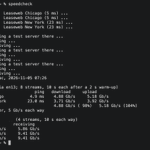
I wanted to check if my app was accurate, so I built my own to find out.
On my iMac, I measured 4.92 Mbps down and 5.19 Mbps up, while the @Speedtest app showed 5.10 and 5.13.
The fiber connection delivers exactly what @ATT promises on every device. Thanks, guys! Upload speeds even go a bit above 5. Between the iMac and the Sparks, the network reaches 9.41 Gb/s, which is about the maximum for a 10G link.
Gem (the server) is the only device below the limit, since its USB adapter only gets about 5.3 Gb/s.
IPv6 tests show lower speeds because of routing, not your connection. The same Chicago server is 25 ms away with IPv6, compared to 7 ms with IPv4. Only compare IPv6 results with other IPv6 runs.

1
139
LegitScript just clarified what HHS’s new peptide policy means for certification.
HHS created a temporary “we won’t enforce against you” path for 6 peptides:
✔️ BPC-157
✔️ TB-500
✔️ Epitalon
✔️ Semax
✔️ KPV
✔️ MOTS-C
What it means:
Licensed 503A pharmacies and doctors can compound these for a specific patient with a prescription, if they follow a strict list of rules (proper sourcing, testing, labeling, single-ingredient only, specific routes, etc.).
Before this, even careful pharmacies operating this way had no clear protection. Now they do (for now).
What it does not mean:
✖️Not permanent
✖️Not for blends
✖️Not for 503B facilities
✖️Not for research-use-only (RUO) sellers
LegitScript says offering these six in compliance with the policy will no longer automatically block certification.
regulations.gov/document/HHS…
1
140
I'm not entirely sold on Gemini's numbers, but hey, let's hope they're right. From their lips to God's ears! 😂


91
In 2023, my best ChatGPT tip was one word: Continue. And I said thank you, even though it "wasn't needed." Four years later, here's where it went.
1
1
151
Why can an ADHD brain hyperfocus on a complex hobby for four hours straight, yet physically freeze for three days over a chore that takes 90 seconds?
The truth is, the human brain doesn't measure task difficulty in minutes, it measures it in dopamine, executive bandwidth, and cognitive set-shifting costs. From the neurochemical gating of the mesoaccumbens reward pathway to the working memory overload of the "micro-decision trap," the ADHD "freeze" isn't a lack of willpower; it’s a biological system mismatch.
iamhrt.com/the-science-of-ad…

93
When I was in my 20s, my late father used to say to me whenever he caught me sleeping in: "Get your tasks finished bright and early. This way, you'll know that everything is completed for the day, nothing that matters carries over to tomorrow, and after that, you're free to take a nap if you need."
Interestingly, I never took any naps because I was just too pumped. Instead, I worked on my car during the day, and sometimes in my tiny garage if it wasn't summer. Then I did the tech work, and that's how I finished my day.
96