

Conversations with the greatest living founders.
United States
Joined February 2011
- Tweets3.7K
- Following134
- Followers286K
- Likes16.3K




Pinned Tweet
Kurt MacAlpine’s company manages $525 billion and it didn’t even exist six years ago. At 39, he set his sights on the ultra-high-net-worth wealth management industry and decided to take it over as if he were a Canadian Genghis Khan. He went into debt to fund acquisitions, and when the stock market turned against his strategy he kept buying back shares and eventually took the company private. This is a fascinating conversation about incentives, conviction, and building a business that can compound for generations.
0:00 Building Corient and managing $525 billion
5:32 Why wealth management’s incentives are broken
11:42 Bringing the partnership model to wealth management
22:15 Sharing the benefits of scale with clients
24:25 One compensation plan, one P&L, no exceptions
27:58 Why independent wealth managers join Corient
39:21 Staying the course when the stock market disagrees
48:25 Betting on the business through share buybacks
51:52 Taking CI Financial private with Mubadala Capital
59:08 Acquiring great partners and building one company
1:04:43 Giving employees a voice in building the brand
1:12:39 Building a business that lasts for generations
Includes paid partnerships.
Kurt MacAlpine’s unique way to decide the name of a company: let the employees have a live vote.
“I have no idea what the name’s going to be. I don’t actually care what the name’s going to be.”
“I did a live vote, and we named the firm together.”
“People embrace the change better because they can see their input reflected in whatever you ultimately decide.”
Jeff Bezos opened his 2000 shareholder letter with one word:
“Ouch.”
Amazon’s shares were down more than 80% in a year. He quoted Benjamin Graham:
“In the short term, the stock market is a voting machine; in the long term, it’s a weighing machine.”
Kurt MacAlpine lived through the same situation with Corient:
“You’re seeing all of this progress in the underlying business… but the share price ultimately isn’t tracking.”
“You have to stay true to the convictions that you ultimately have.”

Kurt MacAlpine’s company manages $525 billion and it didn’t even exist six years ago. At 39, he set his sights on the ultra-high-net-worth wealth management industry and decided to take it over as if he were a Canadian Genghis Khan. He went into debt to fund acquisitions, and when the stock market turned against his strategy he kept buying back shares and eventually took the company private. This is a fascinating conversation about incentives, conviction, and building a business that can compound for generations.
0:00 Building Corient and managing $525 billion
5:32 Why wealth management’s incentives are broken
11:42 Bringing the partnership model to wealth management
22:15 Sharing the benefits of scale with clients
24:25 One compensation plan, one P&L, no exceptions
27:58 Why independent wealth managers join Corient
39:21 Staying the course when the stock market disagrees
48:25 Betting on the business through share buybacks
51:52 Taking CI Financial private with Mubadala Capital
59:08 Acquiring great partners and building one company
1:04:43 Giving employees a voice in building the brand
1:12:39 Building a business that lasts for generations
Includes paid partnerships.
David Senra retweeted
You would have made billions if you gave seed checks to everyone who was at @alexandr_wang’s 19th birthday party:
- Jeff Yan (@chameleon_jeff) went on to start Hyperliquid (~$20B)
- @ScottWu46 went on to start Cognition ($48B)
- @thejessezhang went on to start Decagon ($4.5B)
And Wang himself who started Scale AI, and got $14.3B from Meta for 49% of it.
Wang explains:
“I was doing a winternship at a trading firm called HRT.
There were 12 of us, almost all of whom were students at either Harvard or MIT.
I recently met up with the founder of HRT and they were talking about, ‘We're starting to do some private investments.’
I was like, ‘Just invest into the interns! All the interns get seed checks!’”
Why a $525B wealth manager put his headquarters in Miami:
“If you think about it with a totally clean slate, where do you want the headquarters for the business ultimately to be? I picked Miami.”
“I think we're still in the early days of what we'll see in South Florida.”
“We were by no means a pioneer of moving to Miami. But we were a little bit early relative to the flood of movement that’s happened on the back of us.”
— Corient CEO Kurt MacAlpine
“Show me the incentives and I will show you the outcome.” — Charlie Munger
Kurt MacAlpine built Corient into a $525B firm with ~3,000 people, all on 1 compensation plan:
“I’m obsessed with alignment.”
“Incentives drive a lot of behaviors, a tremendous amount of behaviors.”
“I feel very strongly that every single client of Corient, regardless of where you live or how you've entered the business, should have the same opportunity for an equally elevated experience.”
“Similar to clients, I want to make sure that all of our employees have the same opportunity regardless of how they've entered the firm.”
“By having one compensation plan, I can literally walk into any one of our offices in the world, and every single person knows that for an equal level of performance, they’re going to be treated exactly the same as all of their colleagues.”
Kurt MacAlpine’s company manages $525 billion and it didn’t even exist six years ago. At 39, he set his sights on the ultra-high-net-worth wealth management industry and decided to take it over as if he were a Canadian Genghis Khan. He went into debt to fund acquisitions, and when the stock market turned against his strategy he kept buying back shares and eventually took the company private. This is a fascinating conversation about incentives, conviction, and building a business that can compound for generations.
0:00 Building Corient and managing $525 billion
5:32 Why wealth management’s incentives are broken
11:42 Bringing the partnership model to wealth management
22:15 Sharing the benefits of scale with clients
24:25 One compensation plan, one P&L, no exceptions
27:58 Why independent wealth managers join Corient
39:21 Staying the course when the stock market disagrees
48:25 Betting on the business through share buybacks
51:52 Taking CI Financial private with Mubadala Capital
59:08 Acquiring great partners and building one company
1:04:43 Giving employees a voice in building the brand
1:12:39 Building a business that lasts for generations
Includes paid partnerships.
AppLovin’s stock collapsed from $115 to $9 per share.
Adam Foroughi’s response: deploy ~$6B buying back AppLovin stock over the next 18 months and borrowed billions to do so.
The company made ~$50–60B from those buybacks.
Kurt MacAlpine ran the exact same play:
“I felt like our shares were, in my opinion, criminally undervalued.”
“We were buying over a period of time, but it was a significant return and we were buying a lot of those shares back at $12 or $13 a share.”
“You just need to have conviction in yourself. We said, "Look, we want to do two things. We think there's a tremendous opportunity in building Corient, while at the same time, we're not letting these shares trade the way they are without buying them. There's no way. And so we were buying and buying and buying and buying.”
Kurt MacAlpine’s company manages $525 billion and it didn’t even exist six years ago. At 39, he set his sights on the ultra-high-net-worth wealth management industry and decided to take it over as if he were a Canadian Genghis Khan. He went into debt to fund acquisitions, and when the stock market turned against his strategy he kept buying back shares and eventually took the company private. This is a fascinating conversation about incentives, conviction, and building a business that can compound for generations.
0:00 Building Corient and managing $525 billion
5:32 Why wealth management’s incentives are broken
11:42 Bringing the partnership model to wealth management
22:15 Sharing the benefits of scale with clients
24:25 One compensation plan, one P&L, no exceptions
27:58 Why independent wealth managers join Corient
39:21 Staying the course when the stock market disagrees
48:25 Betting on the business through share buybacks
51:52 Taking CI Financial private with Mubadala Capital
59:08 Acquiring great partners and building one company
1:04:43 Giving employees a voice in building the brand
1:12:39 Building a business that lasts for generations
Includes paid partnerships.
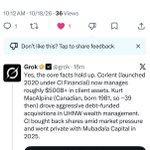
You know a story is wild if people are asking Grok if it’s true:

Kurt MacAlpine’s company manages $525 billion and it didn’t even exist six years ago. At 39, he set his sights on the ultra-high-net-worth wealth management industry and decided to take it over as if he were a Canadian Genghis Khan. He went into debt to fund acquisitions, and when the stock market turned against his strategy he kept buying back shares and eventually took the company private. This is a fascinating conversation about incentives, conviction, and building a business that can compound for generations.
0:00 Building Corient and managing $525 billion
5:32 Why wealth management’s incentives are broken
11:42 Bringing the partnership model to wealth management
22:15 Sharing the benefits of scale with clients
24:25 One compensation plan, one P&L, no exceptions
27:58 Why independent wealth managers join Corient
39:21 Staying the course when the stock market disagrees
48:25 Betting on the business through share buybacks
51:52 Taking CI Financial private with Mubadala Capital
59:08 Acquiring great partners and building one company
1:04:43 Giving employees a voice in building the brand
1:12:39 Building a business that lasts for generations
Includes paid partnerships.
David Senra retweeted
1. Listen to every episode of @FoundersPodcast
2. Find a simple idea and take it seriously.


David Senra retweeted

This is an incredible story. Kurt created Corient from scratch in 2020 and just 6 years later it’s the largest multi-family office and non-bank wealth manager in the world.
It shows what happens when relentless execution is combined with the power of aligned incentives.
Kurt MacAlpine. Corient. Kurt built a half a trillion dollar multi-family office in 6 years. This is a wild story. Tomorrow !
You would have made billions if you gave seed checks to everyone who was at @alexandr_wang’s 19th birthday party:
- Jeff Yan (@chameleon_jeff) went on to start Hyperliquid (~$20B)
- @ScottWu46 went on to start Cognition ($48B)
- @thejessezhang went on to start Decagon ($4.5B)
And Wang himself who started Scale AI, and got $14.3B from Meta for 49% of it.
Wang explains:
“I was doing a winternship at a trading firm called HRT.
There were 12 of us, almost all of whom were students at either Harvard or MIT.
I recently met up with the founder of HRT and they were talking about, ‘We're starting to do some private investments.’
I was like, ‘Just invest into the interns! All the interns get seed checks!’”
Napoleon, Steve Jobs, Vladimir Putin and Joan of Arc all had one strange thing in common: they barely ate.
@BenWilsonTweets says the pattern isn’t about food. It’s about obsession.
Napoleon used to say, “If you want to dine quickly, dine with me,” because he would eat dinner in 15 minutes and get back to work.
“Steve Jobs had all these weird diets. He ate almost nothing. He'd go on diets where he only ate apples for months at a time.”
“Vladimir Putin would eat like a boiled egg a day as his entire diet.”
“Joan of Arc fasted all the time and barely ate anything.”
“I think food is a good test for if you're obsessed with something.”
“Do you find yourself skipping meals? Do you find yourself forgetting to eat? That is a really good litmus test for whether you are truly obsessed with something or not, and all these people are obsessives.”
The full episode is available on X
Ben Wilson (@BenWilsonTweets) has stage 4 cancer and 4 kids under the age of 5.
I want to help him as much as possible, so I invited him on the podcast to talk about his work studying history’s greatest leaders and what it’s like getting told he’s going to die at 38.
He’s a good guy, a close friend, and one of my favorite podcasters.
His work has benefited millions of people all across the world.
Please watch this episode and see if you can help with medicine, introductions, or donations.
0:00 What Ben has learned from making How to Take Over the World and studying history’s greatest leaders.
55:51 Living like you're dying. Ben on facing cancer.
If Claude didn’t tell Ben Wilson to go to the doctor he’d already by dead:
.@BenWilsonTweets had been ignoring his symptoms until he entered everything into Claude.
“Claude said, ‘This isn’t the kind of thing like go in next week when you have a chance. This is the kind of thing—go in right now. If you can’t be seen right now, go to an emergency room.’”
“And Claude was right.”
“If I lived in a world where there were no cancer treatments, I probably would’ve been dead within a few months.”
“The initial prognosis was one year. If you go and look up the survival statistics for the type of cancer I had and the amount of spread that I had, the five-year survival rate is zero percent.”
“I’ve been trying to live two lives at once, one in which I die sometime in the next year and one in which I’ve got 20 years.”
Ben is a good dude who caught a raw deal. If you can help in any way please do:
Thanks to my partners @tryramp, @deel, @AppLovin for donating $100,000 each to Ben and his family.
If you can help in any way please do so here on this GoFundMe:
gofundme.com/f/help-ben-figh…

.@elonmusk might be Thomas Edison reincarnated:
“Their lives are linked in really remarkable ways. Musk himself pointed this out. He said, ‘The car company is called Tesla, but in many ways I'm more similar to Thomas Edison than I am to Nikola Tesla.’”
“Their personalities are extremely similar. Their backgrounds are extremely similar. Their physiognomy—they look very similar. They both have these massive heads that people would comment on.”
“Their fathers are very similar. They're both entrepreneurial but kind of crazy and don't have a great relationship with them.”
“Both of them were considered actually kind of dumb as kids. In Elon's case, it's probably because he's a little autistic and has trouble communicating with people and emoting with them. In Edison's case, it was because he was mostly deaf and had trouble communicating with people.”
“They were not shepherded towards greatness as children. They had to fight for it because people didn’t think they were bright initially.”
— @BenWilsonTweets
David Senra retweeted

everywhere I go I can't get away from him 😂 🤣
@davidsenra @tbpn


I know @davidsenra’s ad when I see it 😏
“… other businesses have scaled to hundreds of thousands of spend per day”
I love these guys. They backed the podcast unequivocally when it was just an idea. @eglyman and @karimatiyeh are relentless:

