

Co-Founder & CEO of @Landbasegtm - find your next customer. Co-Founder of @AppDirect - find, buy, and sell technology.
San Francisco
Joined February 2011
- Tweets447
- Following242
- Followers1.4K
- Likes55





Daniel Saks retweeted

The World is Changing: AI For Creativity
By Jeffrey Katzenberg
A few months ago, I sat in my office in Silicon Valley and watched as a tech founder showed me something extraordinary. On the screen was a fully realized, beautifully lit, well-composed animated scene. It was stunning and it made me feel exactly what I felt in 1986 watching Luxo Jr. That was the first time I watched a computer-animated 3D character take a breath and seem, against all reason, to have life. It left me in awe.
Later that day, I received a text from an artist I've known for thirty years, 350 miles to the south, in the city where I spent most of my career. After seeing a similar video, she texted: "Is this the end of us?" My answer was, "Certainly not.”
I have spent the better part of the last decade in Silicon Valley, but the heart of my career has been in Hollywood. Being deeply connected to both worlds means I have deep loyalties to each and a responsibility to speak honestly to both.
In 2023, I said that these new AI tools would cut the time and cost of producing world-class animation by as much as ninety percent within three years. Some colleagues were alarmed, many were furious.
There is growing fear and resistance surrounding AI within the creative community. I deeply understand it, because I've spent countless hours walking through animation studios watching gifted artists bent over their desks, rebuilding a single second of film for the tenth time because the ninth version wasn't quite right. I've sat in screening rooms where four years of people's labor played out in minutes, and I knew the name of every person that had spent countless hours bringing those images to life. The creative process is a calling, there's really no other way to describe it. From the outside some see resistance. From the inside, it is love.
People do not fight this hard for things they don't care about. The pushback coming out of Hollywood represents the collective effort of people who are deeply passionate about their craft.
Is History Repeating Itself?
The history here is more complicated than either side may realize. In 1906, the most famous composer in America, John Philip Sousa, published an essay titled “The Menace of Mechanical Music." He warned that the phonograph would become "a substitute for human skill, intelligence and soul."
Sousa's fight was not really about the machine, it was about money. The machines were playing his compositions, and the men who built them weren't paying him a cent. His campaign helped create the Copyright Act of 1909. He did not stop the technology. He changed the terms under which it could use his work.
A hundred years ago, sound came to the movies. We remember it now as a miracle, and it was. What we forget is who paid for it. Before sound, tens of thousands of musicians made their living in the orchestra pits of movie houses, scoring every film live, every night, in towns all over the world. When the soundtrack arrived, the work of one composer and one orchestra was recorded for a film that went into thousands of theaters. The union fought back with everything it had, taking out newspaper ads across the country warning against the menace of "canned music," one of them showing a mechanical man tearing the strings out of a harp while an angel wept.
They were not fools, and they were not Luddites. They were right. Those pit jobs did not come back. And yet (this is the part we have to be brave enough to admit), sound gave us the movie musical, the modern score, sfx, sound design, audio engineering, and an art form vastly larger than the one it disrupted. And it helped keep Hollywood in the forefront of world entertainment for the rest of the century and into the next. The loss was real. And yet the art form expanded.
This is a story that has been told over and over again. To resist technology is to risk irrelevance. Just look at Kodak or Blockbuster. To embrace technology is to open doors of new possibility. Just consider Apple and Netflix.
What I Learned From Walt Disney
In the mid-1980s, I was tapped to lead Disney's animation division at a moment when the studio was at an inflection point. Animation wasn't just another business unit. It was the soul of the company, a medium revered because of Walt's genius and his passion. But the production system was cumbersome and unforgiving. A single movie was 125,000 individual hand-drawn and painted cels, photographed one frame at a time. Every revision carried a cost measured in months. These degrees of difficulty shaped the kinds of stories we could tell.
We found our way forward in an unexpected place: Walt himself. The Disney archives held astonishing recordings of Walt explaining his creative process. His own writings. His notes and storyboards. Work product captured at every stage of his process. This was truly a gift. Listening, reading, sitting with the work itself, we heard him talk about character, about emotion, about how an audience feels when a character truly comes alive. He talked about making bold choices and refining a scene until it genuinely moved people. We didn't hear a word about pencils or paintbrushes. In fact, Walt was famous for being a technologist, forever hunting for state-of-the-art tools, often inventing them himself to achieve the images he saw in his head. But he never defined animation by the tools. He defined it by whether the audience believed the character. His principles were timeless. The tools were not.
That realization changed everything. We co-developed the Computer Animation Production System (CAPS) with a young Northern California company called Pixar, replacing hand-painted cels with CGI. In The Little Mermaid, the final scene shimmered with a dimensionality and light that the old process simply couldn't achieve. In Beauty and the Beast, the ballroom sequence moved with a cinematic sweep that placed the audience inside the emotion of the moment. In Aladdin, the Cave of Wonders felt vast and alive, and the Magic Carpet became an intricate, compelling character all its own. In The Lion King, the stampede carried a scale and intensity that raised the emotional stakes beyond anything we'd done before. Technology didn't diminish the craft, it expanded the canvas. It gave artists more room to create.
A decade later, the canvas expanded again. When Disney released Pixar's Toy Story, it wasn't simply a technical milestone. It was proof that a fully computer-animated film could carry real emotional weight, that it could make audiences laugh, cry, and believe. At DreamWorks, we made the difficult decision to sunset hand-drawn animation and become a fully computer-animated studio. It was the right thing to do, but it was not without pain. It cost talented people their place in an industry where they had worked their whole lives. Some made the leap to the new tools and did the finest work of their careers. Some never did.
Tools are never the point. The instruments change with every generation. What endures is taste and imagination. The magical ability to make an audience feel. One of the greatest storytellers of our generation, George Lucas, succinctly captured the eternal essence of this issue: “It’s not the how, it’s the why.”
A Distinction With a Difference
I asked one of the leading AI models a question that has been challenging me for months. What is the difference between reasoning and creating? Its answer changed how I think about almost everything happening in this industry. It said . . .
Reasoning and creating are two distinct cognitive modes, though they also work together. Reasoning is fundamentally evaluative and analytical. It operates on what already exists: facts, premises, evidence. It moves toward a conclusion that was in a sense already implied by the input. Reasoning is constrained by logic and truth. Its goal is to arrive somewhere correct, not to invent somewhere new.
Creating is fundamentally generative. It produces something that didn't exist before. And crucially, there's no single right answer waiting to be found. A blank page has infinite valid responses. Creation involves choices that can't be fully justified by logic alone. Taste, intuition and vision fill the gap where deduction runs out.
Reasoning is what Silicon Valley has been perfecting. Creating is what Hollywood has been practicing for more than a century. AI today operates almost entirely on the reasoning side of the line. It can deduce, evaluate, optimize, and pattern-match brilliantly. And while it can create, there is a real distinction to being creative. What it doesn’t yet have is those things that make us human: empathy, devotion, serendipity, the kind of creativity that comes from a person trying to say something only they could say. When the bot generates a piece of art, it is not trying to communicate anything. It is statistics, not soul; it is emulating things that have been done. By contrast, human creativity isn’t about repeating patterns of zeros and ones; it is about doing something new.
One day, AI may close this gap. Three years ago, the leaders building AI would have called what they are achieving today, improbable, if not impossible. Impossible is no longer improbable.
Today, the line between reasoning and creating is real. Even the leading technologists acknowledge we are not there yet. There is no scientific path to crossing this divide that anyone in the field can articulate today. Understanding that gap is where we will find common ground.
A Path Forward
In 2016, I closed one chapter in Hollywood with the sale of DreamWorks and opened another in Northern California, co-founding WndrCo. We’ve backed more than 50 founders building the next generation of technology and watched how breakthroughs in Silicon Valley emerge, first as experiments, then as platforms, and finally as infrastructure that reshapes entire industries. It's worth remembering that the last great revolution in animation also came from the north. Pixar was a Northern California company, forged not in the conventions of the Hollywood studio system, but in the technological breakthroughs of Silicon Valley. I've spent years on both sides of this bridge. For sure, I don’t have all the answers (take Quibi, for one!). But, from my past and present vantage points of my long career, here is what I see . . .
Brilliant people in Northern California building this technology have made something extraordinary. They have earned the right for the rest of us to be, if not believers, at least optimistic that what comes next will be remarkable. But they have not made an artist. The tools are powerful, but they are not what makes a story matter. That knowledge lives 350 miles to the south, inside people whose life's work has informed the very models you are building. The right path forward includes them by design, with credit, with consent, and with compensation. Build this with the storytellers. Not on top of them. Taste is not something that can be synthesized, it is uniquely human.
At the same time, Hollywood needs to accept that AI is not going away. The energy they are spending trying to make it disappear is energy they are not spending deciding the terms on which it will exist. And the terms are everything. The north needs something from it that they cannot build and cannot buy: creativity. The kind that takes a blank page and conjures a single right answer where there was none and has held audiences for a century. Without it, the most powerful reasoning engine ever invented will still be missing the only thing that makes a story worth telling.
The artists who learn to wield these new instruments will do things the engineers never dreamed of. They always have. Edison invented the motion picture but made terrible movies. It took Chaplin, Lloyd, Keaton and so many others to make movies emotional. Now, the canvas is about to expand yet again. We should decide now that we intend to paint on it.
There are so many valuable lessons in history. This has happened many times before, and it was never settled by the technology. It was settled by the terms. Sousa did not stop the phonograph; he helped write the law that made sure composers got paid. And two years ago, when the writers and the actors walked out, they were fighting for the very things Sousa was fighting for in 1906. Consent, compensation, the basic recognition that human creative work has a price that must be paid. The terms of that fight are still being negotiated, but the principle is older than any of us.
The tools-versus-no-tools argument is a trap. First, we must all agree that there should be terms. Then we can have the crucial debate about what fairness requires.
What I Learned From Steve Jobs
Years ago, Steve Jobs said, "It's in Apple's DNA that technology alone is not enough. It's technology married with the liberal arts, married with the humanities, that yields us the result that makes our hearts sing." He was describing a device. But he could just as easily have been describing this tale of two cities.
What I See Coming Soon
As the barriers and the costs come down, more films will get made, not fewer. Studios will get to take more risks. There will be more seats at the table, and very soon entirely new forms of storytelling. In the 1980s, animation was dismissed as a niche corner of the business. Today it is one of the most beloved and profitable forms of storytelling in the world. In live action, filmmakers like Steven Spielberg, James Cameron and Peter Jackson embraced new visual tools not as shortcuts, but as instruments, and expanded cinema in the process. Every time storytelling has met a genuine technological shift, from synchronized sound to color to computer animation, it has redefined the boundaries of the medium and grown larger in the process.
Assuredly, I don’t have all the answers, but I am confident that the creative opportunities will expand yet again. How we come through this is a choice. The north has the new tools. The south has the creative soul. The best future will draw on the best of both worlds.
I used Landbase to pull 409,940 open GTM job postings across 66,875 companies.
Claude is the # 1 most-mentioned AI tool in these roles.
NON-ENTERPRISE (under 1,000 employees):
Claude: 2,513
ChatGPT: 1,967
ENTERPRISE (1,000+ employees):
ChatGPT: 1,507
Claude: 1,166
They have the same gap at about 28%, but in opposite directions.
At smaller companies, the operator picks the tool (Claude).
At larger ones, procurement does (ChatGPT).
OTHER FINDINGS:
→ 1 in 7 open GTM roles mention AI tools
→ Microsoft Copilot beats Claude Code and Codex in enterprise.
→ Codex is the least mentioned, yet in our testing it runs GTM workflows the fastest.

1
3
79
Daniel Saks retweeted

Grateful to @evansammccann for the months of thoughtful reporting that went into this story
Building @8vc has been my life’s work so far. What means the most is seeing so many people I’ve been lucky to work with take the time to share their experiences. Thank you all!

The Quiet Force. My profile of @AlexKolicich is out.
Raised by a single mom in Hamilton. Google engineer. Peter Thiel’s math guy. Founding partner of 8VC.
“8VC is 8VC because of Alex.” I was told.
I spent months reporting his story in SF, Palo Alto and Orange County, talking with founders and the people who knew him at Clarium, Mithril and 8VC.
Highlights
- Peter Thiel playing blindfolded chess
- Turning down Geoffrey Hinton’s lab twice
- Dreaming about oil
- Back story on 8VC's investments in Quince, Cognition and Anduril
Link to read below.

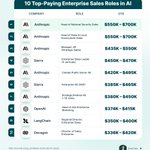
We looked at what AI companies pay enterprise sales roles.
4 tiers. Each one requires a new skill set.
OTE by tier:
› Commercial AE: $216K to $250K
› Strategic / Federal AE: $380K to $450K
› Manager, AE (Strategic): $435K to $550K
› Head of Government Sales: $550K to $700K
How to move up each tier:
Commercial → Strategic: sell technical deals with a deployment team.
At Glean, Commercial AEs earn up to $250K. Strategic AEs earn up to $375K. Strategic sellers open the deal. The deployment team wins it by proving the model works on the customer’s data.
Strategic → Manager: build a team model you can repeat.
At Anthropic, AE managers earn up to $550K. The job becomes designing the team that closes deals over and over. ElevenLabs pairs one AE with one solutions engineer and copies that setup across 12+ markets.
Manager → Head of Government Sales: sell through partners.
Anthropic is paying up to $700K for Head of National Security Sales and Head of State and Local Government Sales. The skill here is building federal partnerships and a channel motion that opens routes into government.
P.S. I used Landbase to pull data from 9,881 open roles across 68 AI-native companies.

2
88
Software used to be a system of record. Now it’s a system of action.
That shift undoes the decade-old GTM stack: 6sense, Clay, Outreach, Zapier, plus GTM engineers to run it all.
Coding agents with the right data now do it from one prompt.

1
53
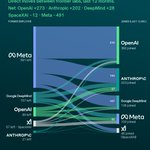
The AI talent war has a clear scoreboard.
In the last 12 months, 310 people went directly from Meta to OpenAI. Only 32 made the reverse move. We mapped direct moves between OpenAI, Anthropic, Google DeepMind, Meta and SpaceXAI.
Meta is the frontier labs' talent pipeline. 591 people went straight from Meta to another frontier lab. Only 100 came the other way. OpenAI was the biggest winner: 362 joined directly from the other four labs, 89 left for them. Net +273.
Anthropic barely loses anyone to rival labs. Only 21 people left Anthropic directly for another frontier lab in 12 months, the fewest of the five, while 223 joined from them. It gained more than it lost against every lab: 143 vs 4 with Meta, 37 vs 3 with DeepMind, 37 vs 13 with OpenAI.
DeepMind people are choosing Anthropic. 37 went directly from Google DeepMind to Anthropic. 3 went the other way. That's more than went from DeepMind to OpenAI (21). SpaceXAI and Meta are nearly even: 26 from SpaceXAI to Meta, 31 from Meta to SpaceXAI.
How we counted: a "move" means someone's very next job after lab A was lab B. They started at lab B in the 12 months to Oct 13, 2026 and left lab A in July 2025 or later. Based on public work-history profiles, so these are minimums. Meta includes Facebook; SpaceXAI includes xAI.
Made with Landbase data on Grok. Happy to run this for any set of companies. Reply with the ones you'd want to see.
I


1 in 5 open roles at AI companies is in go-to-market.
Even the best AI products in the world don’t sell themselves.
Top 10 by open GTM roles:
1. Databricks: 313 open GTM roles
2. OpenAI: 154
3. ElevenLabs: 140
4. Anthropic: 134
5. Cursor: 72
6. Sierra: ~53
7. LangChain: ~46
8. Glean: ~43
9. Decagon: 36
10. Abnormal AI: ~29
Outside the Silicon Valley echo chamber, AI adoption is still in the early innings.
P.S. To get the data, we used Landbase to analyze 9,881 open roles across 68 AI-native companies

1
92
Spoke at GTM World Tour SF.
AEO, cold calling, LinkedIn. What works for them may not for you. Keep testing.
The constants:
› Niche audience
› Tight targeting
› Right buyer, time, message
First-timers booked meetings live on BetterContact data.
Thanks Roman & Nicolas!

1
57

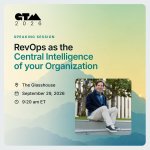
Opening GTM 2026 with a talk on RevOps as the central intelligence of your org.
Agents can now run list building, research, and CRM hygiene. So what do you take off reps' plates so they can focus on what closes?
📅 Sept 29 · 9:20 AM ET
📍 The Glasshouse, NYC

1
3
129
The 2026 stack running Landbase:
GTM: Landbase, HubSpot, Nooks
Data: BetterContact, Explorium
Email: Mission Inbox, ZeroBounce, Warmy
Infra: GCP, Vercel, Pinecone, Temporal
AI: OpenAI, Anthropic
Dev: Cursor, CodeRabbit, Linear
Analytics: Amplitude, Heap, Webflow
What are we missing?

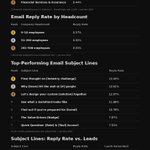
We analyzed 8M+ cold emails in Landbase.
Subject lines that drove the most leads:
→ "[Company Name]"
→ "Re: [Project]"
→ "[Topic] feedback"
Highest reply rates:
→ Non-profit & Gov (0.48%)
→ 0-10 employees (0.37%)
Takeaway: specific, contextual subject lines convert best.

2
42
Here is a live demo of the Landbase CLI!
Started with a brand off a key fob. Got 3 TAM segments, target titles, and enriched contacts in seconds.
@RetentionAdam: "That's pretty dope."
1
225
“I’m thrilled to join AppDirect at such an exciting stage in its journey,” said Lin. “AppDirect’s mission to simplify how businesses buy, sell, and manage technology aligns with my passion for helping innovative companies grow sustainably." businesswire.com/news/home/2…

1
197
“You shouldn’t need a PhD to grow your business—The GTM-2 Omni makes enterprise-grade targeting and messaging accessible to everyone,” said Daniel Saks, Co-Founder and CEO of Landbase. “AI should simplify GTM, not make it harder." businesswire.com/news/home/2…

1
129
Check out my latest article: Behind the Vibe: How Multi‑Agent AI Systems Power Vibe AI linkedin.com/pulse/behind-vi… via @LinkedIn

1
111

🔥 Landbase is one of Business Insider’s “43 Startups to Bet Your Career on in 2025”! 🚀💡
With millions of startups launched each year, making this list is a huge honor. To be recognized alongside top companies is a testament to the incredible team we’ve built and the momentum behind what we’re creating.
But let’s be real—we’re just getting started. 👀
If you're an engineer, product builder, or GTM innovator looking to make an impact, now is the time to bet on Landbase. We’re hiring top talent to help shape the future of AI-powered go-to-market strategy. ⚡
Massive thanks to Business Insider and the team behind this list— Ben Bergman, Julia Hornstein, Riddhi Kanetkar, Melia Russell, Samantha Stokes, and Rebecca Torrence!
Let’s build something legendary. 🚀🔥
hashtag#Landbase hashtag#BusinessInsider hashtag#TopStartups hashtag#AgenticAI hashtag#Hiring hashtag#Engineering hashtag#GTM

1
1
274
Daniel Saks retweeted

($574M raised 🤯)
Nailing (authentic) conviction in your vision...
Thank you, @DanielSaks, Co-Founder of @AppDirect @LandbaseAI for sharing your story!
Check out the full episode on the @Zendesk Sit Down Startup podcast (see comments for links)
open.spotify.com/episode/7fv…