

Helping non-technical entrepreneurs turn AI into ROI. Previous founder of a $16M eCom startup.
AI Operator Academy 👉
Joined June 2022
- Tweets27.2K
- Following120
- Followers62.8K
- Likes13.7K




Pinned Tweet
This week I crossed 50,000 followers on X.
Hard to believe, because when I started posting about AI, I had 15k. Every one of them came from my old life: selling on Amazon.
Most of you know me as an AI guy. You probably know nothing about how I got here.
Here are a few things about my background that might help you, especially if you feel stuck right now.
-I graduated college in 2017 with two degrees, entrepreneurship and marketing. Both basically worthless
- My first job out of college was at IBM selling data storage. I was 22, making $70k a year, which felt like great money at the time
-It didn't take long to realize I hated corporate life and didn't want that to be my future
-I stuck around long enough to go through a year and a half of IBM's Global Sales School, widely considered one of the best sales training programs in the world. I got paid to learn how to sell
-Right after graduation I began a side hustle selling used books on Amazon. I fell in love with it
-in 2019 I quit IBM to sell on Amazon full time, even though I was barely making any money doing it
-I moved across the country and back in with my mom to chase it
-I did not have immediate success, I got down to my last $1,000 in savings and had to take a $15/hour job at my uncle's insurance agency to keep the lights on. Still building Amazon on the side (January 2020)
-COVID hit and accelerated ecom. By August 2020 I quit the insurance job and went back to Amazon full time, this time actually making money
-That year I did $990k in sales, the next year over 3M, the next year over 4M
-In January 2023 I started posting content online. There was a huge gap in the market. Almost nobody was teaching the sales and relationship side of selling on Amazon
-That summer I partnered with @cleartheshelf and @entreresource to launch my first info product, the Wholesale Challenge
-I had never sold an info product. I was brand new to content and marketing
-The Challenge was a 7-day cohort-based live training. $300 on the front end, with a $1,000 upsell webinar on the back
-I had never run a webinar in my life. I closed 52% of the room and we collected $110k in pure profit in under 45 minutes
-That was the moment I finally understood the power of building an audience, marketing, a personal brand, and putting out a genuinely good product
-About a year later I launched a mastermind and coaching program called The Wholesale Network
-we grew it to over $350k in ARR in under a year and a half
-By the middle of 2025 I was completely burned out on Amazon after doing it for almost 9 years
-selling on Amazon taught me every fundamental of business and I wouldn't trade those years for anything, but I knew it was time to move on (I just had no idea what was next)
-I sold The Wholesale Network to a partner, liquidated my Amazon storefront, and set out to figure out what I actually wanted to do with my life
-started experimenting heavily with AI, started building no-code automations with tools like Zapier and Make
-in January of this year OpenClaw took off and I was in the right place at the right time. My business partner found it on day two, back when it was still called clawdbot
-We started experimenting immediately and got about two weeks ahead of everyone else
-When it went viral, we were positioned to create the best content on how to actually use it, because we were already using it in our own business
-My following doubled in two weeks just from sharing what we were doing
-Since then we've built a real business: AI assessments, AI concierge consulting, and our AI Operator Academy community, which now has over 50 members
-We're partnering with top-tier brands, growing on every channel, and have more opportunities than we know what to do with
-All of it traces back to one thing: investing in the Build With AI podcast, social media, personal branding, and partnerships
-A year ago I genuinely didn't know what I was going to do with my life. I was pretty depressed. My entire identity was wrapped up in being an Amazon seller, and once that wasn't my path anymore, I felt completely lost
I'm writing this to tell you something simple: if you don't know what's next, keep moving forward. Keep putting in the work. Keep talking to people. Keep building your brand.
The opportunities will show up. And when they do, you'll be in a position to capitalize.
love yall

As a founder it’s easy to get tunnel vision on the wrong things.
So I like to run the prompt below once a month or so to get an outsider’s view (the outsider being Claude) on what I should be focusing on.
The prompt:
Analyze my last 60 days of emails, call transcripts, todoist tasks, and any other necessary connector to tell me exactly what I should:
-keep doing/double down on (what’s working)
-stop doing entirely
-any other interesting insights you think I should be aware of that I may be oblivious to because I’m so in the weeds of my business on a daily basis
9 free Grok Bot templates you can install as a service this week:
All 9 are in the xAI marketplace. Here's what each one does, with a link to the template.
Full video walks through how I'd set each one up for a client and find businesses that need it (using @treg_ai).
Pipeline bots
1. Outbound Prospecting: builds a list from your ideal customer profile, researches every name on the public web, and drafts the first touch for you to approve. Runs a weekday draft batch, a Friday recap, and a Monday list top-up.
x.ai/bot/marketplace/bots/pg
2. GTM Prospecting: enriches the list, skips anyone already contacted, and learns your voice from emails you've already sent. Has a humanizer skill so drafts don't read like AI.
x.ai/bot/marketplace/bots/pr…
3. Lead Pipeline Desk: every morning it scores new inbound leads, merges duplicates, assigns an owner, and flags what's stuck. Sends a pipeline report every Monday.
x.ai/bot/marketplace/bots/le…
4. Call Follow-Ups: checks the calendar every 30 minutes, turns each recorded call into a follow-up email in your voice, and updates the CRM. The promise tracker catches every "I'll get back to you on that."
x.ai/bot/marketplace/bots/ca…
Insight bots
5. Paid Media Report Desk: turns Google Ads, Meta, and LinkedIn exports into one weekly report with commentary, and answers ad questions in Slack.
x.ai/bot/marketplace/bots/ta…
6. Market Researcher: watches competitor sites, ads, pricing, and positioning, then suggests how to counter them.
x.ai/bot/marketplace/bots/ma…
7. Talent Discovery: reads an open role, sources a daily batch of candidates who aren't already in your pipeline, and drafts the outreach.
x.ai/bot/marketplace/bots/sh…
Enablement bots
8. Sales Call Coach: scores every sales call and tells you what to fix before the next one. You can even have it drill you on objections by voice.
x.ai/bot/marketplace/bots/sa…
9. Customer Proof Desk: mines call notes and transcripts for case studies, testimonials, and proof points most businesses never use.
x.ai/bot/marketplace/bots/cu…
And yes, the templates are free. Technically anyone can click "Import Bot."
But out of the box, none of the bots know the business's ICP, voice, or approval rules.
Business owners are willing to pay good money for that setup (and ongoing coaching/maintenance) as a service.
the AI Concierge

there's a big opportunity in AI advisory right now, a gap in the market that's waiting to be filled...
atm there are two types of "AI experts":
the AI normie
- know how to use tools but completely delegate his thinking
- don't think in systems
- can't implement AI in real business workflows
the full AI nerd
- know everything there's to know about AI
- has 10 Claude Code instances running his life
- can't communicate with an human
and this is where YOUR opportunity is...
the market is screaming for a third type: the AI advisor
someone who can walk into a business, look at their operations for 2 hours, and say "this process right here? AI cuts it by 40% and here's exactly how"
they're looking for that guy who's deep enough in the rabbit hole to fix their problems, but also smart enough to dumb things down so they can understand the solution
be that guy
AI generated music is 1000x better than real music.
Today I canceled Spotify and SiriusXM because I finally tested Suno.
What sold me was the first prompt I gave it:
“My favorite artists are A Day to Remember, Bring Me The Horizon, Spiritbox, Bad Omens, and Sleep Token.
Analyze all their hits and generate a song I’m likely to love based on those artists.”
It one shots an absolute banger in 10 seconds.
I'll link the song in the next tweet for anyone curious.
Why would I ever go back to Spotify/SiriusXM when I can generate music perfectly tailored to my taste on command, for free?
Not affiliated with Suno in any way btw, it was just one of those moments where I was so impressed with AI’s capability I had to say something about it.
Link to the song it generated: suno.com/s/DN1w2eykaeoihyWI
If you don't like hardcore/metal you won't like it.
My top 10 Grok Bot use cases so far:
1. Chief of Staff bot. I delegate to it, it hands work to my other bots, and it catches conflicts like a call overlapping my flight or a podcast invite with no recording link.
2. Sunday week plan. Every Sunday at 8am it plans my week in Todoist around my day themes (writing day, video day, admin day) and reschedules tasks to fit.
3. Nightly second brain audit. Every weekday at 6:15pm it checks the day's work against my two second brains on GitHub and suggests edits. Nothing changes without my approval.
4. Newsjack Bot. Every morning it scans the news for stories I can comment on, drafts pitches to reporters, and sweeps media request platforms. On day two it had 2 pitch packs ready and had triaged 243 media requests.
5. Connector Bot. It reads my Notion CRM, email, calendar, meeting notes and DMs. Every Monday it gives me the 5 people due for a check in with a draft for each, plus 1 or 2 intros where both sides win.
6. Speed to Lead bot. It sweeps my inbox for money threads like warm leads and live deals, then drafts the follow up so nothing goes cold.
7. X Research bot. It finds what performed on X in my niche over the last 14 days and notes why each winner worked.
8. Analytics Bot. Every week it syncs the last 7 days of my posts and email campaigns into one Notion database with live metrics.
9. Facebook Marketplace bot. It sells the random things sitting in my garage on Facebook Marketplace and answers buyers for me.
10. Article finder skill. I give it a topic and it pulls X Articles that did 5x their author's median bookmarks, with titles and thumbnails for inspiration.
Anything that talks to clients or important contacts is a draft. I still hit send.
Which one would you want to see an in depth breakdown of?
Corey Ganim retweeted

Kling is back.
Kling 4.0 is now live on Higgsfield.
> Omni Reference: characters, objects and audio in one generation
> 30-second scenes in a single pass
> Start, middle and end frames to direct every beat
> Native 4K coming soon
Available now on Higgsfield.
This is the App Store in 2008 all over again...
ChatGPT has ~900M weekly users and anyone can now publish a plugin inside it but almost nobody is building here yet.
A plugin is just two things in one box: a skill (how to do the job) + a connector (access to your apps). Someone asks ChatGPT for help, it suggests your plugin, they use it, then they buy.
The playbook I'd follow: free plugin -> paid upgrade.
I think a few interesting businesses will come form this:
1. Bookkeepers: categorize a month of transactions free, upsell done-for-you books
2. Real estate agents: listing copy + comps plugin that funnels to your brokerage
3. Fitness coaches: a week of workouts built on your method, upsell 1:1 coaching
4. Plumbers/HVAC: a "what's wrong with my unit" plugin that books the service call
5. Agencies: an ads or SEO audit plugin that ends in a booked strategy call
6. Consultants: turn your intake questionnaire into a free first diagnosis
It's such a good time to jump in because it just opened to everyone.
The next step is ChatGPT recommending plugins on its own (it's already starting to do this), and being early in your niche is a massive competitive advantage.

my unpopular opinion is that ChatGPT apps are the best distribution play rn
we spent last month shipping these for agency clients and...
+50-200% on income those apps were already doing
just you literally get an access to ~900M weekly users for free
+ you're not struggled with onboarding, since it's built on top of ChatGPT and for user who never used your product, much easier to get in via gpt interface
same product, same pricing, just new way of using your product
and the fear that OpenAI just clones you is backwards
cloning your niche is the ONE move that costs them more than it returns...
they'd rather buy you and ship it out of the box
here's exactly how to launch it:
1. pick a workflow the client already gets paid for
> not a new idea
> an existing paid workflow with proven demand
2. build it as an MCP server
> streamable HTTP on public HTTPS, usually at /mcp
> that server is the whole product surface
> UI is optional, tools come first
3. name and describe every tool like the model is reading it, because it is
> action-oriented name, a human title, a description of when to use it
> accurate annotations and a real input schema
> that metadata is what decides whether you get called at all
4. add the UI after the tools already work
> expose it as an MCP resource with a ui:// uri
> set the type to text/html;profile=mcp-app
> your built js gets inlined into that resource and runs in an iframe
5. connect it at chatgpt.com/plugins and break it yourself
> plus button, add custom MCP server
> paste the url with /mcp, create as a plugin
> run MCP Inspector first and catch the schema errors there
6. submit at platform.openai.com/plugins and overprepare
> a zip of the built plugin and publisher verification
> a privacy policy url, no privacy policy means no review
> 5 positive and 3 negative test cases
> release notes and a demo video for the reviewer
> a domain token hosted at /.well-known/openai-apps-challenge
7. keep billing on YOUR backend
> OAuth 2.1 into the account system you already have
> enforce authorization on every request, not through the model
> there is no revenue share
> the plugin is the channel and the MRR stays yours
that's absolutely free traffic and by some reason most of products skip it...
the guy below is a good case which shows real efficiency of this approach (he literally made around +$40k monthly income)


The most profitable skill in business is a lost art.
It's not sexy. It has nothing to do with tech or AI.
It's being a connector.
Being able to connect two strangers for mutual benefit is the single best way to insert yourself into deals, build credibility, and build a billion dollar network.
So I built a Connector Bot in Grok Bot.
It helps me stay on top of my network and make valuable intros to smart/wealthy people.
Here's my full setup (let me know if you want me to share the system prompt as well):
1. First, I built a "Personal CRM" database in Notion with 87 people. It includes name, company, last contact date, follow-up cadence (monthly or quarterly), industry, and "Needs." "Needs" is the field that makes intros possible. Write down what each person is looking for.
2. I made one Grok Bot with one job. I didn't bolt this onto my general assistant. This bot's only job is my network.
3. Connected my sources read-only. CRM, email, calendar, meeting notes, Slack, etc.. The more places it can see conversations, the better it gets.
4. Gave it simple cadence rules. Higher value relationships get a monthly check in. Folks I'm not as close with get a quarterly bump.
5. I scheduled a Monday digest. My bot gives me 5 people due for a check-in, each with a reason and a ready-to-paste message. 1 to 2 intro ideas where both sides win. One pattern across my network, like three people solving the same problem that should know each other. Up to 3 new people from the week worth adding to the Personal CRM.
6. Added a weekday noon check. It only pings me if someone is waiting on my reply or I'm meeting them today. Otherwise it stays quiet.
7. IMPORTANT: ALWAYS drafts only. It never sends anything. I always hit send. I reply "sent" and it logs the touch in my CRM.
This helps me better stay on top of my network, make valuable intros, and become a better connector.
There are people in this world who make millions of dollars per year as professional connectors.
This is not an exaggeration. It is genuinely one of the highest leverage skills you could ever learn.
I analyzed 8 open source GitHub repos you can turn into a paying service (zero code required).
Here's a breakdown of each one including a sample offer, pricing, and a link to the repo.
Full video explains how I'd find clients (using @treg_ai) and exactly who to target for each offer.
1. ListMonk: win-back emails for dentists, HVAC, and med spas with 2,000+ past customers. $750 setup + $400/mo
github.com/knadh/listmonk
2. Postiz: 12-16 posts/mo in the client's voice for businesses with a dead feed. $250 setup + $500/mo
github.com/gitroomhq/postiz-…
3. WhisperX: weekly call scorecards (booking rate, missed upsells, rep coaching) for home service shops. $500 setup + $500/mo
github.com/m-bain/whisperX
4. Pipecat: after-hours AI receptionist for plumbers, HVAC, locksmiths, towing. $1,500 setup + $400/mo
github.com/pipecat-ai/pipeca…
5. Docling: invoices auto-coded into QuickBooks for contractors and bookkeepers. $1,500 setup + $300/mo
github.com/docling-project/d…
6. ComfyUI: 7-image listing sets for Amazon and Shopify brands. $750 per set
github.com/Comfy-Org/ComfyUI
7. Browser Use: daily permit portal tracker for builders, remodelers, pool and solar installers. $1,500 setup + $250/mo
github.com/browser-use/brows…
8. Anthropic's finance repo: listing packs (teaser, marketing package, buyer list) for business brokers. $1,000 per pack
github.com/anthropics/financ…
I think the repo with the most potential is ListMonk.
You could even position this offer as a rev share where you take a small cut of the leads you reactivate so the client has zero up front risk.
I purposely made the pricing estimates for these offers super conservative, you could charge more for each of these for the right client (I've sold a version of #8 for $3,000).
The main thing to remember for all of these:
Your buyer DOES NOT CARE about AI or GitHub.
They only care about the outcome.
Corey Ganim retweeted
A strong personal brand is THE most valuable business asset you can build.
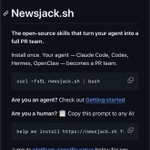
One of the most interesting ways I’ve seen for building your brand/getting media placements is a free GitHub repo called Newsjack (Newsjack.sh)
Built by @elvissun, it’s basically a set of agent skills designed to turn your agent into a PR specialist.
Here's how to use it:
1. Install it. Give this prompt to your agent (I use a dedicated Grok Bot for this): "help me install newsjack.sh from the github repo and setup a daily newsjack monitoring for my company."
2. Run /pr-strategist. It works out your audience, positioning, and news pegs before you pitch anything.
3. Run /voice-extractor. Give it 5-20 past writing samples. It checks drafts against your voice and strips the AI tells.
4. Run /newsjack-monitor-setup. Enter your expertise, topics, competitors, and RSS feeds once. Then /newsjack-detector flags fresh stories you have the credibility to participate in.
5. Run /angle-generator. It turns one fact into 3-7 story angles shaped for journalists (it won’t invent facts which is an important feature).
6. Run /find-journalists for a small, fit-checked media list. Then /same-outlet-ranker picks the one right reporter at each outlet.
7. Run /meanest-editor. It roasts your pitch like a veteran PR director before you send it.
8. Run /reactive-comment on HARO and Qwoted requests. It only drafts a reply when your expertise is a real fit.
Obviously you still review and send every pitch yourself.
But this is a really cool, free way to begin getting some media placements and backlinks to your website which is great for building credibility in your niche.
This post is getting a ton of bookmarks so here's a quick way set it up fast.
Have a dedicated Grok @bot do most of the work. A copy/paste setup prompt you can steal:
"You are PR Bot. Your only job is newsjacking for [company]. Install Newsjack from newsjack.sh and set up daily monitoring for my company. Run /pr-strategist with me once, then /voice-extractor on my past writing in [docs link]. Every weekday at 7am, run /newsjack-detector. Only message me if a story passes. For any story that passes, run /angle-generator, /find-journalists, /same-outlet-ranker, draft the pitch, and run /meanest-editor before showing me. Every Monday, sweep HARO and Qwoted and draft replies with /reactive-comment. Never send anything. Drafts only. I approve and send every pitch."
Should give you a solid start in building an agent-led PR department for your personal or company brand.


A strong personal brand is THE most valuable business asset you can build.
One of the most interesting ways I’ve seen for building your brand/getting media placements is a free GitHub repo called Newsjack (Newsjack.sh)
Built by @elvissun, it’s basically a set of agent skills designed to turn your agent into a PR specialist.
Here's how to use it:
1. Install it. Give this prompt to your agent (I use a dedicated Grok Bot for this): "help me install newsjack.sh from the github repo and setup a daily newsjack monitoring for my company."
2. Run /pr-strategist. It works out your audience, positioning, and news pegs before you pitch anything.
3. Run /voice-extractor. Give it 5-20 past writing samples. It checks drafts against your voice and strips the AI tells.
4. Run /newsjack-monitor-setup. Enter your expertise, topics, competitors, and RSS feeds once. Then /newsjack-detector flags fresh stories you have the credibility to participate in.
5. Run /angle-generator. It turns one fact into 3-7 story angles shaped for journalists (it won’t invent facts which is an important feature).
6. Run /find-journalists for a small, fit-checked media list. Then /same-outlet-ranker picks the one right reporter at each outlet.
7. Run /meanest-editor. It roasts your pitch like a veteran PR director before you send it.
8. Run /reactive-comment on HARO and Qwoted requests. It only drafts a reply when your expertise is a real fit.
Obviously you still review and send every pitch yourself.
But this is a really cool, free way to begin getting some media placements and backlinks to your website which is great for building credibility in your niche.
This is 100% the move.
A centralized, up to date knowledge base that all your agents can access so you're never locked in to one platform.
Here's how we built ours:
1. The whole thing is 2 private Github repos of plain markdown files. One company brain, one personal.
2. We numbered each folder by function. Company has brand, customers, products, sales, ops, finance. Personal has health, investments, family.
3. One AGENTS. md file that every agent reads first.
4. At the end of each day our agents run a "knowledge base audit" skill that compares the day's work to both brains and suggests edits.
What I love about this system is that it allows us to test all the new agent platforms without starting from scratch.
Zero agent lock-in.

I moved my bots' memory into an Obsidian vault so switching agents doesn't mean starting over from scratch.
Grok Bot, Meta Muse, ChatGPT dots, Hermes bots. I like to try all of them without having to teach each one about my projects, preferences, and everything else I've already explained.
So I keep their memory, logs, and workflows in the same vault. Just plain files I own and can read or edit myself.
Each bot has instructions to read the relevant files before answering and save new information there. My health bot updates the health folder. My project bots update their own folders. Dated logs keep the history.
When I try a new agent, I point it at the same vault and give it the same instructions. It can pick up context that another bot saved.
I wrote earlier about memory becoming the thing that locks people into an agent provider. This is how I'm trying to avoid that.

Planning to post a YouTube video soon about how we set this up step by step.
Will feature my co founder @NickSpisak_ who’s the architect behind our setup.
Corey Ganim retweeted
This is 100% the move.
A centralized, up to date knowledge base that all your agents can access so you're never locked in to one platform.
Here's how we built ours:
1. The whole thing is 2 private Github repos of plain markdown files. One company brain, one personal.
2. We numbered each folder by function. Company has brand, customers, products, sales, ops, finance. Personal has health, investments, family.
3. One AGENTS. md file that every agent reads first.
4. At the end of each day our agents run a "knowledge base audit" skill that compares the day's work to both brains and suggests edits.
What I love about this system is that it allows us to test all the new agent platforms without starting from scratch.
Zero agent lock-in.
I moved my bots' memory into an Obsidian vault so switching agents doesn't mean starting over from scratch.
Grok Bot, Meta Muse, ChatGPT dots, Hermes bots. I like to try all of them without having to teach each one about my projects, preferences, and everything else I've already explained.
So I keep their memory, logs, and workflows in the same vault. Just plain files I own and can read or edit myself.
Each bot has instructions to read the relevant files before answering and save new information there. My health bot updates the health folder. My project bots update their own folders. Dated logs keep the history.
When I try a new agent, I point it at the same vault and give it the same instructions. It can pick up context that another bot saved.
I wrote earlier about memory becoming the thing that locks people into an agent provider. This is how I'm trying to avoid that.