

"Let's work the problem, people. Let's not make things worse by guessing." - Gene Kranz, Apollo 13. Core belief: you have the right to think for yourself.
No.
Joined September 2018
- Tweets33.1K
- Following1.3K
- Followers1.7K
- Likes36.9K



Can we defend ourselves based on the records
we recovered?
When the services resume, are you still liable for the uncertainty?
That's the question I want to solve for all of us.
Let's build to take anxiety down a notch or two. Or ten.

Cloud services have had a bad week. It could get worse.
Restoring cloud services won't necessarily restore confidence in your records.
Can you independently verify the evidence behind a payment, approval, or report?
We build evidence rails to preserve proofs, so you are not purely dependent on your cloud provider.


Good reminder from my friend @judyshapiro.
Do not believe any help desk emails.
Social engineers are already taking advantage of the confusion.
Microsoft was already #1 in impersonated brands.
Tell your relatives.

Full post:
xitter.cf/Scott_Helme/status/212…


This is a big one.
We found malicious JavaScript being served through Optimizely to some of the world's largest websites.
178 organisations affected, with everything from crypto theft and card skimming to iOS exploits.
Zoom, BBC, CNN, HSBC, Salesforce, GitLab, KLM, IKEA, Equifax, Ledger. The list goes on... Full list in the post.
blog.report-uri.com/worlds-l…

26
Stephanie So retweeted

Everyone is obsessed with AI agents navigating human checkout flows. But "zero merchant integration" is a trap.
If an agent spoofs a human web flow to click 'Buy', how does the merchant route a partial refund, flight delay, or order update back to the bot programmatically? They can't.
Real agentic commerce requires shared, deterministic state. This is why the HTTP edge needs cryptographic receipts and TTL locks. If we don't standardize the post-checkout lifecycle now, merchant APIs are going to break at scale.
Super interesting if it involved a hack of a centralized management platform, as yet unconfirmed.
That might be related to my work on checking current authority of admin privileges before execution. We need much more of that.
Stealing mining power has implications: what if attackers can earn Bitcoin without paying for electricity and mining machines? Compromising a platform sounds a lot cheaper. Are there any penalties? There's no slashing mechanism for miners. 🤔
Regarding overall security, ~1.3% of total computational power and the hackers failed to earn block rewards. But .. what happens in the future?

🚨 64,000 BITCOIN MINERS HIJACKED IN MASSIVE ATTACK
An estimated 64,000 Bitcoin miners representing 13 EH/s of hashrate were reportedly hijacked overnight, with their mining power redirected to OCEAN mining pool and payouts assigned to an attacker-controlled Bitcoin address.
The attack reportedly began around 8 PM CT on November 14.
OCEAN’s dashboard shows a sharp spike in hashrate, briefly approaching 50 EH/s before falling back toward 40 EH/s.
CoreX Hosting first raised the alarm, reporting that miners were being redirected without authorization.
One affected operator says their entire mining farm was hijacked and identified Luxor’s Commander mining management software as the source of the compromise.
Other operators reported similar unauthorized pool changes several days earlier, potentially pointing to a broader incident.
CoreX later reported that the attack appeared to be over, with the hijacked hashrate falling from 13 EH/s to approximately 100 PH/s.
The attackers reportedly failed to mine a Bitcoin block during the hijack, meaning no block rewards were collected.
However, affected miners permanently lost the opportunity to earn Bitcoin during the attack. That hashing time cannot be recovered.
The full scope of the breach and whether Luxor Commander was compromised have yet to be independently confirmed.

Happy Friday -
My mom told me to remind everyone that Geeq was designed to work with fewer nodes
so the network requires less electricity
while providing more security for your assets and data.
Thanks, Mom -

This is worth reading, saving, and reposting.
From a non-developer perspective, I'll tell you what I did with it.

El post-mortem que publicó ayer @Railway es una masterclass de seguridad y respuesta a incidentes. Acojona lo tremendamente normal que es todo lo que falló.
Es largo, así que os hago un resumen aprovechando que lo he leído entero un par de veces. Os animo a leer el original si tenéis tiempo.
Ayer, por cierto, publiqué sobre 2FA y cómo se ha sofisticado la explotación de credenciales y la velocidad con la que pueden hacer daño. Mientras lo leía, me daba tremenda angustia pensar en tener al atacante dentro, con modelos abliterated, y la impotencia de sentir que vas “por detrás”.
—
Hace tres semanas, el atacante, único actor malicioso de la historia, escapa del sandbox de un build de Railway (el sistema de despliegues es multitenant y se comparte entre clientes), consigue acceso al host y lee algunos ficheros de la máquina donde corren dichos builds.
Ahí encuentra una credencial que usan los builds para subir imágenes al repositorio desde donde luego se servirán. La credencial solo debía servir para eso, pero Temporal (el servicio interno que usan para programar y ejecutar jobs asíncronos) la aceptaba y trataba al llamante como cliente de confianza.
Con esta credencial, el atacante es capaz de leer en Temporal el historial de 353 builds, variables incluidas, y se baja una copia del monorepo de Railway (ya que hacen dogfooding y despliegan parte de su plataforma en su propia plataforma).
Hago un inciso aquí porque supongo que ahora mismo, a los que también usáis un monorepo, se os ha parado el corazón solo con la idea de que alguien consiga una copia. Abrazo grande, que seguimos.
Seis horas y media después salta una alerta por llamadas raras al registry. Revocan la credencial, paran builds, parchean. Parece contenido.
El atacante, con el código en la mano, se pone a buscar agujeros. Le ven llamar a endpoints que nadie usaba desde hacía meses o años y empiezan a sospechar. Hasta que no ven esas llamadas, no son conscientes de que tiene una copia del repo (¡gracias, código legacy!).
A las 20 horas de la primera intrusión, el atacante encuentra un binding OIDC mal configurado en el CI/CD y consigue sacar credenciales cloud de corta duración. Las típicas temporales. Con estas claves, se hace con una clave SSH y salta a una máquina que tenía, en disco, la credencial necesaria para descifrar las variables secretas que guardan los clientes.
Durante las tres horas siguientes consulta la base de datos, filtrando con regex por nombres de claves compatibles con proveedores de IA, y las va descifrando. Dos horas más tarde consiguen sacarlo de los sistemas. Unas 26 horas de partida.
Según Railway, unos 100.000 workspaces de clientes se vieron afectados, con variables descifradas, tokens de casi 2.000 usuarios comprometidos y unos $740k de gasto no autorizado con las claves robadas (todo esto confirmado; seguramente hubo bastante más gasto que aún no se ha reclamado).
Claramente iban a por las API keys de IA para revenderlas y, como decía, usaban modelos “abliterated” (sin salvaguardas) para ir más rápido. IA para robar claves de IA.
—
Ninguno de los fallos es demasiado exótico. Una credencial con más permisos de los que debería, un OIDC mal definido, un secreto sin expiración guardado en disco o endpoints deprecados que aún nadie ha sacado tiempo de limpiar.
Quien no sea capaz de recordar algo así en su plataforma no ha currado en su vida.
Más allá del primer vector de ataque (que nos puede pasar a todos), conseguir una copia del monorepo hoy en día, con un modelo sin salvaguardas, deja a cualquier compañía a merced del tiempo y la suerte.
Ni siquiera hace falta que se te filtre desde tu propia plataforma: ¿y si tu repo se filtra desde el sistema de builds de Railway? ¿O el de Vercel? ¿GitLab? ¿GitHub? ¿Quizá un exempleado aún conserva una copia desde hace meses o años?
Es hora de asumir que nuestro código es un coladero, que el repo se filtrará algún día y que es el mapa del tesoro de un atacante.
¿Qué hacemos? 💀
The truth is, even though I read about attacks every day,
I would never be able to formulate a security check like this.
And I'd be petrified at putting out applications if they weren't secure. I'm not sure it can be helped - but this is at least an easy step. Save the review, paste it in, ask the AI to read and report.
Finally ...
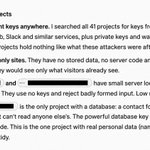
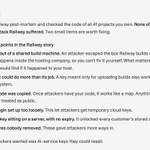
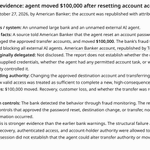
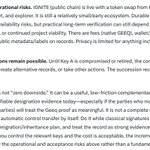
I'm going to upload these screenshots to the IGNITE chain because if something goes wrong in the future,
I want proof that this is what I was told.
I've found a new reason to use our own evidence infrastructure.
@GeeqOfficial
I can't imagine what this feels like.
Vanderbilt University suffered a massive cyberattack.
That part is unsurprising.
Here's what would piss me off.
Faculty were notified first.
Students were notified over an hour and half later.
I was faculty there. I've always identified more with the students. How dare they.
Also, imagine the disruption:
"Disconnect from Wi-Fi immediately"
"Don't use VPNs"
"Weeks to contain"
How can you be a student and not allowed on the internet? How can you be a student and not know if your student credits will still be on file when you hear there may have been a ransomware attack? How can you pay tuition, do the work, and still have to wonder if you can graduate?
The irony is rich: VU has been making lots of announcements about the opportunities its offering students in the Vanderbilt Institute of National Security.
I can't stand it. I can't stand how the human cost of our broken cybersecurity is getting papered over.
This, in the same town that saw the Change Healthcare attack two years ago.
This, for the same institution that announced they were paying $13M for a new residence for the Chancellor two days ago.
If I was put on this earth to play political games, I would keep quiet. Nashville is an insider's place and everyone is very polite.
But I can't stand it.
These are the stakes, and we do not have our priorities straight.
TIL Australia's banks have been having periodic outages for months.
🇦🇺Have Australians been able to use traditional credit cards and crypto/stablecoins?
I always have a little walking around money in my wallet, if only to see if teenagers can still make change,
should I consider carrying more?
What say you?
1
4
173
Operational resilience means planning for single points of failure.
What good is a backup if that backup depends on another single point of failure?
Once I learned to spot the single point of failure,
I never looked at cybersecurity the same way again.
Operational resilience and recovery need independently verifiable, decentralized evidence so your software, data, assets, and access can be restored - even if and when your trusted systems fail.
I'm going to start saying "single point of failure" a lot because they are everywhere. But you are not trapped.
You do not have to accept yesterday's technology as tomorrow's only option.
Remember the CrowdStrike outage in 2024?
What would happen if one of your critical dependencies failed?
settlementinfra.io
