

Subscribe: https://xitter.cf/t.co/Zu7Sv2Efxd. Listen: @InvestLikeBest, @FoundersPodcast, @BizBreakdowns, @joyscompounding.
Joined December 2020
- Tweets2.4K
- Following165
- Followers53.6K
- Likes4.2K



Pinned Tweet
Larry David is one of America’s unlikeliest icons, and one of history’s purest founders.
In our latest profile, Correspondent-at-Large @blakejharrisNYC—who spent six years talking to Larry for his new book—explains what makes Larry so special, and why it took him so long to break through.
Larry was a mediocre student with a middling social life. His first two jobs—selling bras and driving cabs—ended quickly. At 25, he called his mother from a hotel room: “Ma, nothing good is ever gonna happen to me.” She urged him to become a mailman.
Soon after, he found what he thought would be his calling: stand-up comedy. His material was funny, but he rarely finished a set. If somebody in the audience looked at their watch, or didn’t laugh when he thought they should, Larry stormed off.
14 years later, aged 39, he got a break. He was asked to write his first sitcom script for a big new Showtime series. Only an eighth of what he wrote survived the edit, but the episode was still his. He was broke, and the writing credit could have sparked his career. But Larry refused to put his name on it.
Even with Seinfeld, Larry nearly hit self-destruct. The pilot performed worse than almost any other show NBC had ever tested. Still, the network ordered four episodes, one of the smallest orders in TV history. Larry barely made it through them.
When the studio installed a showrunner to oversee the scripts, Larry endured the man’s notes, then said “NO. I’m not doing one thing,” and walked out. In the summer of 1991, with the show finally starting to work, NBC wanted Jerry and Elaine to get married and have a baby. Larry quit in the parking lot and wished everyone good luck. Jerry stood with Larry, and NBC caved.
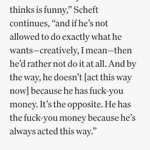
Larry’s friend and comedian Bill Scheft put it this way: “He doesn’t [act this way now] because he has fuck-you money. It’s the opposite. He has the fuck-you money because he’s always acted this way.”
Read the full profile by Blake, author of Emperor of Nothing: The Making of Larry David.
colossus.com/article/many-fa…

Colossus retweeted

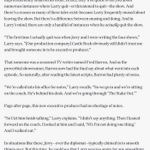
...That’s just who Larry is,” says Berg. “No matter how successful he becomes, he’s still the guy who’s always capable of finding the gray lining in every silver cloud.
And I’m sure that if anyone asked him the next day if he had fun at the game, he would have said, ‘We spent 45 minutes in traffic. Then some fucking guy told me I sucked.
Then we spent another 45 minutes in traffic.’ Like, that was his experience of the night. All because of one mook in a Camaro.”
colossus.com/article/many-fa…
The first time Larry David quit Seinfeld.


Larry David is one of America’s unlikeliest icons, and one of history’s purest founders.
In our latest profile, Correspondent-at-Large @blakejharrisNYC—who spent six years talking to Larry for his new book—explains what makes Larry so special, and why it took him so long to break through.
Larry was a mediocre student with a middling social life. His first two jobs—selling bras and driving cabs—ended quickly. At 25, he called his mother from a hotel room: “Ma, nothing good is ever gonna happen to me.” She urged him to become a mailman.
Soon after, he found what he thought would be his calling: stand-up comedy. His material was funny, but he rarely finished a set. If somebody in the audience looked at their watch, or didn’t laugh when he thought they should, Larry stormed off.
14 years later, aged 39, he got a break. He was asked to write his first sitcom script for a big new Showtime series. Only an eighth of what he wrote survived the edit, but the episode was still his. He was broke, and the writing credit could have sparked his career. But Larry refused to put his name on it.
Even with Seinfeld, Larry nearly hit self-destruct. The pilot performed worse than almost any other show NBC had ever tested. Still, the network ordered four episodes, one of the smallest orders in TV history. Larry barely made it through them.
When the studio installed a showrunner to oversee the scripts, Larry endured the man’s notes, then said “NO. I’m not doing one thing,” and walked out. In the summer of 1991, with the show finally starting to work, NBC wanted Jerry and Elaine to get married and have a baby. Larry quit in the parking lot and wished everyone good luck. Jerry stood with Larry, and NBC caved.
Larry’s friend and comedian Bill Scheft put it this way: “He doesn’t [act this way now] because he has fuck-you money. It’s the opposite. He has the fuck-you money because he’s always acted this way.”
Read the full profile by Blake, author of Emperor of Nothing: The Making of Larry David.
colossus.com/article/many-fa…
"The hotter that Seinfeld became, the more agents, managers, and executives pressed Larry and Jerry to get involved with other projects outside the show."
The co-creators kept saying no.

Larry David is one of America’s unlikeliest icons, and one of history’s purest founders.
In our latest profile, Correspondent-at-Large @blakejharrisNYC—who spent six years talking to Larry for his new book—explains what makes Larry so special, and why it took him so long to break through.
Larry was a mediocre student with a middling social life. His first two jobs—selling bras and driving cabs—ended quickly. At 25, he called his mother from a hotel room: “Ma, nothing good is ever gonna happen to me.” She urged him to become a mailman.
Soon after, he found what he thought would be his calling: stand-up comedy. His material was funny, but he rarely finished a set. If somebody in the audience looked at their watch, or didn’t laugh when he thought they should, Larry stormed off.
14 years later, aged 39, he got a break. He was asked to write his first sitcom script for a big new Showtime series. Only an eighth of what he wrote survived the edit, but the episode was still his. He was broke, and the writing credit could have sparked his career. But Larry refused to put his name on it.
Even with Seinfeld, Larry nearly hit self-destruct. The pilot performed worse than almost any other show NBC had ever tested. Still, the network ordered four episodes, one of the smallest orders in TV history. Larry barely made it through them.
When the studio installed a showrunner to oversee the scripts, Larry endured the man’s notes, then said “NO. I’m not doing one thing,” and walked out. In the summer of 1991, with the show finally starting to work, NBC wanted Jerry and Elaine to get married and have a baby. Larry quit in the parking lot and wished everyone good luck. Jerry stood with Larry, and NBC caved.
Larry’s friend and comedian Bill Scheft put it this way: “He doesn’t [act this way now] because he has fuck-you money. It’s the opposite. He has the fuck-you money because he’s always acted this way.”
Read the full profile by Blake, author of Emperor of Nothing: The Making of Larry David.
colossus.com/article/many-fa…
Colossus retweeted

My second conversation with Christina Cacioppo (@christinacaci), Vanta's cofounder and CEO.
Charlie Songhurst says the best returns come from companies that are highly boring and highly complex, because fewer founders want to build them.
Vanta is one of those companies.
When we first talked five years ago, Christina told me about building the first version of Vanta in Excel.
Since then she has turned it into the category leader in security compliance. Now she is rebuilding it around AI.
We discuss:
- Why great software businesses got cheap
- Why Vanta eats the cost of AI instead of marking it up
- Why comp for top people is up 10X in five years
- What is over/under hyped in AI
- How AI attackers are changing security
- Vanta marketing + billboards
- Building trust in an era of low trust
Enjoy!
TIMESTAMPS
0:00 Intro
4:17 Surviving the SaaSpocalypse
9:40 The AI Pricing Trap
16:17 Rebuilding Software for AI
22:43 Silicon Valley's Talent Wars
31:57 What's Overhyped in AI
38:39 Security at Machine Speed
47:16 Reinventing Software
55:37 The Billboard War
60:38 Rebuilding Trust in Technology
Colossus retweeted

“No matter how successful he becomes, he is still the guy that's always capable of finding the grey lining in every silver cloud."
What a line in the latest @colossusmag piece. Perfectly captures the energy of Larry David.
Colossus retweeted

what a nice touch that @colossusmag’s podcasts are narrated by Scott Bricks who narrated Atlas Shrugged
Colossus retweeted

thank god for Larry David’s purity
imagine if they’d married Jerry and Elaine
disaster averted via classic Larry quitting. amazing article if you are a Seinfeld/Curb fan

Larry David is one of America’s unlikeliest icons, and one of history’s purest founders.
In our latest profile, Correspondent-at-Large @blakejharrisNYC—who spent six years talking to Larry for his new book—explains what makes Larry so special, and why it took him so long to break through.
Larry was a mediocre student with a middling social life. His first two jobs—selling bras and driving cabs—ended quickly. At 25, he called his mother from a hotel room: “Ma, nothing good is ever gonna happen to me.” She urged him to become a mailman.
Soon after, he found what he thought would be his calling: stand-up comedy. His material was funny, but he rarely finished a set. If somebody in the audience looked at their watch, or didn’t laugh when he thought they should, Larry stormed off.
14 years later, aged 39, he got a break. He was asked to write his first sitcom script for a big new Showtime series. Only an eighth of what he wrote survived the edit, but the episode was still his. He was broke, and the writing credit could have sparked his career. But Larry refused to put his name on it.
Even with Seinfeld, Larry nearly hit self-destruct. The pilot performed worse than almost any other show NBC had ever tested. Still, the network ordered four episodes, one of the smallest orders in TV history. Larry barely made it through them.
When the studio installed a showrunner to oversee the scripts, Larry endured the man’s notes, then said “NO. I’m not doing one thing,” and walked out. In the summer of 1991, with the show finally starting to work, NBC wanted Jerry and Elaine to get married and have a baby. Larry quit in the parking lot and wished everyone good luck. Jerry stood with Larry, and NBC caved.
Larry’s friend and comedian Bill Scheft put it this way: “He doesn’t [act this way now] because he has fuck-you money. It’s the opposite. He has the fuck-you money because he’s always acted this way.”
Read the full profile by Blake, author of Emperor of Nothing: The Making of Larry David.
colossus.com/article/many-fa…
Colossus retweeted

After failing as an irregular bra salesman, Larry found work as a New York City cabdriver
...this profile of Larry David
colossus.com/article/many-fa…
Colossus retweeted
Larry David is one of America’s unlikeliest icons, and one of history’s purest founders.
In our latest profile, Correspondent-at-Large @blakejharrisNYC—who spent six years talking to Larry for his new book—explains what makes Larry so special, and why it took him so long to break through.
Larry was a mediocre student with a middling social life. His first two jobs—selling bras and driving cabs—ended quickly. At 25, he called his mother from a hotel room: “Ma, nothing good is ever gonna happen to me.” She urged him to become a mailman.
Soon after, he found what he thought would be his calling: stand-up comedy. His material was funny, but he rarely finished a set. If somebody in the audience looked at their watch, or didn’t laugh when he thought they should, Larry stormed off.
14 years later, aged 39, he got a break. He was asked to write his first sitcom script for a big new Showtime series. Only an eighth of what he wrote survived the edit, but the episode was still his. He was broke, and the writing credit could have sparked his career. But Larry refused to put his name on it.
Even with Seinfeld, Larry nearly hit self-destruct. The pilot performed worse than almost any other show NBC had ever tested. Still, the network ordered four episodes, one of the smallest orders in TV history. Larry barely made it through them.
When the studio installed a showrunner to oversee the scripts, Larry endured the man’s notes, then said “NO. I’m not doing one thing,” and walked out. In the summer of 1991, with the show finally starting to work, NBC wanted Jerry and Elaine to get married and have a baby. Larry quit in the parking lot and wished everyone good luck. Jerry stood with Larry, and NBC caved.
Larry’s friend and comedian Bill Scheft put it this way: “He doesn’t [act this way now] because he has fuck-you money. It’s the opposite. He has the fuck-you money because he’s always acted this way.”
Read the full profile by Blake, author of Emperor of Nothing: The Making of Larry David.
colossus.com/article/many-fa…
Larry David created two of the best comedies in television history, but, up until he was 40, his career was a failure.
Genius and dysfunction are often the same.

Larry David is one of America’s unlikeliest icons, and one of history’s purest founders.
In our latest profile, Correspondent-at-Large @blakejharrisNYC—who spent six years talking to Larry for his new book—explains what makes Larry so special, and why it took him so long to break through.
Larry was a mediocre student with a middling social life. His first two jobs—selling bras and driving cabs—ended quickly. At 25, he called his mother from a hotel room: “Ma, nothing good is ever gonna happen to me.” She urged him to become a mailman.
Soon after, he found what he thought would be his calling: stand-up comedy. His material was funny, but he rarely finished a set. If somebody in the audience looked at their watch, or didn’t laugh when he thought they should, Larry stormed off.
14 years later, aged 39, he got a break. He was asked to write his first sitcom script for a big new Showtime series. Only an eighth of what he wrote survived the edit, but the episode was still his. He was broke, and the writing credit could have sparked his career. But Larry refused to put his name on it.
Even with Seinfeld, Larry nearly hit self-destruct. The pilot performed worse than almost any other show NBC had ever tested. Still, the network ordered four episodes, one of the smallest orders in TV history. Larry barely made it through them.
When the studio installed a showrunner to oversee the scripts, Larry endured the man’s notes, then said “NO. I’m not doing one thing,” and walked out. In the summer of 1991, with the show finally starting to work, NBC wanted Jerry and Elaine to get married and have a baby. Larry quit in the parking lot and wished everyone good luck. Jerry stood with Larry, and NBC caved.
Larry’s friend and comedian Bill Scheft put it this way: “He doesn’t [act this way now] because he has fuck-you money. It’s the opposite. He has the fuck-you money because he’s always acted this way.”
Read the full profile by Blake, author of Emperor of Nothing: The Making of Larry David.
colossus.com/article/many-fa…
Colossus retweeted
Whoever does the ads at Ramp is a special talent

Larry David is one of America’s unlikeliest icons, and one of history’s purest founders.
In our latest profile, Correspondent-at-Large @blakejharrisNYC—who spent six years talking to Larry for his new book—explains what makes Larry so special, and why it took him so long to break through.
Larry was a mediocre student with a middling social life. His first two jobs—selling bras and driving cabs—ended quickly. At 25, he called his mother from a hotel room: “Ma, nothing good is ever gonna happen to me.” She urged him to become a mailman.
Soon after, he found what he thought would be his calling: stand-up comedy. His material was funny, but he rarely finished a set. If somebody in the audience looked at their watch, or didn’t laugh when he thought they should, Larry stormed off.
14 years later, aged 39, he got a break. He was asked to write his first sitcom script for a big new Showtime series. Only an eighth of what he wrote survived the edit, but the episode was still his. He was broke, and the writing credit could have sparked his career. But Larry refused to put his name on it.
Even with Seinfeld, Larry nearly hit self-destruct. The pilot performed worse than almost any other show NBC had ever tested. Still, the network ordered four episodes, one of the smallest orders in TV history. Larry barely made it through them.
When the studio installed a showrunner to oversee the scripts, Larry endured the man’s notes, then said “NO. I’m not doing one thing,” and walked out. In the summer of 1991, with the show finally starting to work, NBC wanted Jerry and Elaine to get married and have a baby. Larry quit in the parking lot and wished everyone good luck. Jerry stood with Larry, and NBC caved.
Larry’s friend and comedian Bill Scheft put it this way: “He doesn’t [act this way now] because he has fuck-you money. It’s the opposite. He has the fuck-you money because he’s always acted this way.”
Read the full profile by Blake, author of Emperor of Nothing: The Making of Larry David.
colossus.com/article/many-fa…
Colossus retweeted
Pretty, pretty good
Larry David is one of America’s unlikeliest icons, and one of history’s purest founders.
In our latest profile, Correspondent-at-Large @blakejharrisNYC—who spent six years talking to Larry for his new book—explains what makes Larry so special, and why it took him so long to break through.
Larry was a mediocre student with a middling social life. His first two jobs—selling bras and driving cabs—ended quickly. At 25, he called his mother from a hotel room: “Ma, nothing good is ever gonna happen to me.” She urged him to become a mailman.
Soon after, he found what he thought would be his calling: stand-up comedy. His material was funny, but he rarely finished a set. If somebody in the audience looked at their watch, or didn’t laugh when he thought they should, Larry stormed off.
14 years later, aged 39, he got a break. He was asked to write his first sitcom script for a big new Showtime series. Only an eighth of what he wrote survived the edit, but the episode was still his. He was broke, and the writing credit could have sparked his career. But Larry refused to put his name on it.
Even with Seinfeld, Larry nearly hit self-destruct. The pilot performed worse than almost any other show NBC had ever tested. Still, the network ordered four episodes, one of the smallest orders in TV history. Larry barely made it through them.
When the studio installed a showrunner to oversee the scripts, Larry endured the man’s notes, then said “NO. I’m not doing one thing,” and walked out. In the summer of 1991, with the show finally starting to work, NBC wanted Jerry and Elaine to get married and have a baby. Larry quit in the parking lot and wished everyone good luck. Jerry stood with Larry, and NBC caved.
Larry’s friend and comedian Bill Scheft put it this way: “He doesn’t [act this way now] because he has fuck-you money. It’s the opposite. He has the fuck-you money because he’s always acted this way.”
Read the full profile by Blake, author of Emperor of Nothing: The Making of Larry David.
colossus.com/article/many-fa…
Colossus retweeted

NBC wanted Jerry to marry Elaine and have a baby (!)
Larry David lost his mind.
Who knew?!
colossus.com/article/many-fa…
Colossus retweeted

I have never been so excited to read something
Larry David is one of America’s unlikeliest icons, and one of history’s purest founders.
In our latest profile, Correspondent-at-Large @blakejharrisNYC—who spent six years talking to Larry for his new book—explains what makes Larry so special, and why it took him so long to break through.
Larry was a mediocre student with a middling social life. His first two jobs—selling bras and driving cabs—ended quickly. At 25, he called his mother from a hotel room: “Ma, nothing good is ever gonna happen to me.” She urged him to become a mailman.
Soon after, he found what he thought would be his calling: stand-up comedy. His material was funny, but he rarely finished a set. If somebody in the audience looked at their watch, or didn’t laugh when he thought they should, Larry stormed off.
14 years later, aged 39, he got a break. He was asked to write his first sitcom script for a big new Showtime series. Only an eighth of what he wrote survived the edit, but the episode was still his. He was broke, and the writing credit could have sparked his career. But Larry refused to put his name on it.
Even with Seinfeld, Larry nearly hit self-destruct. The pilot performed worse than almost any other show NBC had ever tested. Still, the network ordered four episodes, one of the smallest orders in TV history. Larry barely made it through them.
When the studio installed a showrunner to oversee the scripts, Larry endured the man’s notes, then said “NO. I’m not doing one thing,” and walked out. In the summer of 1991, with the show finally starting to work, NBC wanted Jerry and Elaine to get married and have a baby. Larry quit in the parking lot and wished everyone good luck. Jerry stood with Larry, and NBC caved.
Larry’s friend and comedian Bill Scheft put it this way: “He doesn’t [act this way now] because he has fuck-you money. It’s the opposite. He has the fuck-you money because he’s always acted this way.”
Read the full profile by Blake, author of Emperor of Nothing: The Making of Larry David.
colossus.com/article/many-fa…
Colossus retweeted

I learned about Larry David through Curb & wasn’t a huge fan at first. But the more I’ve come to understand who he is and his style of comedy, the more respect I’ve developed for him and love for his work
Loved this profile.

Colossus retweeted

It is one of the oddest portraits of what actual integrity looks like, the result being maybe the two best comedy series in history. An inspiration for odd ducks everywhere.

Ad by @tryramp (the game is real and has good music)

Larry David is one of America’s unlikeliest icons, and one of history’s purest founders.
In our latest profile, Correspondent-at-Large @blakejharrisNYC—who spent six years talking to Larry for his new book—explains what makes Larry so special, and why it took him so long to break through.
Larry was a mediocre student with a middling social life. His first two jobs—selling bras and driving cabs—ended quickly. At 25, he called his mother from a hotel room: “Ma, nothing good is ever gonna happen to me.” She urged him to become a mailman.
Soon after, he found what he thought would be his calling: stand-up comedy. His material was funny, but he rarely finished a set. If somebody in the audience looked at their watch, or didn’t laugh when he thought they should, Larry stormed off.
14 years later, aged 39, he got a break. He was asked to write his first sitcom script for a big new Showtime series. Only an eighth of what he wrote survived the edit, but the episode was still his. He was broke, and the writing credit could have sparked his career. But Larry refused to put his name on it.
Even with Seinfeld, Larry nearly hit self-destruct. The pilot performed worse than almost any other show NBC had ever tested. Still, the network ordered four episodes, one of the smallest orders in TV history. Larry barely made it through them.
When the studio installed a showrunner to oversee the scripts, Larry endured the man’s notes, then said “NO. I’m not doing one thing,” and walked out. In the summer of 1991, with the show finally starting to work, NBC wanted Jerry and Elaine to get married and have a baby. Larry quit in the parking lot and wished everyone good luck. Jerry stood with Larry, and NBC caved.
Larry’s friend and comedian Bill Scheft put it this way: “He doesn’t [act this way now] because he has fuck-you money. It’s the opposite. He has the fuck-you money because he’s always acted this way.”
Read the full profile by Blake, author of Emperor of Nothing: The Making of Larry David.
colossus.com/article/many-fa…


Seinfeld's pilot performed worse than almost any other show NBC had ever tested.
A summary of the report:

Larry David is one of America’s unlikeliest icons, and one of history’s purest founders.
In our latest profile, Correspondent-at-Large @blakejharrisNYC—who spent six years talking to Larry for his new book—explains what makes Larry so special, and why it took him so long to break through.
Larry was a mediocre student with a middling social life. His first two jobs—selling bras and driving cabs—ended quickly. At 25, he called his mother from a hotel room: “Ma, nothing good is ever gonna happen to me.” She urged him to become a mailman.
Soon after, he found what he thought would be his calling: stand-up comedy. His material was funny, but he rarely finished a set. If somebody in the audience looked at their watch, or didn’t laugh when he thought they should, Larry stormed off.
14 years later, aged 39, he got a break. He was asked to write his first sitcom script for a big new Showtime series. Only an eighth of what he wrote survived the edit, but the episode was still his. He was broke, and the writing credit could have sparked his career. But Larry refused to put his name on it.
Even with Seinfeld, Larry nearly hit self-destruct. The pilot performed worse than almost any other show NBC had ever tested. Still, the network ordered four episodes, one of the smallest orders in TV history. Larry barely made it through them.
When the studio installed a showrunner to oversee the scripts, Larry endured the man’s notes, then said “NO. I’m not doing one thing,” and walked out. In the summer of 1991, with the show finally starting to work, NBC wanted Jerry and Elaine to get married and have a baby. Larry quit in the parking lot and wished everyone good luck. Jerry stood with Larry, and NBC caved.
Larry’s friend and comedian Bill Scheft put it this way: “He doesn’t [act this way now] because he has fuck-you money. It’s the opposite. He has the fuck-you money because he’s always acted this way.”
Read the full profile by Blake, author of Emperor of Nothing: The Making of Larry David.
colossus.com/article/many-fa…
Colossus retweeted

Great read

Larry David is one of America’s unlikeliest icons, and one of history’s purest founders.
In our latest profile, Correspondent-at-Large @blakejharrisNYC—who spent six years talking to Larry for his new book—explains what makes Larry so special, and why it took him so long to break through.
Larry was a mediocre student with a middling social life. His first two jobs—selling bras and driving cabs—ended quickly. At 25, he called his mother from a hotel room: “Ma, nothing good is ever gonna happen to me.” She urged him to become a mailman.
Soon after, he found what he thought would be his calling: stand-up comedy. His material was funny, but he rarely finished a set. If somebody in the audience looked at their watch, or didn’t laugh when he thought they should, Larry stormed off.
14 years later, aged 39, he got a break. He was asked to write his first sitcom script for a big new Showtime series. Only an eighth of what he wrote survived the edit, but the episode was still his. He was broke, and the writing credit could have sparked his career. But Larry refused to put his name on it.
Even with Seinfeld, Larry nearly hit self-destruct. The pilot performed worse than almost any other show NBC had ever tested. Still, the network ordered four episodes, one of the smallest orders in TV history. Larry barely made it through them.
When the studio installed a showrunner to oversee the scripts, Larry endured the man’s notes, then said “NO. I’m not doing one thing,” and walked out. In the summer of 1991, with the show finally starting to work, NBC wanted Jerry and Elaine to get married and have a baby. Larry quit in the parking lot and wished everyone good luck. Jerry stood with Larry, and NBC caved.
Larry’s friend and comedian Bill Scheft put it this way: “He doesn’t [act this way now] because he has fuck-you money. It’s the opposite. He has the fuck-you money because he’s always acted this way.”
Read the full profile by Blake, author of Emperor of Nothing: The Making of Larry David.
colossus.com/article/many-fa…