

Amazingly simple design. Have a question? Or looking for some design tips? We’re here to help: https://xitter.cf/t.co/aiUZ91aNpW 😊
Sydney, Australia
Joined April 2009
- Tweets227K
- Following382
- Followers341K
- Likes62K

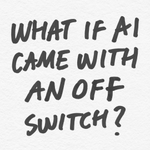


AI is everywhere. When and how you use it should always be your choice.
Starting today, you can switch generative AI features on or off and choose to limit AI-generated content in your Canva Settings. Let AI do some of the heavy lifting, handcraft every detail yourself, or do a bit of both.
Your creativity, your call.
#Canva #CanvaAI

ALT Text on a white background reads, "WHAT IF AI CAME WITH AN OFF SWITCH?" in bold, black handwriting.

ALT Text on a textured background reads "NOW IT DOES." In the center, there's a toggle switch labeled "AI," with a cursor pointing at it.

ALT The image features handwritten-style text saying "Your Creativity" at the top and "Your Call" at the bottom on a textured, light gray background. In the center, there is a purple toggle switch labeled "AI," being clicked by a cursor.


You’re a somebody who swipes. And now you can be a somebody who saves 50% on Canva Pro or Business for 3 months: canva.com/pro/

Read all about it: about.fb.com/news/2026/11/mu…

Canva retweeted

Stefano Corazza, Head of AI Research @canva, says the cost of generating video has dropped 100x in just one year, making creative ideas more important than technical skills:
"We are basically reliving the transition between oil painting and photography, but at a 1,000x type of speed and impact. You still need an eye and a taste and an idea to take a good shot."
"The cost of creating a single frame of video has gone down basically two orders of magnitude in one year. Imagine if gas was two orders of magnitude cheaper than last year."
"You don't need super deep VFX technical skills anymore. But the idea, the centrality of the idea still stands."


Canva retweeted

In this episode, Stefano Corazza, head of AI research at @canva, joins us to explore how his team is building custom models and agents around iterative design workflows. We discuss the trade-offs between training models from scratch and adapting open weights models, and how proprietary design data supports specialization. Stefano explains how Craft separates layout planning from pixel generation and how Brush uses design tools and visual feedback to create and revise compositions. We examine the challenges of evaluating design quality beyond a single generation, including the use of vision language models as judges alongside human evaluation. We also discuss lessons from simplifying agent harnesses, why faster inference enables more iterations, and how model ownership creates opportunities to optimize serving costs. Finally, we explore how APIs and MCP are expanding access to these capabilities and what changes when software companies build tools for agents as well as people.
🗒️Full show notes: twimlai.com/go/784.
📖 CHAPTERS
===============================
00:00 - Introduction
01:19 - Canva AI Research, Craft, and Brush
04:25 - Why Canva Builds Custom Models
09:43 - Canva Craft Layout-to-Pixels Architecture
12:27 - Canva Magic Layers
14:54 - Training Data and Detailed Scene Descriptions
21:45 - Synthetic Data and Diversity in Design Generation
22:53 - Evaluating Image Generation Models and Design Editing
25:00 - Vision-Language Models for Evaluating Design Quality
26:30 - Tuning Model Taste and Visual Style
31:13 - Canva Brush
35:49 - Simplifying Agent Harness
37:36 - Code Generation
39:44 - Optimizing Inference Stack
47:54 - Distilling Craft for Speed and Cost
50:24 - Canva Models Available Through MCP and APIs
54:23 - What’s Next for Canva Research
We didn't want just any old letters.
Craft on typography... may have a few people talking.
Experimenting? Drop us your #CanvaCraft creations 🤩

Canva retweeted

Training your own model when you could just plug in someone else's is a bold call....
Canva did it twice in two weeks. Craft for images, Brush for editing designs, both built in-house.
When 265M people use your product every month, owning the model starts to make a lot of sense.
Who's going to copy this playbook next?
🤝 Paid partnership

Canva retweeted

tested brush in canva on one of my messy decks lol
it looks at the layout and layers before touching anything, so the changes actually make sense. canva building its own models is a bigger deal than people think
Canva retweeted

Canva now has its own AI vision-language model capable of editing existing designs, called Brush.
Users can describe a change, and Brush then plans and executes the edits across the design. According to Canva, Brush is 69% faster overall on general design editing tasks and 46% cheaper per task than frontier models.
🤝 Paid partnership

Canva retweeted

SHIPPING AI TO 265M PEOPLE A MONTH MEANS ONE THING: A HUGE INFERENCE BILL.
Canva even had to slow down some AI rollouts this year because demand exploded.
So they built their own:
→ Craft for images
→ Brush for design editing, faster and cheaper than general-purpose models
→ Quality that matched or beat their previous setup in internal testing
Cheaper edits = AI for more people.
🤝 Paid partnership
Canva retweeted

Canva Brush is here!
For years, we’ve been working to make AI feel like a true design partner inside Canva, not something that takes over your work.
The first time I used Brush, it finally clicked: super fast, understood what I wanted to change, and kept what I loved intact.
We can't wait to see what you'll create with it!
Canva retweeted

last week: Canva ships Craft, its first image model. It debuts #4 on Design Arena.
today: Canva ships Brush, a vision-language model built just for design editing.
One week between them.
How many people still think of Canva as a template app?
🤝 Paid partnership · 🤖 Made with AI
Canva retweeted

underrated detail about canva’s brush launch: earlier this year they had to slow down some AI rollouts because demand exploded
that’s the real reason brush exists. a model built only for design editing, faster and cheaper than general-purpose alternatives, matching or beating their previous setup in internal testing
at 265M monthly users, efficiency decides who gets AI and when
🤝 Paid partnership