Official account of Lawrence Berkeley National Laboratory (LBNL), a U.S. Department of @ENERGY national lab.
Berkeley, CA
Joined October 2008
- Tweets34K
- Following1.5K
- Followers92.7K
- Likes23.1K
Berkeley Lab retweeted
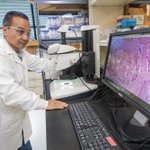
“Do routine blood tests retain information about a person’s prior radiation exposure?” asks @berkeleylab's Jamie Inman. "Our findings suggest they could contribute to rapid exposure screening, although confirmatory testing is needed.” technologynetworks.com/diagn…
"The cell phone that everybody carries with them has chips that have been made with materials that have at some point been tested at Berkeley Lab. The Center for X-Ray Optics has played a key and pioneering role in enabling EUV lithography, so that it could be used by leading-edge chipmakers in their most advanced manufacturing processes.” — Bruno La Fontaine
energy.gov/science/articles/…
Valuable #CriticalMinerals found in industrial byproducts like mine tailings and coal fly ash are going to waste. Our scientists are building a versatile tool using advanced sensors & ML to detect hot spots among the waste, so we know where to recover. #LBNLCriticalMinerals @eesalbnl @BerkeleyLabPSA @LBNLcs
bit.ly/4ytNkpe
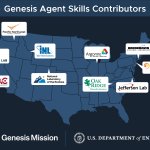
We’re proud to have contributed to @ENERGY's technical resources for the Genesis Mission. The Genesis Agent Skills, just released by DOE, was developed by contributors from across the national laboratory system, including Berkeley Lab.
Learn about Genesis Agent Skills:
energy.gov/science/articles/…

ALT The image shows a map of the United States highlighting locations of various national laboratories. Each lab is marked with a label, including Pacific Northwest National Laboratory, Idaho National Laboratory, Argonne National Laboratory, Brookhaven National Laboratory, Princeton Plasma Physics Laboratory, Jefferson Lab, Oak Ridge National Laboratory, National Laboratory of the Rockies, SLAC National Accelerator Laboratory, and Berkeley Lab. The bottom features logos for Genesis Mission and the U.S. Department of Energy.
Could a routine blood test reveal radiation exposure? Berkeley Lab scientists developed a machine learning tool that uses data from complete blood count (CBC) results, potentially offering an accessible way to screen workers at risk without the hurdles of existing methods. @LBNLatap newscenter.lbl.gov/2026/10/1…
We're studying deep underground reservoirs of hot salty waters below California & the Gulf Coast to learn how to tap these resources for the valuable #lithium needed by battery makers and other industries. #LBNLCriticalMinerals
@eesalbnl
bit.ly/4ytNkpe
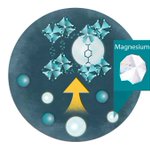
A sponge-like material could solve the challenge of extracting #lithium from salty waters called brines, giving the U.S. a reliable domestic source. The highly reusable sponge quickly sucks up magnesium and other minerals, leaving purified lithium behind. #LBNLCriticalMinerals
@BerkeleyLabETA
bit.ly/4ytNkpe
Congratulations to @LBNLcs' Sam Williams, one of this year’s recipients of @ENERGY's prestigious E. O. Lawrence Award! Williams created transformative performance modeling tools and algorithms that help supercomputers run more efficiently. newscenter.lbl.gov/2026/10/1…
When it comes to designing accelerators, “There are an infinite number of possibilities, and only a handful of those are actually good solutions… Agentic assistants are made for speedrunning these kinds of workflows.” — Berkeley Lab’s Thorsten Hellert
@LBNLatap @BerkeleyLabPSA @ENERGY
newscenter.lbl.gov/2026/10/0…
Berkeley Lab retweeted
Congratulations to Francis Halzen, 2026 Nobel Prize in Physics winner for his leadership of the IceCube collaboration, an experiment in the deep ice of Antarctica designed to detect evidence of high-energy neutrinos.
Learn how @UCBerkeley and @BerkeleyLab scientists have contributed to this groundbreaking work news.berkeley.edu/2026/10/08…
BREAKING NEWS
The Royal Swedish Academy of Sciences has decided to award the 2026 #NobelPrize in Physics to Francis Halzen “for decisive contributions to the IceCube Neutrino Observatory and the discovery of high-energy neutrinos of astrophysical origin.”
Particle accelerators are getting a super intelligence (SI), commonly referred to as artificial intelligence, upgrade. As part of DOE’s #GenesisMission, the Multi-Office Accelerator Team (MOAT) will deploy their SI accelerator assistant at more facilities across the US and expand the tool from operations to accelerator design. @LBNLatap @BerkeleyLabPSA @ENERGY
newscenter.lbl.gov/2026/10/0…
Congratulations to Berkeley Lab’s new Early Career Research Program (ECRP) awardees Asmit Bhowmick, Marcus Noack, Dan Wang, and Bingqing Cheng! @LBNLatap @BerkeleyLabPSA @LBNLcs @ENERGY newscenter.lbl.gov/2026/10/0…
The western U.S. has huge deposits of lithium-rich clay, but getting the #lithium out is a long-standing challenge. A new method could unlock a vast domestic resource. Better yet? It’s energy-efficient & avoids toxic byproducts. #LBNLCriticalMinerals
@BerkeleyLabETA
bit.ly/4ytNkpe
Berkeley Lab retweeted
“IceCube grew out of ideas developed in the early 1960s,” says @berkeleylab's Spencer Klein -- who worked on IceCube alongside Francis Halzen starting in the 2000s. “It’s worked far better than we could ever have expected when we were getting started.” physicstoday.aip.org/news/fr…
Berkeley Lab retweeted
"Gravity is probably discrete, measured like electromagnetism, but what else could happen is a shockingly difficult question to answer," says @berkeleylab's Daniel Carney. newscientist.com/article/258…
The mineral spodumene is an abundant natural source of lithium, but processes to separate it typically require lots of energy & hazardous acids. Our scientists' new approach uses safe ingredients and less energy, opening up a rich domestic supply for the #battery industry
#LBNLCriticalMinerals @eesalbnl
bit.ly/4ytNkpe
Society depends on critical minerals for energy, transportation, consumer products, healthcare, and scientific and defense technologies. Our scientists are building affordable & reliable domestic supply chains from raw, recycled, and waste sources. #LBNLCriticalMinerals
bit.ly/4ytNkpe
EUV lithography prints chip circuits 50,000x thinner than a hair, built on decades of research at Berkeley Lab's CXRO.
"CXRO will continue to play a vital role in helping push the boundaries of Moore's Law even further in the many years to come." – Bruno La Fontaine
Read more:bit.ly/4z9RT7R
Berkeley Lab researchers have developed Time-of-Flight Cascade Gamma Imaging, a new technique that could advance a promising cancer therapy called targeted alpha therapy. Read more: newscenter.lbl.gov/2026/10/0…
Berkeley Lab retweeted
We're wrapping up the first Bay Area Light Sources Users' Meeting of all three local light sources!
SLAC's Linac Coherent Light Source & Stanford Synchrotron Radiation Lightsource, and @BerkeleyLab's @advlightsource thank you for coming to SLAC!