
Breaking the Silence is an Israeli veterans' organization aimed at raising awareness to the dire consequences of prolonged military occupation.
Israel
Joined February 2011
- Tweets7.8K
- Following1.7K
- Followers119K
- Likes3.2K


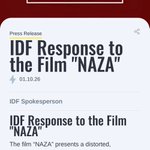


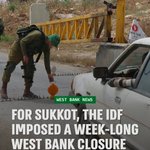


A group of diplomats from France, Belgium, and Poland were attacked by settler terrorists near Taybeh, in the West Bank. Facing international outcry, the IDF published a revealing response to the incident. Let’s break down why the IDF really failed to protect the diplomats 🔽
The IDF: (1) the European diplomats did not coordinate their visit with the military; (2) the hotline they used to report the attack is not intended for civilian use, so the IDF did not respond to the incident.
The IDF is the sole authority responsible for security in the area where they were attacked, at all times and regardless of coordination. That’s why it has an obligation to prevent settler terrorists from attacking people: Palestinians, Israelis, European diplomats or American journalists.
Had the IDF fulfilled its responsibility, masked settlers armed with clubs wouldn’t be roaming around a Palestinian village in broad daylight in the first place. And even if the hotline is not intended for civilian use, as the IDF claims, it remains unclear why the soldiers who received the call did not relay the report to the appropriate unit.
The IDF will always have a bureaucratic excuse, but the real reason is that backing settler terrorists is its policy.
For this reason, every day settler terrorists, funded by the state, injure people, slaughter animals, burn mosques and homes, uproot trees, and destroy property. They kill Palestinians and mostly get away with it. If, on the other hand, a Palestinian teenager throws a stone at the attackers, soldiers are authorised to use lethal force to “eliminate the threat.” European diplomats got a glimpse of everyday life for Palestinians in the West Bank.
This horrifying routine serves a purpose. Through daily terror and economic strangulation, it aims to drive Palestinians off their land. The ultimate goals: ethnic cleansing and annexation.

ALT Activestills, Oren Ziv, Israeli settlers attack solidarity activists, Jannatah, WB, 25.08.26
🔴 Vehicles carrying diplomats from France, Belgium, and Poland were attacked by settlers in the West Bank village of Taybeh.
Settler terror gangs seem determined to show diplomats what Palestinians endure every day. The IDF, meanwhile, seems determined to show them that it can’t handle these settler militias. In reality, it arms them.

אירוע חריג ביותר בכפר הפלסטיני טייבה בבנימין - בעת מסיק הזיתים:
רכבים של דיפלומטים מצרפת, בלגיה ופולין - הותקפו לפני זמן קצר בידי יהודים.
מעדויות שהגיעו מהשטח וכן מתיעודים שהגיעו לידי גלי צה״ל, עולה כי אחד הרכבים הדיפלומטיים הותקף באבנים ושמשתו נופצה.
בנוסף, אחד הקונסולים נצפה בתיעוד כשהוא שוכב על הרצפה, ככל הנראה לאחר שהותקף.
עדויות נוספות מצביעות על כך ש-7 יהודים רעולי פנים הגיעו על גבי טרקטורונים לשטח, הקיפו את הרכב הדיפלומטי, דרשו תעודות זהות, וניפצו את החלון ברכב של הקונסוליה הבלגית.
מדובר צה״ל טרם נמסרה תגובה.

Breaking the Silence retweeted

To be clear: Some facts are neither in dispute nor unclear. Our photographer was clearly marked as Press. She was clearly beaten. These are not partisan or risible statements, but indisputable. We urge a thorough investigation and accountability.

The Prime Minister’s Office:
The facts surrounding the confrontation near Abu Falah, during which Washington Post photojournalist Heidi Levine was allegedly assaulted, remain unclear and are under investigation.
Israel unequivocally condemns violence against anyone—Jews, Arabs, Christians or journalists. Those responsible will be held accountable.
But serious questions remain. Reports indicate some 200 Arabs and far-left activists confronted approximately 40 Israeli youths. Footage shows masked individuals on both sides hurling objects, amid reports of fireworks fired at Jewish youths. Other footage appears to show Levine knocked down and immediately helped to her feet by the same unidentified individual.
The investigation must establish the facts, including who initiated the violence.
We will not allow disputed incidents to be exploited to demonize the hundreds of thousands of law-abiding Jewish residents of Judea and Samaria.
The facts must determine the conclusions. Not the headlines.
Settler terrorists attack Palestinians every day. This is not a figure of speech. Every day, they injure people, slaughter animals, burn mosques and homes, uproot trees, and destroy property. None of this would be possible without the IDF’s backing.

I was a combat soldier in an elite IDF unit. I served in the West Bank and witnessed firsthand how settlers could do whatever they wanted with impunity.
Today I’m the Executive Director of ״Breaking the Silence״ an organization that has collected thousands of testimonies from Israeli soldiers over the past two decades.
And I can say with certainty that this statement by IDF spokesperson is a lie. The IDF is not trying to stop Jewish terrorism in the occupied territories. In fact, it protects Jewish terrorists and arms them with US-made M16 rifles.
If the IDF genuinely wanted to stop Jewish terrorism, the Chief of Staff could simply order the 30,000 soldiers stationed in the West Bank to carry out arrests. It’s that simple.
You can see the settlers who attacked Heidi Levine, a journalist for The Washington Post. But what you can’t see is the state behind them: a state that funds them, arms them, and, above all, grants them near-total impunity for their actions. This violence does not happen in a vacuum. Israel enables it.
"Since 1967, approximately 1 million Palestinians have been detained by Israel, with some estimates calculating that up to 40 percent of Palestinian men have been arrested at least once in their lives."

“Children [in administrative detention] often don’t even know why they’re being held, and their parents don’t know either.”
972mag.com/palestinian-child…

Torture is Israel's policy. Since October 2023, Israeli detention facilities for Palestinians have effectively become torture camps.

“Testicle completely mutilated, surgically removed” — this is from a document from Soroka Medical Center regarding a prisoner who was brought in after a “rubber bullet shooting incident.” Documents and testimony show that firing rubber bullets - including at close range and inside cells - has become common practice in the Israel Prison Service. A second prisoner underwent surgery to fix a fracture in his leg, and a third was operated on only after his release, because he was struggling to walk.
The story, in Haaretz:
haaretz.com/israel-news/isra…

“Der Kollateralschaden betrage bis zu 300 Zivilisten. Das deckt sich mit Angaben eines weiteren ehemaligen Soldaten gegenüber Breaking the Silence. In seiner Aussage, deren Transkript der F.A.Z. vorliegt, heißt es mit Blick auf den Angriff in Dschabalia: „Ich war an der Genehmigung eines Ziels mit einem Kollateralschaden von 300 beteiligt.“ Auch er sagt, die Erlaubnis für eine so hohe Naza-Zahl sei vermutlich vom Generalstabschef gekommen."

Der Dokumentarfilm „Naza“ hat in Israel zu einer aufgeheizten Stimmung geführt. Ehemalige Soldaten berichten der F.A.Z. von den Einsätzen, um die es geht. faz.net/aktuell/politik/ausl…

Breaking the Silence retweeted

I'm glad you visited Taybeh yourself, despite the Israeli sign warning you that it was dangerous to be there. You found out for yourself that it isn't. You walked in and left in peace.
As for the graffiti of an M16 with "Fatah al-Asifa": how does that prove the village isn't peaceful? Can you point to a single case of people from Taybeh killing or attacking anyone? You walked through Taybeh and faced no violence. Yet you chose to present a piece of old graffiti as proof of a threat, ignoring the reality you saw with your own eyes.
What you left out is that Taybeh has been under attack by Israeli settler terrorists for more than a year. They have driven families from their homes, seized the village's quarry, surrounded it with illegal outposts, and taken over more than 70% of its land. Now they are blocking residents from reaching their olive groves during the harvest.
Your own photos show an iron gate, another tool the Israeli army uses to control residents' movement and squeeze them.
Since you were there, I wish you had listened to the people of Taybeh. You could have asked why they can't reach their land for the olive harvest, and how badly their families are struggling because of it. You could have documented what settlers are doing to them. Instead, your post centers on an Israeli warning sign and a piece of old graffiti that proves nothing.
And if graffiti concerns you, I can point you to more than 50 Palestinian villages and towns where settlers sprayed hateful slogans on walls after setting homes on fire, sometimes beside a Star of David. I haven't seen you express any concern about that.
This selective outrage and coverage make your post deeply dishonest. It ignores the violence residents face while presenting a peaceful village as a threat.
Taybeh is one of the most peaceful villages in the West Bank. The threat isn't from Taybeh. It's against Taybeh, from Israeli settler terrorists. That is the truth.
savewestbankchristians.com/

Ihab (@IhabHassane ) regularly talks about a peaceful Palestinian Christian village called Taybeh.
I decided to check it out.
I found streets adorned with beautiful messages of love and erm… coexistence.


Breaking the Silence retweeted

Gaza’s buildings are collapsing on top of us. But there’s nowhere else to shelter
@Ebtisam_mahdi reports on the impossible choice facing Palestinian families: to live in war-torn structures at risk of caving in, or flimsy tents exposed to the elements.
972mag.com/gaza-building-col…

Testimonios de soldados en Gaza: “Llegó un momento en que ya no parecía tan grave matar a decenas de personas”. Estos soldados nos dieron su testimonio sobre las órdenes que recibieron en Gaza. El País ha publicado sus testimonios:
elpais.com/internacional/202…

The IDF continues to carry out mass demolitions in Masafer Yatta in the West Bank. Since the beginning of September, more than 200 Palestinians have been left homeless. The pretext: the IDF declared their land a military training area, known as Firing Zone 918.
Military training is itself an outrageous justification for expelling hundreds of people from their homes. But even that is not the real objective behind the designation of Firing Zone 918. The real objective, as it has been from the very beginning, is ethnic cleansing.

„Während unserer mehr als 80 Tage [in Netzarim, Gaza] dort hat meine Brigade 160 bis 170 Menschen getötet. Nur bei einem Mann wurde vermutet, dass er eine Waffe trug. Niemand hat die Waffe gesehen.“
Gemeinsam mit dem SPIEGEL haben wir die Aussagen von zehn israelischen Soldaten veröffentlicht, die in Gaza im Einsatz waren. Hier sind einige Auszüge aus ihren Berichten:
NAZA-300: Bis zu 300 zivile Tote als Kollateralschaden einkalkuliert
„Beim Angriff auf einen hochrangigen Hamas-Mann wurden teils mehrere Hundert zivile Opfer in Kauf genommen. Ich erinnere mich an den Fall des Hamas-Kommandeurs von Dschabalia, Ibrahim Biari. [...] Unser Kommandeur versammelte uns wenige Stunden vor dem Angriff am 31. Oktober 2023 und sagte, der Generalstabschef habe den Angriff beschlossen. Dabei würden 300 zivile Opfer einkalkuliert. Der Angriff wurde tatsächlich ausgeführt.“
Schießbefehle:
„Jemand meldete, dass auf dem Dach eines Gebäudes ein Beobachter der Hamas sei. Eine Drohne wurde dorthin geschickt, der Pilot sagte: ‚Diese Person hängt Wäsche auf.‘ Ein Offizier sagte daraufhin: ‚Palästinensische Männer hängen keine Wäsche auf. Er muss ein Beobachter sein.‘ Der Drohnenpilot sagte erneut: ‚Nein, er steht mit dem Rücken zu uns und hängt Wäsche auf.‘ Dann sagte der Offizier des Panzerzuges, der Teil unseres Kampfverbands war: ‚Ich habe freie Bahn. Kann ich schießen?‘
Der Kommandeur fragte: ‚Kannst du den Beobachter sehen?‘ Nun war er schon definitiv ein Beobachter, ein ‚Tatzpitan‘. Er gab das Kommando zu feuern.
Etwa 20 Minuten später rasten Krankenwagen zu dem Gebäude und begannen, Verwundete und Tote abzutransportieren. Wenig später sah ich auf einer israelischen Nachrichtenwebsite eine Meldung: Palästinenser behaupten, zwölf Mitglieder einer Familie seien getötet worden.
So heißt es immer: behaupten. Und ich dachte: Das waren wir.“
Menschliche Schutzschilde:
„Als ich in Rafah Dienst tat, erlebte ich den Einsatz von menschlichen Schutzschilden, sie wurden ‚Moskitos‘ genannt. Ich habe dort zwei oder drei von ihnen gesehen: junge palästinensische Männer, meist nur mit Schuhen und Unterwäsche bekleidet, mit verbundenen Augen und gefesselten Händen. In den Häusern, die uns als Lager dienten, wurden sie ständig mit Radiomusik beschallt, damit sie nichts hören konnten. Sie wurden in Tunnel und Häuser vorgeschickt, bei ihren Einsätzen musste sie israelische Militäruniformen und GoPro-Kameras tragen.“
Nachträgliche Inkriminierung:
„Wenn Menschen getötet oder verletzt werden, versucht die Armee immer als Erstes, sie mit der Hamas in Verbindung zu bringen. Denn wenn man sagen kann, dass die getöteten Personen Hamas-Terroristen sind, sieht das in den Augen der Welt besser aus. Wir nennen diesen Prozess ‚nachträgliche Inkriminierung‘. [...] Auch bei dem Angriff auf Journalisten im Nasser-Krankenhaus hieß es in einer ersten Mitteilung, es seien sechs Hamas-Terroristen getötet worden. Es habe sich um ein militärisches Ziel gehandelt, das eine Bedrohung für die Soldaten dargestellt habe. Die Soldaten sprachen von einer ‚Hamas-Kamera‘, weil die Hamas damit alles sehen konnte, was in der Nähe passierte. Ihr Ziel war, solche Kameras auszuschalten. Doch der Kameramann von Reuters, auf den sie zielten, war kein Terrorist. Sie haben einen legitimen Journalisten getötet.“
Zerstörung von Gebäuden:
„Ein Gebäude ist das höchste in unserem Sektor? Wir zerstören es, denn es könnte eine Bedrohung darstellen. Aber dann ist das nächsthöchste Gebäude das höchste Gebäude, und so geht es weiter, bis alles zerstört ist. Am Anfang wurden uns nur einzelne Gebäude genannt, die wir zerstören sollten. Später bekamen wir einen ganzen Abschnitt zugewiesen.“
„Wenn wir zivile Häuser als Stützpunkt genutzt haben, bekamen wir beim Abzug oft die Anweisung, das Haus in Brand zu setzen. Das zerstörte das Gebäude nicht völlig, sondern machte es unbewohnbar. Wir verstanden, dass es darum ging, eine Rückkehr der Bewohner zu verhindern.“
Den vollständigen Artikel im SPIEGEL lesen:
spiegel.de/ausland/gazakrieg…

The article:
spiegel.de/ausland/gazakrieg…

Soldier testimony from Gaza:“[...] I was involved in approving a target with 300 collateral damage. [It was when] IDF forces entered for maneuvering inside the [Gaza] Strip and encountered a very very prepared [Hamas] battalion, good soldiers, strong soldiers.
There were many clashes. And then there was a total amok, like to take down the commander of this battalion [but] we couldn’t precisely say where this person was. The strikes on Gaza — they’re in a very very very dense [area.] [...] So even if you get to a relatively precise polygon (a defined area in which the designated subject of a strike is expected to be), you can get very very high collateral damage.
So we got to a relatively narrow polygon, and there we kind of stopped. We didn’t manage to get more intelligence that would narrow us down more than this polygon. They said: He is killing soldiers now, he needs to be hit [...]
They really wanted to kill this person. And it was the kind of target where it was like exception, exception, exception and in the end it was approved. I know that it went up, I think at least to the chief of staff. The very least a brigadier general, but I believe that further [up,]”
**********
This soldier describes the strike on Ibrahim Biari, commander of the Central Jabalia Battalion, in which 126 people, including 68 children, were killed. Such an enormous death toll was not a violation of IDF procedures. In fact, even twice as many civilian deaths would not have exceeded the collateral damage the IDF had permitted.
This was not the only instance in which the IDF authorised hundreds of civilian deaths as collateral damage, but the threshold approved for Biari was not the standard one. The standard, and for that reason, much deadlier collateral-damage threshold was much lower. For the period between October 2023 and at least until December 2024, the IDF allowed up to 20 civilians to be killed as collateral damage for every person deemed a Hamas operative, whether a low-ranking militant or a truck driver.
Find more testimonies from soldiers who have served in the occupied Palestinian territories on our website. Since 2004, we have collected, verified, and published thousands of testimonies. If you have served in the occupied Palestinian territories, break your silence. Help end the occupation.
Full testimony: breakingthesilence.org.il/te…

Trump’s plan does not include a clear mechanism or timeline ensuring the IDF’s withdrawal from Gaza in general, and from the Yellow Line in particular. These gaps allow Israel to do what it knows best: establish facts on the ground.

WSJ’s Anat Peled travels inside the Yellow Line in Gaza, where Israel has built around 30 military bases. One year after the ceasefire, satellite images reveal new outposts and fortified zones rising in the enclave.
🔗 Read more: on.wsj.com/4ye9QRW
"During the more than 80 days [in Netzarim, Gaza] we were there, my brigade killed 160 to 170 people. Only one man was suspected of carrying a weapon. No one saw the weapon."
We collaborated with Der Spiegel to publish testimonies from ten soldiers who served in Gaza. Here are some excerpts from their testimonies:
NAZA-300: Up to 300 Civilians Authorised to be killed as Collateral Damage
"When it came to high-ranking officers, several hundred civilian casualties were allowed for a certain attack. I remember the case of Ibrahim Biari, the Hamas commander in Jabalia. [...] A few hours before the attack on October 31, 2023, our commander gathered us all around and told us that the chief of staff had decided to actually attack the place and it was potential for collateral damage of 300 civilians. The attack was eventually carried out."
Rules of Engagement:
"Someone reported that there was a Hamas spotter on the roof of a building. A drone was sent there, and the pilot said: 'This person is hanging laundry.' An officer replied: 'Palestinian men don’t hang laundry. He must be a spotter.' The drone pilot said again: 'No, he’s standing with his back to us and hanging laundry.' Then the officer of the tank unit that was part of our combat force said: 'I have a clear shot. Can I fire?'
The commander asked: 'Can you see the spotter?' By then, he was definitely a spotter, a 'Tatzpitan.' The commander gave the order to fire.' About 20 minutes later, ambulances raced to the building and began evacuating the wounded and the dead. A little later, I saw a report on an Israeli news website: Palestinians claim that 12 members of a family have been killed.
That’s how it’s always phrased: 'claim.' And I thought: that was us."
Human Shields:
"While I was on duty in Rafah, I witnessed the use of human shields, known as "mosquitoes.” I saw two or three of them: young Palestinian men clad only in shoes and underwear, blindfolded and with their hands bound. In the houses that served as our camps, music from the radio was constantly blaring so that they couldn’t hear anything. They were sent ahead into tunnels and houses, and during their missions they had to wear Israeli military uniforms and GoPro cameras."
Retroactive Incrimination:
Whenever people are killed or injured, the army’s first response is to try to link them to Hamas. That’s because saying the people killed were Hamas terrorists looks better in the eyes of the world. We call this process 'retroactive incrimination.' [...] In the case of the attack on journalists at [the Nasser] hospital, the first [the IDF's] statement said that six Hamas terrorists had been killed. It said the target was military and posed a threat to the soldiers. The soldiers referred to it as a 'Hamas camera,' because Hamas could use it to see everything happening nearby. Their aim was to take out cameras like that. But the Reuters cameraman they targeted was not a terrorist. They killed a legitimate journalist."
Destruction of Buildings:
"Is one building the tallest in our sector? We destroy it because it could pose a threat. But then the next-tallest building becomes the tallest, and so it goes on until everything is destroyed. At first, we were told to destroy individual buildings. Later, we were assigned an entire area"
"When we used civilian homes as a base, we were often told to set the house on fire as we withdrew. That didn’t destroy the building completely, but it made it uninhabitable. We understood that the point was to prevent the residents from returning."
Read the full article in Der Spiegel:
spiegel.de/international/wor…

Témoignages de soldats de l’armée israélienne sur le « NAZA », terme hébreu désignant les dommages collatéraux :
« L’estimation (…) était de 300 victimes. D’ordinaire, nous réussissons nettement mieux à maintenir ces chiffres à des niveaux plus bas. Toutes les ressources du renseignement sont mobilisées pour cela. Ce fut un réel dilemme. Mais ils ont finalement opté pour l’attaque. »
« Pour chacun, ils pouvaient estimer si plusieurs niveaux d’évacuation avaient été atteints : jusqu’à 25 % [des habitants], jusqu’à 50 %, jusqu’à 75 %… Ils nous disaient qu’ils allaient attaquer les grands immeubles dans des zones où le taux d’évacuation atteignait 75 % »
@weimanadav, notre directeur exécutif: « La mort de dizaines de milliers de Palestiniens dans des frappes aériennes à travers la bande de Gaza ne peut s’expliquer par une poignée d’attaques exceptionnellement horribles. Elle est le résultat prévisible des normes opérationnelles et des politiques que l’armée israélienne a choisi de mettre en œuvre lorsqu’elle combat à Gaza »
lemonde.fr/en/international/…
