

Grow Your Future 🌱 with the College of Agriculture and Bioresources at the University of Saskatchewan.
Saskatoon, Saskatchewan
Joined February 2017
- Tweets5.5K
- Following291
- Followers4.3K
- Likes5.1K






USask AgBio retweeted

Two stresses, one breeding line, same program.
Heat-tolerant chickpea lines are also being screened for phosphorus-use efficiency.
#cdnag #agresearch

An excellent example of the experiential learning opportunities available at the College of AgBio!

“Become the beaver.” 🦫
Students in #USask’s SLSC 450: Practical and Applied Restoration course rolled up their sleeves (and pulled on their waders!) to help build a beaver dam analog in opimihāw Creek at @Wanuskewin_Park.
news.usask.ca/articles/stude…
@agbiousask @UsaskAlumni


USask AgBio retweeted

#Mine waste can contain toxic elements harmful to human health and the #environment. Researchers from @agbiousask @usask are using the CLS to study how plants native to the boreal forest - which is home to many old mines - interact with these materials: bit.ly/40J07F2

ALT Photo: Researchers Levi Lundell, left, (PhD student, Dept of Soil Science, College of Agriculture and Bioresources) and Alicia Lamb (MSc student in Derek Peak's group) They're at the BioXAS-Imaging beamline, with a macro sample holder.
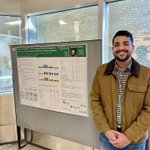
Congrats 🎉 to Mackenzie Metke who won ‘Best Student Poster’ at Agriculture Research Day for “Understanding water use strategies in crop rotations through precipitation use efficiency and isotopic water source analysis”!

Mackenzie is supervised by Dr. Maryse Bourgault in the Dept. of Plant Science. Her co-supervisor is Dr. Kui Liu, based out of the Swift Current Research and Development Centre, an Agriculture and Agri-Food Canada facility.
#USaskResearch #USask #AgBio
USask AgBio retweeted

Great research poster highlighting Gustavo Camargos study #AgBioResearchDay @agbiousask #AppliedForageResearch

USask AgBio retweeted
Researchers from @usask @agbiousask are studying what happens to the #phosphorus in fertilizer when its added to soil. This research could help farmers use #fertilizer more efficiently and reduce damage to the environment: bit.ly/3Ro0HGS
#ResearchInAction

ALT Samples of phosphorus ready for imaging.

ALT The research team, from left to right: Derek Peak, project lead; Gourango Kar, research associate; and, Tihunie Yihun, masters student.
Congrats 🎉 to Mariyam Hussain who won ‘Best Poster Presentation’ at Agriculture Research Day for “Development of enzymatically modified pulse-derived protein ingredients and their applications in plant-based foods”!

She's a graduate student (supervised by Drs. Takuji Tanaka and Michael Nickerson) in the Department of Food and Bioproduct Sciences.
Agriculture Research Day featured 55 posters from five @usask colleges! This annual event highlights the diversity of #agresearch at #USask.
Today is Agriculture Research Day!
Posters will be on display until 3:00pm throughout the Agriculture Building 2nd floor walkway and down the link to the Collaborative Sciences Research Building (CSRB).
Come meet the students over the noon hour!
#USask #USaskResearch

Congrats 🎉 to Kate Sauser for successfully defending her MSc thesis: “Zero-Tillage’s Impact on Carbon Dioxide Emissions in Saskatchewan Agriculture."
Supervisor: Stuart Smyth
Discover AgBio Grad Studies: lnkd.in/eErEWgPv
#USask #USaskresearch

USask AgBio retweeted
Getting more beef from every acre with better pastures canadiancattlemen.ca/nutriti…

USask AgBio retweeted

40 years of impact, innovation, and healthier rural communities. 🌾
The Canadian Centre for Rural and Agricultural Health celebrates its 40th anniversary this year at #USask:
news.usask.ca/articles/resea…

Thank you for discussing these important topics with our students!
Premier Moe is right about our AgBio students. You are creating opportunities not only for yourself and your family, but for the agricultural industry and Saskatchewan as a whole.

USask AgBio retweeted
Canada’s #canola industry generates $43.7B in economic activity annually. USask researchers have developed a new method for processing canola seeds that could help generate even more value from this crop.
bit.ly/4aIzrdA @usask_engr @usask @agbiousask
We thought it fitting on #WorldFoodDay to share our new mission statement for the College of Agriculture and Bioresources!
Want to be part of Canada’s hub for agriculture and bioresources education and research? Check out the link in our bio for more information!

USask AgBio retweeted
Researchers @agbiousask are exploring a new way to deliver #VitaminD using ultra-thin, edible films that dissolve on the tongue. Learn more: bit.ly/4zH2doW
#ResearchInAction
@usask @NSERC_CRSNG


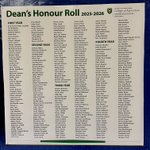
The 2025-26 Dean’s Honour Roll is up! 📝
It's reserved for #USask AgBio students with a sessional average of 80% or higher in at least 24 credit units in a degree or diploma program during the previous academic year.
See it in the Ag Building across from room 2E10!

Periods of reduced feed can be common in beef production systems for various reasons.
For cattle, changes in feed intake impacts more than just performance. It can alter rumen fermentation, nutrient absorption and gut barrier function.
New findings from researchers in the Department of Animal and Poultry Science show that when cattle eat less, the gut does not simply have less work to do. It changes.
canadiancattlemen.ca/nutriti…
#USaskResearch #beefproduction #cattle
