






Medicare open enrollment starts tomorrow, October 15, and runs through December 7.
If you have a retinal condition, this is a good time to take a close look at your plan. Before you choose, ask:
· Will all of my doctors and surgery centers accept this plan?
· Will I have to try other drugs first (step therapy) before getting the one my retina specialist recommends?
· What will I pay overall, not just the monthly premium?
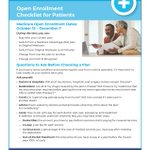
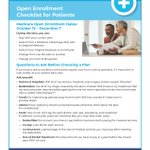
Our open enrollment checklist walks through these questions and more: asrs.org/MedicareOpenEnrollm….
Need help? Call 1-800-MEDICARE or contact your State Health Insurance Assistance Program (SHIP) for free local counseling.
#MedicareOpenEnrollment #SeeforaLifetime #RetinaSpecialist

ASRS retweeted

The proposed #Medicare fee schedule includes a terrible policy that would cut payments for same-day patient care across nearly every specialty practice. @CMSGov must withdraw this proposal. #Modifier25 Read more bit.ly/4AXN0Az

On #WorldSightDay, we encourage everyone to learn more about retinal conditions and the steps you can take to preserve and protect healthy retinas. Safeguard your sight by knowing the signs and symptoms of retinal disease, recognizing the risks, and seeking early treatment from a retina specialist.
Looking for a trusted patient resource? Explore the ASRS patient education materials, including the "What is a Retina Specialist?" patient guide, available in English and Spanish. SeeforaLifetime.org/Resource…
#LoveYourEyes #RetinaSpecialist #ASRS
Pumpkins and winter squash bring delicious flavor and plenty of color to fall meals, along with nutrients that support healthy vision.
Rich in vitamins A, C, and E, as well as lutein, zeaxanthin, and zinc, these seasonal favorites are a nutritious addition to your fall menu and a simple way to support your retina health.
Learn more about healthy habits that can help protect your sight at ASRS.org/patients.
#FallFavorites #RetinaHealth #RetinaSpecialist #SeeforaLifetime

Did you know that some people with significant vision loss may experience vivid visual hallucinations?
James C. Major, MD, Chair of the ASRS Committee on Communications, recently joined FOX 32 Chicago to discuss Charles Bonnet syndrome, a condition that can cause people with vision loss to see images that aren’t actually there.
Watch the segment to hear Dr. Major explain why these visual hallucinations can occur and what patients and their families should know.
To learn more about Charles Bonnet syndrome, access an ASRS patient fact sheet on the condition at asrs.org/RetinaHealthSeries.
#SeeforaLifetime
fox32chicago.com/video/fmc-c…
Medicare Open Enrollment begins October 15. Before choosing or changing your Medicare coverage for 2027, take time to make sure your plan will meet your retina care needs.
A few important questions to ask:
• Is your retina specialist in network?
• Are the medications you need covered?
• Does the plan require prior authorization or step therapy for retinal treatments?
• Is your preferred hospital or surgery center in network?
• How much will you really pay for visits, tests, and treatments?
The ASRS Medicare Open Enrollment guide can help you know what to look for before making a decision.
Learn more: asrs.org/MedicareOpenEnrollm…
#SeeforaLifetime

The American Society of Retina Specialists offers an extensive collection of FREE patient resources to help you make informed decisions about your retina health, including:
• Find Your Retina Specialist locator
• Retina Health Fact Sheets covering 40+ conditions
• Patient Guides
• Educational videos on retinal conditions and retina specialists
• Patient stories and testimonials
• Medicare Open Enrollment information
Visit and share these science backed resources today. Explore the collection at SeeforaLifetime.org
#HealthyAgingMonth

This #HealthyAgingMonth, learn the risk factors for retinal disease. Age, family history, and health conditions like diabetes can increase your risk of developing sight-threatening retinal conditions.
Talk to your eye physician about your personal risk factors and the steps you can take to protect your vision. Knowing your risk and detecting retinal disease early can help preserve your sight for years to come.
Learn more at SeeforaLifetime.org.
#SeeforaLifetime

Regular dilated eye exams are especially important for older Americans and those at higher risk for retinal diseases like diabetic retinopathy and age-related macular degeneration.
Many retinal diseases have few noticeable symptoms in early stages. With regular dilatedeye exams,your eye physician can help preserve your sight by detecting symptoms of a retinal condition early, before extensive damage occurs.
Can't remember the last time you had a dilated eye exam? Schedule one today.
More at SeeforaLifetime.org
#RetinaSpecialist #HealthyAgingMonth

Medicare Open Enrollment starts in a few short weeks.
If you’re thinking about switching plans, make sure you review our Medicare Open Enrollment Patient Checklist first.
Retina patients should take a close look at:
• Whether your plan will continue to cover your retina specialist and needed medications
• If the plan requires preauthorization for tests or procedures
• Whether it uses “step therapy” (or “fail first” policies) that could delay or restrict the treatment your retina specialist recommends
Take Note: Original Medicare does not allow step therapy.
Get the facts you need to make an informed choice: asrs.org/MedicareOpenEnrollm…
#HealthyAgingMonth #RetinaSpecialists

September is Healthy Aging Month! Maintaining healthy vision is an important part of aging well, and taking steps to protect your sight can make a lasting difference.
While some vision changes are common with age, vision loss is not inevitable. Early detection and timely treatment of retinal conditions such as age-related macular degeneration (AMD), diabetic retinopathy, and retinal detachment can help preserve your sight.
Follow us for expert tips from retina specialists to help you protect your vision and see for a lifetime.
Learn more at SeeforaLifetime.org.
#HealthyAgingMonth #SeeforaLifetime

When Jose first noticed changes in his vision, he put off seeing his eye doctor. But as his vision gradually worsened, he knew he couldn’t wait any longer.
Jose was referred to a retina specialist and was diagnosed with a macular hole, along with retinal tears and a retinal detachment. After undergoing multiple procedures, he regained good eyesight and returned to the activities he loves, including working, driving, traveling, and photography.
Jose’s experience is an important reminder: Don’t ignore changes in your vision. Seeking care from a retina specialist can make a difference.
Read Jose’s story today: asrs.org/patients/patient-st….
#SeeforaLifetime #RetinaSpecialist

ASRS retweeted
Specialtydocs are pushing back on @CMSgov CY2027 Medicare physician fee proposal. Cuts to specialty care threaten practice stability and patient access. We need payment reform, not more cuts! bit.ly/4hjcuAx

You may have heard of a macular hole, but have you ever seen one?
A macular hole is a small break in the macula, the part of the retina responsible for the sharp, detailed central vision needed for activities like reading and driving. Symptoms can include blurred or distorted vision or a dark spot in the center of your vision.
Learn more about this condition, including symptoms, diagnosis and treatment, when you download the ASRS Retina Health Series fact sheet on macular holes, available in English, Spanish, Chinese and Large Print asrs.org/patients/retinal-di….
Image: Traumatic Macular Hole. ASRS Retina Image Bank®, Image 2858.
#SeeforaLifetime

What does it take to become a retina specialist?
Years of medical education and specialized training prepare retina specialists to diagnose and treat complex diseases of the retina, macula and vitreous and perform delicate, sight-saving surgery.
Learn more about who retina specialists are, the conditions they treat and how they help patients preserve their vision.
Download the What Is a Retina Specialist? patient guide, available in English and Spanish: asrs.org/patients/patient-ed…
#SeeforaLifetime #RetinaSpecialist
Have an upcoming appointment with a retina specialist? A little preparation can help you make the most of your visit.
Our Preparing for Your Retina Appointment guide offers helpful tips on what to bring, what to expect, and questions you may want to ask your retina specialist.
The guide is available in English and Spanish. Download and share it with family and friends today.
Learn more: asrs.org/patients/patient-ed…
#SeeforaLifetime


ASRS is fighting CMS’ harmful Modifier -25 cut proposal on all fronts. While President Geoff Emerson is taking the message directly to DC, you can join in from home: asrs.quorum.us/campaign/cong…
What happens inside the eye when a retinal detachment occurs?
A retinal detachment happens when the retina, the light-sensitive tissue at the back of the eye, separates from the back wall of the eye. Watch to see what happens when the retina detaches and why prompt treatment is so important.
Learn more about the symptoms, risk factors and treatment of retinal detachment in our Retina Health Series fact sheet: asrs.org/patients/retinal-di…
#SeeforaLifetime
DYK? Retina specialists are among the most extensively trained and highly skilled eye care providers, having completed up to 10 years of advanced medical training to specialize in ophthalmology and sub-specialize in diseases and surgery of the retina.
To learn even more, watch and share our informational video: “Retina Specialists: Helping You See for a Lifetime.”
The video features three patients facing common retinal conditions whose lives have been changed and vision preserved because of the unique care provided by their retina specialist.
It also covers everything you ever wanted to know about retinas and retina specialists, including:
• How the retina makes sight possible
• What conditions retina specialists treat
• The breadth and depth of a retina specialist’s education, training, and surgical experience
• The importance of seeking out a retina specialist to preserve vision and prevent blindness
Watch now and share with others who might someday need the expert care retina specialists provide.
Learn more at SeeforaLifetime.org.
#RetinaSpecialist #SeeforaLifetime
Could menopausal hormone therapy influence AMD progression?
On the JVRD Author’s Forum Podcast, Talisa E. de Carlo Forest, MD, joins host Dr. Timothy Murray to discuss her article, “Menopausal Hormone Therapy and Conversion From Intermediate to Advanced Age-Related Macular Degeneration.”
The study followed women with intermediate AMD and found that a history of menopausal hormone therapy use was not associated with an increased risk of progression to either advanced non-neovascular AMD or neovascular AMD.
Dr. Forest discusses the findings, the potential role of hormonal factors in AMD, and why further research into sex-specific factors may help us better understand AMD progression.
Watch: youtu.be/DbXpThg2-C0?si=BniM…
More: ASRS.org/JVRDForum
