

Believer in freedom and democracy. Opposes authoritarianism. Deep dives on UK energy policy & Net Zero realities | Eigen Values Substack
Hampshire - UK
Joined July 2009
- Tweets47.1K
- Following1.7K
- Followers12.3K
- Likes213K



Pinned Tweet
The Energy Independence Bill promises to “bring down bills for good,” deliver greater security and put Britain “back in control.” In a feat of stunning Orwellian doublespeak it dies precisely the opposite. A thread 🧵(1/10)
🤖 Made with AI

David Turver retweeted

The UK has agreed to join EU's more expensive Emissions Trading Scheme.
This will push up the cost of UK electricity made using gas.
Today, right now, more than half of the electricity generated in the UK comes from gas.
18.4 GW gas
2.3 GW solar
5.3 GW wind
5.1 GW nuclear
2.6 GW Biomass
@andyburnham 's Reset will increase electricity prices.
National Grid: Live share.google/SrQEhAMwwgDeyPB…

David Turver retweeted

...and shows that it is vital that those who can see the real and priced-in dangers from the Trojan Reset continue to kick-off about Les folies de Burnham. It makes things dearer not cheaper, it is biased towards EU importers not UK exporters, and brings in EU courts above ours.

David Turver retweeted
Dunkelflaute conditions forecast for the weekend again. We should get away with it, because weekend demand is lower than during the week. But wind generation will again be well below NESO's derated capacity.

No wonder we have the highest industrial electricity bills in the developed world. The bill is 4X the cost of energy supplied.

Slightly off-topic, but a must-read for anyone who's interested in UK energy prices.
Andy is MD of @glencoemountain, and shared one of his energy bills for Glencoe. The actual price for consumed energy was £500.77 for October.
However, when various additional charges and government add-ons were totaled up, the final bill came in at an eye-watering £2,102.98.
I've attached a break-down of where the costs go.


David Turver retweeted
Shanks is the Buzz Lightyear energy minister. Electricity prices are going to infinity and beyond because that £110bn of spending (plus interest and guaranteed investor returns) will be recovered through our energy bills.

Net Zero is giving us higher taxes and higher bills. Brexit gives us the freedom to abandon the drag anchor of Net Zero. The EU Reset will lock us into permanent decline.

David Turver retweeted

Britain faces a massive blow to its energy supplies because of a slump in production in Norway.
The International Energy Agency said on Thursday that Norway’s gas production will plummet by one third over the next decade and the Nordic country accounts for 40pc of total UK gas supplies.
🔗 telegraph.co.uk/business/202…

Shanks is the Buzz Lightyear energy minister. Electricity prices are going to infinity and beyond because that £110bn of spending (plus interest and guaranteed investor returns) will be recovered through our energy bills.
Dunkelflaute conditions forecast for the weekend again. We should get away with it, because weekend demand is lower than during the week. But wind generation will again be well below NESO's derated capacity.
David Turver retweeted

"When the SPS reset is announced tomorrow, we will be told, and expected to believe, that abandoning the right to make our own laws on food and agriculture constitutes some sort of benefit for this country. That puzzles me, and I admit that I am a bit confused by the Government’s negotiating strategy in this reset more generally. In my experience, most negotiations involve giving something that benefits the other side in return for something that benefits you. This negotiation has involved asking for things that benefit the EU in return for conceding things that benefit the EU. It is a novel approach to negotiations.
One must spare a thought for Maroš Šefčovič, my old sparring partner, who must have been a bit flummoxed by this. He has, after all, spent a career negotiating with people who actually wanted to get something from him. He was not in his current job between 2016 and 2018, so he will not have been familiar with British negotiators with this unique negotiating style. But he has adjusted, and was no doubt delighted to discover that the EU single market for food and agriculture could be enlarged without going through any of the inconvenience of giving Britain any say in it.
Mr Šefčovič certainly seemed pretty delighted on Monday, when he spoke at the UK-EU Parliamentary Partnership Assembly of his “intense” “dating schedule” with our negotiator, the Minister, Mr Falconer, who, for his part, said that his role had “felt like a honeymoon”, and that although they were not married,
“the relationship is indeed very close”.
If I may bring a colloquial term into your Lordships’ House, this kind of thing slightly gives me the ick.
Our relationship with the EU is not a marriage. We just went through a long and unnecessarily painful divorce, but the remainer/rejoin establishment, so well represented on the Benches opposite, are still turning up at the ex’s house and desperately trying to bestow gifts in the hope that there will one day be another chance. That is the context in which we must see this SPS deal.
Let us be clear about the problem the Government tried to solve here. British traders face costs at the border, as they do at all kinds of borders and always have. Some of those costs are imposed unnecessarily by our own Government and the others are real, but even Mr Falconer himself claims these are only some tens of millions of pounds per year. If the aim was to reduce that number, why not just reduce or subsidise those costs? Instead, Labour’s way of cutting the paperwork at the border has been to agree that Brussels should write all the paperwork everywhere else and that we should pay it to do so. Dynamic alignment sounds so much better than doing what you are told.
We already have to accept EU food rules in order to sell food in Europe. This agreement is not about that; it is about accepting the rules and transactions which have nothing to do with the European Union. Food and animal exports to the EU are under 1% of this economy. Most British food production never goes anywhere near the EU and only 6% of it goes abroad at all. For most British producers, the effect of the SPS deal will be to remove a barrier between them and a European customer they do not have anyway and to put a new cost between them and a British customer they do have. It has achieved something remarkable and truly innovative: imposing the expense and inconvenience of the EU single market without even having to sell into it.
In all this, we get no say. Of course, British diplomats can turn up and say what they think, but they are then kicked out of the room and the EU gets on with it, and, whatever is agreed, we have to put up with it. In Andy Burnham’s British Food restaurant, there is no menu; the waiter just tells you that you have to have whatever the chef decides. And if you want to leave, apparently you have to pay for that, too.
The Government tell us it is all worth it to get some growth—0.14%, to be precise—in 2040. The DBT methodology note of 22 May last year admits:
“This analysis is not a full cost-benefit analysis of an SPS agreement”.
Too right it is not, for it covers only the benefits and not the costs: the inability to import cheaper food from outside the EU and the inability to reform our own rules and promote innovation. This week, the more serious estimate we had from the Growth Commission says that, over 10 years, there will be about 1% of benefits and 3% of costs—a loss of 2% of GDP and, in 10 years’ time, some £2,400 per household. The savings from less red tape for exporters are going to be dwarfed by higher prices for everyone else.
In 2018, some of the EU’s negotiators were filmed joking that Britain had become the EU’s first colony. Unfortunately, eight years on, it seems that we have a British Government who do not think that that was a joke. The old Colonial Office used to send young men abroad to govern people who had not asked for it. The Government have reversed the arrangements—they send young negotiators abroad to ask Brussels to govern us.
Think about it for a moment. This agreement gives Emmanuel Macron and Friedrich Merz more say over British food and agriculture than the British Prime Minister. How can that be right? Under no pressure at all, the Government have needlessly, gratuitously, unnecessarily chosen to give away this Parliament’s rights to an institution in which we are not represented. They should be ashamed of themselves."
Burnham says he's looking at every single thing to bring down energy bills except abandoning Net Zero, abolishing carbon taxes, cutting renewables subsidies and stopping the ruinous grid expansion. He's blind to the things that will work.

David Turver retweeted
Robert Tombs: '[David Lammy] clearly hopes ... that rejoining a flailing EU will be better than anything Labour can do on its own. Or perhaps, more realistically, he hopes that Labour’s failures will be less glaring if we are in step with the other failures.'
🎯
telegraph.co.uk/news/2026/11…

David Turver retweeted
This is the cost if Labour drops its red lines: sign up to single market rules with no say, unlimited freedom of movement and forced to ditch the superior trade deals struck since Brexit. Lib Dems are totally clueless.

David Turver retweeted
We're relying on the kindness of the Norwegians to continue to supply their hydro power through the interconnector. But they're running short of water. 😬

Big downward move in NO2 water levels this week, leading to fresh calls for electricity export restrictions...
@Miatsf @mgshanks @AndrewBowie_MP @ClaireCoutinho @harrietc @ColinMoynihanUK @drlukeevans @ashley7fox @TiceRichard @cmackinlay @mattwridley @DavidGHFrost @Iromg @AllisonPearson @MerrynSW @EdConwaySky @afneil @mattotele @jonathan_leake @julietsamuel @energygovuk @ofgem @neso_energy
e24.no/energi-og-klima/i/j3d…

David Turver retweeted

⚡ Why are Britain's energy bills so high?
Our @defossardf joins @Jacob_Rees_Mogg on @GBNEWS to discuss Not Zero, our latest report by @7Kiwi revealing how green taxes are driving up household energy costs.
🎥 Watch below 👇
This is the cost if Labour drops its red lines: sign up to single market rules with no say, unlimited freedom of movement and forced to ditch the superior trade deals struck since Brexit. Lib Dems are totally clueless.
David Turver retweeted
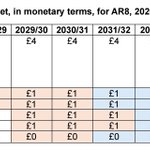
🚨BREAKING. The Government has announced budget pots for AR8 & the subsidy cupboard is bare, only £1 for each of pots 1 to 4. Budget will only increase if the Treasury agrees the bids are in consumers' interest. Is this a rare outbreak of common sense from Govt? Link in reply.

David Turver retweeted
Gas storage closing just as today's assessment of Gas Security of Supply reveals risks of 'negative margins' or running out of gas. And they haven't assessed from 2026/27 to 2030/31. Better get fracking. Link in reply.


SSE to close the Atwick salt cavern gas storage site in East Yorkshire in summer 2027, cutting nearly 10% of UK storage capacity
pgjonline.com/news/2026/nove…

If anyone thinks sending thousands of turbine blades to landfill is "clean homegrown energy" I have a bridge to sell you.

China, Europe, and the US account for most of the mounting backlog of discarded turbine blades, creating an expanding industrial gridlock.
Annual global blade waste is surging rapidly — moving from roughly 10,000 tonnes in the mid-2020s toward 110,000 tonnes a year by 2030.
While energy agencies track total generating capacity (surpassing 1.3 terawatts globally) rather than cumulative unit counts, the speed of new deployment is staggering. Roughly 28,300 new wind turbines were installed worldwide in 2025 alone.
This leaves a worsening crisis of waste disposal, that is no longer a distant abstraction. It’s unfolding in real time across the globe, as a massive wave of early-generation installations hits its end-of-life.
These blades are made of high-strength composite polymers, designed to survive decades out in the worst weather, making them notoriously difficult to recycle. They were engineered to last, but they were never designed to disappear.
Following years of mounting pressure, regional landfill bans on decommissioned blades are taking effect across parts of Europe from January 1, 2026. Panic has spread through the sector about how and where to discard these almost indestructible blades.
Commercial recycling infrastructure lags far behind this looming tsunami.
The thought of endless blade graveyards across open glades, woodlands and coastal vistas is a new modern-day nightmare. In France, at least 55% of a rotor blade’s mass must be recycled or reused. Yet in the broader industry, recycling these rough polymers can cost up to $2,000 per tonne — compared with a fraction of that to dump them in a landfill.
Because of early 'repowering' (replacing older, smaller turbines before their 20-25 year lifespan ends, to capture more wind with larger blades), near-term waste is surging. The Global Wind Energy Council says annual global blade waste will jump tenfold in the next five years — from 10,000 tonnes in 2025 to 110,000 tonnes by 2030.
Without a solution in sight, the unusable blade backlog faces indefinite stockpiling, graveyarding or the sight of endless road trains to nowhere.
IMAGE: Turbine blades stored at the Global Fiberglass Solutions facility in Sweetwater, Texas.

We're relying on the kindness of the Norwegians to continue to supply their hydro power through the interconnector. But they're running short of water. 😬
Big downward move in NO2 water levels this week, leading to fresh calls for electricity export restrictions...
@Miatsf @mgshanks @AndrewBowie_MP @ClaireCoutinho @harrietc @ColinMoynihanUK @drlukeevans @ashley7fox @TiceRichard @cmackinlay @mattwridley @DavidGHFrost @Iromg @AllisonPearson @MerrynSW @EdConwaySky @afneil @mattotele @jonathan_leake @julietsamuel @energygovuk @ofgem @neso_energy
e24.no/energi-og-klima/i/j3d…